
Abstract
The transition from secondary school to different life pathways are crucial for all learners. This means adjusting to new environment, communicating to new people, and meeting the demands of the pathway that they chose. Learner should be equipped with necessary skills and competencies to strive in the new environment. Schools must make sure that they are prepared for transition. This study assessed the transition readiness of the Junior High School learners at Buhi SPED Integrated School. Specifically, it described the profile of the learners, the level of transition readiness in terms of care skills, life skills, functional academics, pre-vocational skills, enrichment skills, career skills and livelihood skills. The researcher also determine the significant relationship between the level of transition readiness, as perceived by the teacher, and the learner’s profile. This study utilizes descriptive-correlational research design. A quantitative method was used. The respondents are six Junior High School teachers and sixteen (16) learners. The teachers served as the evaluators to assess the transition readiness of the learners. Meanwhile, the learners are the primary subject of the study. The samples were selected through purposive sampling technique. Data were gathered using a validated researcher-made questionnaire and were analyzed using frequency, percentage, and weighted mean, while correlation analysis was used to determine the relationship between variables. The findings revealed that the learners are “moderately ready” for transition across all domains. It was also revealed that that there is no significant relationship between the transition readiness of the learners, as perceived by the teachers, and the learners’ profile. Based on the findings, the Transition Readiness Assessment Checklist were developed. It is a structured evaluation tool designed to measure the preparedness of Junior High School learners—particularly those in Special Education (SPED)—for independent living, community participation, and future employment. Grounded in the principles of inclusive education and aligned with transition domains emphasized in DepEd frameworks, this checklist provides a comprehensive view of a learner’s functional abilities across multiple developmental areas.
Keywords
transition readiness transition curriculum framework special education
Chapter 1: THE PROBLEM
Introduction
The transition from secondary school to different life pathways are crucial for all learners. This means adjusting to new environment, communicating to new people, and meeting the demands of the pathway that they chose. Learner should be equipped with necessary skills and competencies to strive in the new environment. Schools must make sure that they are prepared for transition. If this is challenging for a regular learner, imagine how overwhelming it is to learners with special needs.
The inclusive education in the Philippines has undergone development and enhances its system over the years to cater the different needs of the learners. The Department of Education (DepEd) has strengthened its advocacy to provide academic skills and holistic development for learners with special needs. The goal is to hone not only their cognitive skills but also their vocational, social, emotional, and functional skills to prepare them to independent living, employment, or higher education.
In recent years, the call for inclusive and functional education has grown stronger specially in terms of integrating skills necessary for transition. This is deeply rooted on the law and policy mandated to strengthen the special education in the Philippines. Republic Act No. 9442, an Act Amending Republic Act No. 7277, or the Magna Carta for Persons with Disabilities reaffirm the right to quality education for learners with special needs. These anchors the development of programs and services that prepares learners to become self-reliant, capable of employment, and be included to mainstream of educational opportunities.
At the policy level, DepEd Order No. 21, s. 2020 provides the K to 12 Transition Curriculum Framework for Learners with Disabilities, which aims to guide schools in implementing transition-focused instruction. It encourages the integration of academic, life, vocational, and social skills into the curriculum and supports the use of assessment tools and transition plans. This order underscores the responsibility of schools to ensure that SPED learners are equipped for post-school life, either through employment, higher education, or community participation.
Meanwhile, DepEd Order, No. 044 s. 2021 states that the transition competencies and skills must be included in the curriculum to prepare the learners. This transition program must provide learner the bridge from one phase to another to help them adjust and move forward to a more inclusive and integrated learning provisions.
This research is grounded on the assessment of transition readiness of the Junior High School learners at Buhi SPED Integrated School where the number of enrollees increased every year leading to a more crucial demand for quality learning. The school strives to cater all the needs and advocates to train and teach learners the skills and competencies necessary for transition. However, many teachers observed that the learners struggle during the transition period. Lack of ability to make decision, communication, and lack of self-efficacy are some of the observable challenges of these learners. Some of them have no idea what dreams or life pathway they want to take. They are reliant to their parents and teachers and get easily overwhelmed by changes and new environments.
While Buhi SPED Integrated School follows and integrate the Transition Curriculum Framework, there is no tangible and concrete evidence whether the learners are truly ready for transition to their desired exit outcomes. The challenge is heightened by the fact that no standard assessment tool is available to determine their readiness, hence, the felt need underscores the growing concern of teachers, parents, and school community and requires urgent action.
In this study, the researcher will assess the transition readiness of the SPED learners, identify which area needs to improve and provide interventions in transition planning. It aims to offer significant insights to the teachers, school administrators, parents, and policy maker to assess their current practices and revisit strategies. The researcher would also like to offer a comprehensive assessment tool that the Buhi SPED Integrated School can utilize to ensure that the learners are fully-prepared and ready for transition.
Theoretical Framework
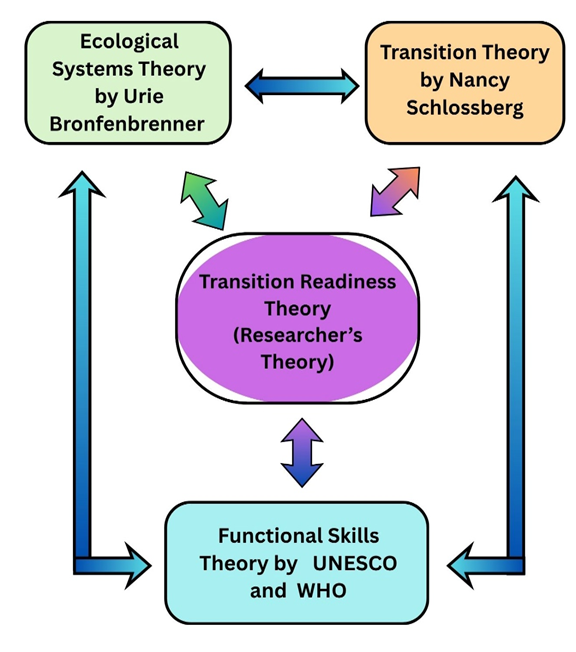
This research was anchored on the three interrelated theories: Ecological Systems Theory by Urie Bronfenbrenner, Transition Theory by Nancy Schlossberg and Functional Skills Theory by United Nations Educational, Scientific and Cultural Organization (UNESCO) and World Health Organization (WHO). The researcher came up with her own Transition Readiness Theory. Shown in Figure 1 is the paradigm of this study.
Ecological Systems Theory by Urie Bronfenbrenner emphasizes that a learner’s development is influenced by multiple environmental systems — the microsystem (family, teachers, peers), mesosystem (interaction between school and home), exosystem (community and local agencies), and macrosystem (cultural and policy influences).
In the context of learners in Buhi SPED Integrated School, learners perform based on how well supported they are by the community. To prepare the learners for transition parents, teachers, administrators and the community must come together to support and open learning opportunities for them. For example, if a local bakery will welcome the learners and teach them how to bake bread and pastries, they will be surely equipped with the vocational skills needed to transition. Parents and teachers and other stakeholders play a crucial role on the motivation, self-efficacy and independence of the learners. This will help them to cope with living independently and ensure community participation.
Nancy Schlossberg’s Transition Theory is concerned with how individuals cope with changes or shifts in life circumstances. The theory introduces the 4 S’s Framework namely: Situation, Self, Support, and Strategies. These are the core dimensions that affect how individuals experience and adapt to transition
For SPED learners, transitions such as moving to higher education, entering the workforce, or living more independently require thoughtful preparation. Without interventions that build their coping mechanisms and support systems, these transitions can be overwhelming.
Transition Theory is directly aligned with the core objective of this study which is to assess the readiness of the SPED learners for transition. Assessing their readiness for transition means understanding how they perceive change, what are the resources they have and what are the interventions they need to cope with the challenges they will face during this crucial stage of life.
The United Nations Educational, Scientific and Cultural Organization (UNESCO) and World Health Organization (WHO) developed the Functional Skills Theory, often referred to as the Life Skills Approach, which advocates for the development of practical competencies that individuals need for everyday functioning and independent living. It emphasizes essential skills such as communication, personal hygiene, money management and other life skills. These skills are essential for independence and overall well-being.
This theory is interrelated with the current study as it emphasizes the importance of authentic learning experience. Some of the SPED learners will not pursue higher education, thus, they also need to be equipped with other skills like life, vocational and entrepreneurial. They must learn the necessary competencies for them to be prepared as they transition to their chosen life pathways. Therefore, the findings of this study enable teachers to monitor the learners’ readiness for independent living and community integration.
The three theories are interconnected in explaining that the transition readiness of SPED learners depends on supportive environments, strong coping mechanisms, and the development of practical life and essential skills. Bronfenbrenner emphasizes the role of family, school, and community support, Schlossberg highlights the importance of coping with life transitions through support and strategies, while Functional Skills Theory focuses on building competencies for independent living. The paradigm illustrates the dynamic and reciprocal relationship among these theoretical foundations. Environmental influences, transition experiences, and functional skill development interact to shape learners’ overall level of transition readiness.
Based on the insights cast by the cited theories, the researcher came up with her own Transition Readiness Theory which proposed that transition readiness is holistic and multidimensional. SPED learners will become more confident and prepared for transition if they have a strong foundation, receive collaborative support and opportunities to develop functional skills and competencies essential for independent living and their desired exit outcome. This helps them to cope with the demands of the new environment.
Conceptual Framework
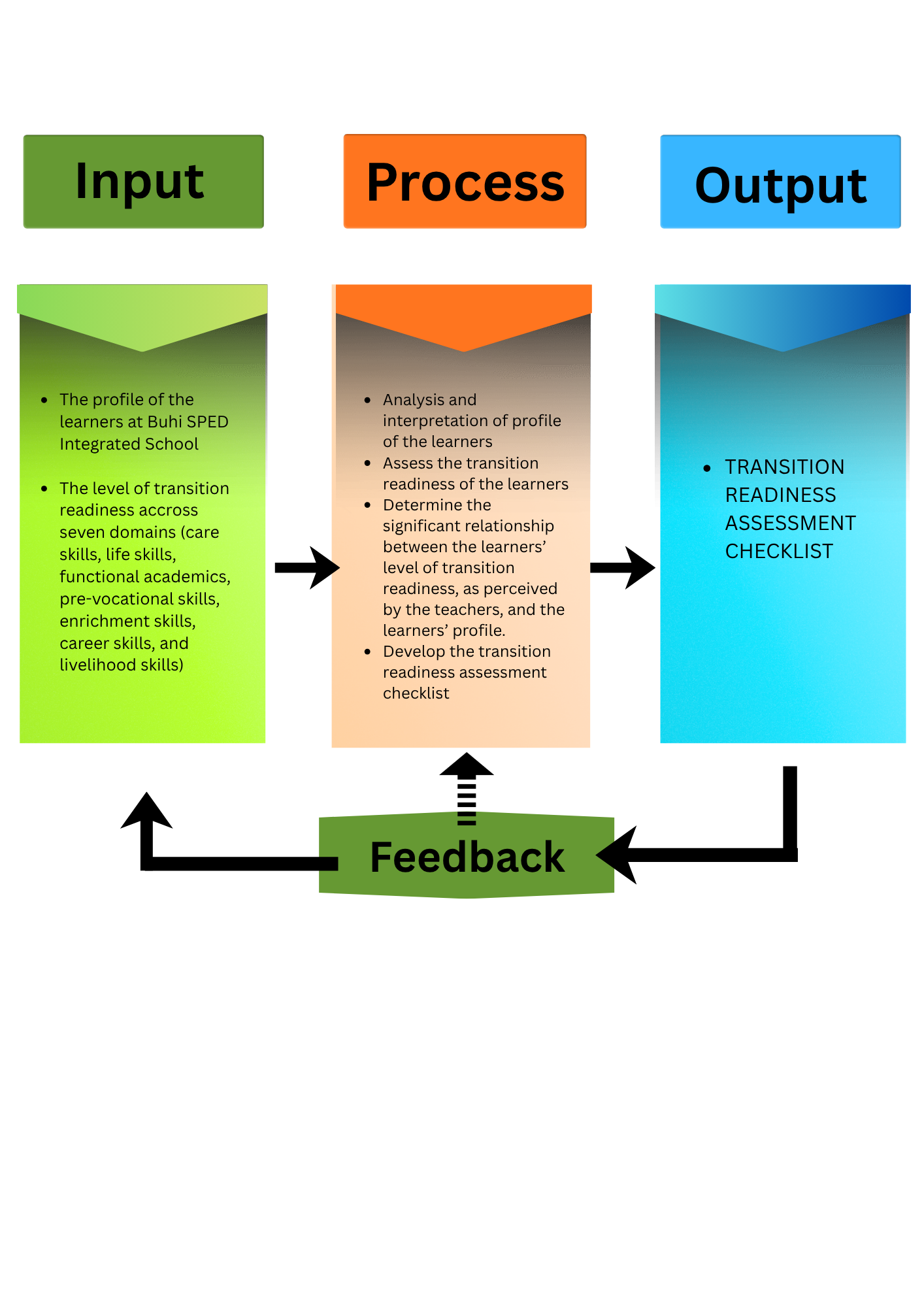
The Conceptual framework of the present study was based on the system’s approach which shows the interplay of the three important elements: input, process, and output. This framework explains how the elements of the study interact to achieve the intended outcome and how feedback is used to enhance the system. It shows how each component helps to achieve the desired result, and feedback guarantees that the system is continuously improved. The Conceptual Paradigm is shown in Figure 2.
Input. The input of the study includes the profile of the respondents and level of transition readiness.
Process. The process shows the analysis and interpretation of profile the profile of the learners, the significant relationship between the level of transition readiness of learners, as perceived by the teachers, and learners’ profile and transition readiness of the learners and the data gathered through survey questionnaire and checklist.
Output. The output of the study is the Transition Readiness Checklist which will be a sustainable monitoring that contains measurable indicators and institutionalizes transition readiness assessment at Buhi SPED Integrated School.
Feedback. This provides a mechanism for continuous improvement of assessment and consistent monitoring of learners’ transition readiness. Through feedback, adjustments can be made to enhance the output.
Statement of the Problem
This study aimed to assess the transition readiness of Junior High School learners of Buhi SPED Integrated School. Specifically, it sought to answer the following questions:
1. What is the profile of the Junior High School learners at Buhi SPED Integrated School in terms of:
1.1 Age
1.2 Sex
1.3 Grade Level
1.4 Type of Difficulty
2. What is the level of transition readiness of the learners as perceived by the teachers in terms of:
2.1 Care Skills
2.2 Life Skills
2.3 Functional Academics
2.4 Pre-vocational Skills
2.5 Enrichment Skills
2.6 Career Skills
2.7 Livelihood Skills
3. Is there a significant relationship between the learner’s level of transition readiness, as perceived by the teachers, and the learner’s profile?
4. What measures can be proposed based on the findings of the study?
Assumptions of the Study
This study was premised on the following assumptions:
-
The profile of the respondents is varied.
-
The level of transition skills of the respondents is determined.
-
Measures are proposed based on the findings of the study.
Null Hypothesis
H₀: There is no significant relationship between the learner’s level of transition readiness, as perceived by the teachers, and the learner’s profile.
Significance of the Study
This study was deemed beneficial to the following:
Learners. This study is beneficial for them to understand their strengths and areas to improve. The findings of the study will give them an overview whether they are equipped with skills needed to their desired exit outcome.
Teachers. This study can serve as a guide that can help teachers in instructional planning, curriculum design, program development. The output can also be a sustainable monitoring and assessment tool for teachers to determine whether the learners are ready for transition.
Parents. This study helped to have a clearer picture of their child’s
development and become more involved on how to guide and assist their children, as they were the primary source of support for their children at home.
School. This study enlightened the school in formulating strategic intervention programs and materials that learners would need in the future. It will also help them to integrate institutionalize assessment to determine the readiness of the learners.
Administrators. The output of this study served as an evidence-based framework to monitor the implementation transition development curriculum and effectiveness of instruction. This may also give them ideas about resource allocation, teacher training and program development.
Schools Division of Camarines Sur. The output of this study will contribute to a growing body of localized resources that promote skills development and may support policy enhancements.
Local Government of Buhi. This study will provide information to the LGU that may help improve inclusive education programs, transition services, and support for SPED learners toward independent living and community participation.
Researcher. This study was of great help to the researchers, providing them with valuable knowledge and directly contribute to the improvement of SPED program in Buhi, Camarines Sur.
Future Researchers. The insights and knowledge gained from this study helped future researchers who studied similar aspects. They could build upon the recommendations offered or replicate the study to validate its findings.
Scope and Delimitation
The main thrust of this study was to assess the transition readiness of the Junior High School learners of Buhi SPED Integrated School, Buhi, Camarines Sur for school year 2025 – 2026. It specifically covered the profile of the respondents and their level of transition readiness. The respondents of the study consist two groups, they were: 6 teachers and 16 learners with special needs which are drawn using purposive sampling technique. The teachers served as the respondents of the study who assessed the learner’s transition readiness while the learners served as the subject of the study.
Definition of Terms
To fully understand the study, important terms were given conceptual and operational definitions.
Assessment. Refers to the systematic process of evaluating the transition readiness of junior high school learners at Buhi SPED Integrated School. It includes evaluating their care skills, life skills, functional academics, pre-vocational skills, livelihood skills, career skills and enrichment skills.
Buhi SPED Integrated School. The research locale for this study, a public school in Buhi, Camarines Sur, Philippines that offers inclusive and special education programs for learners with disabilities at various grade levels.
Care Skills. These refer to the learning package that enable the learners to be equipped with basic self-care and hygiene skills that enable learners to perform independently. This is one of the skills that the researcher is trying to assess in this study.
Career Skills. These are part of the transition learning package designed to assist learners in learning the skills and attitudes to be successful. This includes decision-making, skill development and future occupational possibilities. This also emphasizes the career awareness, employment readiness and interpersonal relationships. In this study, the researcher will assess if the learners are ready to transition to their career goals.
Enrichment Skills. These learning package refers to the opportunities of the learner to explore their talents and skills in Music, Arts, Dance and Sports. In this study, the researcher assessed if the learners harness their innate abilities and talents that can contribute to their transition readiness.
Functional Academics. It focuses on basic academic skills requires in everyday life and incorporates the learner’s strengths and needs. The study wants to assess if the learners are equipped with these academic skills before transitioning to their desired exit outcomes.
Livelihood Skills. It entails the specialized instruction to support, provide subsistence and identify income sources and assist learners to find appropriate means of living. In this research, livelihood skills is one of the skills that needs to be assessed.
Life Skills. It contains skills that will prepare learners in coping with the
challenges and demands of everyday life. This study will assess whether the learners are ready to live independently, be productive, purposeful and participative members of the society.
Pre-vocational skills. It is a learning program that trains and prepares learners for livelihood, vocational training or possible employment. This focuses in honing the entrepreneurial and livelihood skills of the learners.
Special Education (SPED). A specialized instructional approach designed to meet the unique needs of learners with disabilities.
It involves individualized education programs, accommodations, and inclusive teaching methods.
SPED Learners. Learners enrolled in the Special Education program who have diverse learning needs due to physical, cognitive, emotional, or behavioral disabilities. In this study, the focus is on junior high school SPED learners in Buhi SPED Integrated School.
Transition Planning. A structured process within SPED that prepares learners for life beyond school. It involves collaboration among teachers, parents, and learners to set post-secondary goals and identify the steps and skills needed to achieve them.
Transition Readiness. The degree to which learners, particularly those with special needs, are prepared for life after Junior High school. This includes readiness for further education, employment, or independent living, measured through their mastery of the different skills.
Review of Related Literature
This chapter was a discussion of the literature and studies extensively reviewed by the researcher to place the present study in the proper perspective.
Worthy of citation, the following information was abstracted and deduced from both foreign and local literature and studies.
Transition readiness is an important aspect in special education because it helps learners prepare for independent living, employment, further education, and participation in the community.
The transition readiness has been widely studied as it is a key factor to student’s future life pathway. In the research of De Arao & Fontanilla (2024) they assessed SPED teachers’ competencies in facilitating transition skills such as self-advocacy, career preparation, and social adaptation among learners with special needs. Results showed that while teachers are competent in instruction, they need support in post-school transition planning. For Buhi SPED Integrated School, this highlights the importance of teacher preparedness in implementing transition-readiness programs. Since teachers are the models of learning, they should be also necessarily be equipped with skills and strategies.
The research of Licayan (2021) used a mixed-methods design. Licayan explored learners’ readiness in flexible learning during the pandemic. Findings revealed gaps in learner independence and adaptability—core transition-readiness traits. This underscores how external challenges (like distance learning) test learners’ preparedness to transition into new learning environments. Though the new study focuses on the SPED learners, these insights are relevant to understand the other underlying factors that affects the transition readiness of the learners.
Additionally, Pabro & Quimbo (2025) made a quantitative study that examined readiness factors for remote learning such as motivation, digital literacy, and self-regulation. It found that readiness is strongly correlated with academic performance. The insights directly relate to Buhi SPED learners, who may require structured readiness assessments before transitioning to higher levels.
Vecaldo et al. (2020) evaluated the adjustment and college readiness of Filipino K–12 graduates with disabilities. They discovered that transition readiness is linked to both personal factors (confidence, communication skills) and institutional support. For Buhi SPED, this emphasizes building a holistic support system prior to transition.
Villareal et al. (2022) through a phenomenological lens, the study explored teachers’ and parents’ experiences in managing transition programs for learners with disabilities during COVID-19. It found that collaboration between home and school is crucial for readiness. Buhi SPED could adopt similar cooperative models to strengthen transition pathways.
DepEd Cebu Province (2024) This institutional report assessed general education teachers’ readiness for inclusive education. Results showed limited training and understanding of transition strategies for special learners. The findings align with the need to train Buhi SPED teachers in transition frameworks and inclusive practices.
Meanwhile, Gonzales (2024) proposed enhancing transition programs through targeted areas—self-determination, career awareness, and social interaction. The study stresses that readiness is not just academic but also behavioral and vocational. This serves as a model for Buhi SPED’s transition readiness framework.
The study of Puzon (2025) investigated factors contributing to the success of transition programs in Sanchez Mira, Cagayan. Effective stakeholder involvement and individualized transition plans were found essential. Buhi SPED can adopt similar localized strategies to strengthen transition readiness among junior high learners.
Santos & Dela Cruz (2023) analyzed how teachers adapted to shifting modalities during the pandemic. It revealed that readiness to transition is affected by institutional preparedness and access to resources. This parallels the broader concept of learner transition, stressing environmental and structural support.
Ramos (2025) Ramos focused on ALS graduates transitioning to higher education, identifying motivation and study skills as predictors of readiness. Though the population differs, the concept of self-management and goal-setting is applicable to SPED learners transitioning to senior high school.
Examining the challenges in transition faced by student with learning disabilities (LD), Polydoros, G., et. al (2025), found that significant increases in emotional and behavioral challenges post-pandemic. The study which focused on significant increases in emotional and behavioral challenges post-pandemic also highlighted the necessity for targeted interventions, such as teacher training on emotional regulation strategies and structured transition programs. Implications for educators and policymakers include the implementation of inclusive practices and specialized transition support structures to mitigate these challenges and enhance the overall well-being of learners with LD. Buhi SPED integrated School can adapt the interventions stated to help improve the transitioning of learners with disabilities and to provide a more inclusive environment.
The study of Shaffeei, K, et. al (2020) analyzed the needs of the Special Needs Career Transition Program in school. The Special Needs Learners Career Transition Program was implemented to prepare theSpecial Needs Learners with basic and vocational skills as well as individual employment aspects. Findings showed the need to enhance the implementation of the basic skills courses and the Malaysian Skills Certificate (MSC) for the special education teachers. Additionally, the researchers also accentuated the need of learners to be trained and equipped with 3 basic skills (Reading, Writing, Counting), Vocational Basic skills, Basic self-management skills, Social skills, Communication skills, Problem solving skills, Basic technology skills and deep interest in the field before participating in the Career Transition Program. Though on a different context of transitioning, this study of Shaffeei, K., et. al can shed a light on the interventions that can be employed of Buhi SPED Integrated School to enhance the transitioning program of the school.
Chaidi, I & Bakola, L, (2022) described the learners’ transition from primary to secondary education as a passage, a challenging change, but also an opportunity for change with consequences for the student's cognitive, emotional, and psychosocial areas of development. The researchers added that the transition also happens to coincide with the person's critical developmental stage, the start of adolescence. Lastly, the findings of the study suggest that student readiness for learning, targeted, individually structured didactic integration programs intervention, with a focus on comprehending the governing laws of the school community at primary and secondary education levels is crucial to help the learners for the transition. This aligns to the concept of adolescence, as junior high school learners experience various changes brought about by the adolescence period.
According to Strndova, I., et al. (2022), the transition to high school is a difficult period for all learners, but it may be particularly difficult for learners with disabilities since they are more likely to have difficulties in academic, socioemotional, self-determination, and other areas. Using Kohler et al.'s Taxonomy for Transition Programming 2.0 and Bronfenbrenner's bio-ecological model, transition planning facilitators and obstacles from the included research were examined and summarized. The results highlight the necessity for a tailored, student-centered, and cooperative approach backed by systemic elements (e.g., policies, needs-based resources, and high-quality training for school staff) in order to effectively support kids with disabilities. Comparable to Polydoros's research, G. et. Shaffeei, K., et al. (2025). al. (2020) may provide insight into the several interventions that instructors at Buhi SPED Integrated School can use to facilitate a seamless transition for learners with special needs.
Researching for the transition experiences of learners with intellectual disability, as they move from primary to secondary school in New South Wales, Australia. Pitt, F., Dixon, R., & Vialle, W., (2019), employed a multiple case study approach on ten learners with mild to moderate intellectual disability participated in interviews and were observed in the school environment before and after they transitioned from primary school to secondary school. The findings show that the transition experience for learners with intellectual disabilities is typically favorable. However, learners frequently face several significant obstacles, involving problems with doing homework and schoolwork, as well as bullying. The a successful transfer is influenced by a number of elements, according to the study. Among them are the offering support to assist learners in understanding and managing their physical surroundings, cultivating a good rapport with educators, and having additional assistance from special needs personnel. The study suggests there are some simple and practical steps that Buhi SPED Integrated School can take to enhance outcomes for successful transition experiences.
As stated by Mazzotti, V., et al. al. (2020), young people with impairments are less more likely to have favorable results than those without disabilities. Finding in-school indicators of performance after school can give educators (For instance, career technical education, general education, and special education), administrators, district-level staff, and counselors for vocational rehabilitation utilizing data to create, assess, and enhance transition initiatives.
Fisseler, B. and Seale, J. (2025) also explained in their study that People with disabilities do not always successfully transition to and from postsecondary education. Despite the presence of technology which could potentially play a large role in the transition, there has been very little in-depth exploration of how exactly technologies can be incorporated into transition-support programs and the impact this has on transition outcomes. This implies that in order to overcome concerns regarding unequivocal results, cost, feasibility and relevance further debate and research is required involving all relevant stakeholders including those responsible for resourcing and delivering student support systems within postsecondary education. This parallels to the main goal of the study, the need of further study to achieve an optimal transition among Junior High School Learners at Buhi SPED Integrated School.
In their research, Vedrana, B., et. al. (2025) highlighted the necessity of a seamless transitions between academic levels as an essential component of kids' growth and academic achievement, especially for individuals with unique SEN stands for educational needs. Three workshops with schools were part of the project. Occupational therapists, researchers, assistant principals, and principals. Twelve teachers participated in structured interviews, and forty-two pupils were evaluated through the School Setting Interview (SSI). Gaps were found during the workshops during school transitions and highlighted tactics such clear procedures, proactive student participation, and advance planning. The joint design. We produced a transition guide that included a yearly year wheel describing monthly tasks and obligations to guarantee seamless transfers. Lastly, the researchers concluded that engaging all stakeholders in a systematic and extended transition planning process with clear documentation, systematic timelines, and ongoing support is crucial for successful transitions. The findings and interventions align with the current study which can be utilized by the teachers and administrators of Buhi SPED Integrated School to further achieve a smooth transition of the learners.
Alharbi A., Aldosiry N., and Alrusaiyes R. (2020) found it difficult for learners with impairments to move from elementary and middle schools to higher education. The study used a poll to gauge how well 20 strategies were being implemented. The findings showed that only a small number of schools successfully execute transition strategies, with the most common strategy being the sharing of data, such as learners' academic records, test scores, and services and support requirements. The results also indicated that transition practices were more frequently used in middle schools and schools with partial inclusion programs than in primary schools or schools with full inclusion programs. These included setting up a buddy or mentor, creating maps or information packs of the next setting, school visits, and class participation opportunities. The overall findings showed that viable strategies for improving the transition process were generally poorly implemented.
According to Bell, A.M. (2023), just 35% of learners with disabilities graduate from high school with workforce skills, and they experience less favorable success in employment and after-high school education in the United States. The sorts of transition planning techniques and the assessment of special education teachers in high schools were the main subjects of the study. Findings revealed the absence of connections between transition predictors for postschool success and secondary transition evidence-based practices in the transition process. Additionally, the researcher highlighted the need of training in program creation, and evaluation, through professional development in the field for the special educators. The findings and factors stated in this study can be used in the assessment of transition readiness of Junior High School Learners at Buhi SPED Integrated School.
Republic Act 7277 (2010) is an act providing for the rehabilitation, self-development and self-reliance of disabled persons and their integration into the mainstream of society and for other purposes. Commonly known as Magna Carta for Persons with Disabilities, this law mandates the full participation and inclusion of PWDs in the Philippine Society. It grants PWDs rights to equal opportunity for employment, education, health, accessibility, auxiliary social services, and political and civil rights. As the legal guidelines for ensuring the welfare of persons with disabilities, Buhi SPED Integrated School must follow the mandates of the law to ensure an inclusive environment for its learners.
The primary law governing this study is mandated in the Republic Act No. 11650 (2022), otherwise known as Instituting a Policy of Inclusion and Services for Learners with Disabilities in Support of Inclusive Education Act, which seeks to institute a policy of inclusion and services for learners with disabilities in support of inclusive education, establishing inclusive learning resource centers of learners with disabilities in all school districts, municipalities and cities, providing for standards, appropriating funds therefor, and for other purposes. Specifically, this study is anchored on the Sections 3(a) and 3(b) of RA 11650 which aims to provide learners with disabilities free and appropriate public early and basic education, support and related services based on their needs, and access to the general education system through formal schools’ systems in preparation for independent living and community life.
Serving as the framework for the organization, management, and implementation of educational programs and services for Learners with Disabilities (LwDs) for public and private K to 12 schools, DepEd Order No. 044, Series of 2021 aims to ensure that LwDs are provided with equal access to quality and equitable basic education.
DepEd Order No. 021, Series of 2020 otherwise known as "Policy Guidelines on the Adoption of the K to 12 Transition Curriculum Framework for Learners with Disabilities (LWDs)" articulates the principles, features and standards that will establish common understanding on the transition of LWDs in all public and private schools across the country. Additionally, DO 21 s. 2020 highlights seven transition curriculum packages namely, Care Skills Package, Life Skills Package, Functional Academics Package, Pre-Vocational Package, Enrichment Package, Livelihood Package, and Career Skills Package. Lastly, D.O. 21, s. 200 mandates a standardized, life-skills-focused, and individualized transition plan for learners with disabilities.
De la Fuente, J.K., (2023) in the article “Transition Issues Between Learning Stages in the Philippines” pointed out three critical transition points in the learning stages of the learners, Kindergarten to Grade 1, Grade 6 (Elementary) to Grade 7 (Junior High School), and Grade 10 (JHS) to Grade 11 and 12 (SHS). The article also highlighted the high percentage of repeat learners in the Philippines, strong negative correlation between grade repetition and academic performance. De la Fuente suggested that the focus should be on early detection and prevention through remedial programs and additional learning time for learners and not on the repetition given the spiral curriculum of the K to 12 program. The suggestions made by the author could serve as the basis of the assessment and formulation of programs for the learners of Buhi SPED Integrated School to achieve a successful transition from JHS to senior high school.
Focusing on the collaboration among the school stakeholders, Gezun. J.E. (2024) emphasized the need of individualized support systems and learning plan together with the collaboration of the teachers and the institution through providing learners with the essential skills necessary for personal growth, social connections, and success in the real world through the Life Skills Package, which is designed to prepare learners with these skills; systemic transition planning, which involve various elements such as curriculum integration, guidance, and counseling services, parent involvement, collaboration with secondary schools, career exploration and preparation and individualized support; through supporting the inclusion of LSENs in school and community settings, it fosters diversity and inclusion by involving LSENs in extracurricular activities and school programs. Gezun found out that J.P. Rizal Elementary School has been successful in implementing this program promoting self-determination. Though on a different context and level of learners, it is noted that what Gezun found out and suggested is highly similar to . Licayan (2021), Shaffeei, K., et. al. (2020), Gonzalez, (2024), and Ramos (2025) who tackled self-management and life skills.
Article 24 of the UN Convention on the Rights of Persons with Disabilities (UNCRPD) mandates the right to education of persons with disabilities. This article requires States Parties to ensure that persons with disabilities are provided with inclusive education system at all levels without discrimination and on equal basis with others. Specifically, Item 1 of the article enforces States Parties to ensure inclusive education system and provide lifelong learning towards the full development of human potential and sense of morality, development by persons with disabilities of their personality, talents, and skills at full potentials, and enabling them to participate effectively in a free society. Similar to RA 11650, this global guidelines for the right to education of persons with disabilities is consistent with the present study as it provides rules and regulations for inclusive environment for learners with disabilities which can be used by Buhi SPED Integrated School as a reference for a smooth transitioning program.
Bruno, L. & Scott, L. (2019) developed a conceptual framework in their theoretical paper that would help the special education field in blending academic instruction and transition planning to meet both academic and transition needs of learners with disabilities. Universal Design for Transition (UDT) framework is a guide for implementation and promotion of barrier-free transitions. The framework which was based on the Universal Design for Learning, included principles such as multiple means of representation, multiple means of expression, and multiple means of engagement. This framework is relevant to the present study as UDT can be used as reference framework in formulating transitioning programs consistent with the needs of the learners at Buhi SPED Integrated School.
Transition from primary to secondary school was described by Harris, J., Nowland, R. & Todd, M. (2022) as a milestone for children due to the multiple changes, learners must navigate. Though most of the learners adjust successfully, approximately 30% of the learners face difficulties during this phase. Intersecting identities are also likely to influence how children navigate the adjustment of the school transfer, but there have been no syntheses of existing evidence relating to the impacts of intersectionality. The authors found out how d how children with minority intersecting identities are faced with additional challenges during the transition to secondary school and how these can have negative ramifications for their self-concept, mental health, and adjustment to the transition. This differs from the study of Strndova, I., et al (2022) which describes transition as a turbulent time for the learners. However, the findings of these two researches is relevant to the present study as the researcher could use the factors stated as basis of the formulation of transitioning program at Buhi SPED Integrated School.
Addressing the problem of learners with sever intellectual disabilities (SwSID) enrolled in life skills not getting adequate transition planning service, Villanueva, J.G. (2025), investigated special education teachers’ perception about the transition services provided. Findings revealed that inadequacy of transition planning services due to lack of parental knowledge and support, lack of available transition resources for special education teachers, increased training and support for teachers and parents, solutions for transportation challenges including teachers driving buses and use of transit bus systems, and increased support from Texas Workforce Solutions and enhancement of delivery of transition planning services as major problems that learners and teachers are currently facing. This study relates to the present study where the researcher could utilize the findings and the variables of stated by Villanueva, J.G.(2025) as the basis for the assessment of transition readiness of the learners at Buhi SPED Integrated School.
Ali, S. (2023) highlighted the importance of preparing learners with impairments for life after school, explaining that the goal of transition planning is to help learners with special needs make a successful transition from school to post-school activities. The author also emphasized several essential components in the holistic approach to transition planning. Person-centered Planning (PCP), Self-Determination Skills, Collaboration, and Comprehensive Skill Development are among the crucial components highlighted. The Person-Centered Planning is also mentioned by Strndova, I., et al (2022), as a key component to support the needs of learners with disabilities. These studies are relevant to the present study as it can be a useful component in the assessment of transition readiness of the learners and in formulating transitioning programs among learners at Buhi SPED Integrated School. These are essential components in creating this transition readiness assessment.
Aromolan, S. (2021) described transitioning from middle to high school as challenging where it comes with a lot of “hiccups” for adolescent. The researcher also attributed adolescence as a contributing factor in transitioning where various mental, psychological, and physiological changes occur. According to Bell, A.M. (2023), just 35% of learners with disabilities graduate from high school with workforce skills, and they experience less favorable success in employment and after-high school education in the United States. The sorts of transition planning techniques and the assessment of special education teachers in high schools were the main subjects of the study. This aligns with the present study as it can be used to adapt a transition program where parents and school administrator can play a major role in ensuring that the transition was smooth and manageable.
Occupational therapy services to learners with disabilities aged 14 to 16 years old have showed effectiveness in the study of Pierce, D., Spence, A., Sakemiller, L. & Roberts, C. (2020). Developed by 14 school-based occupational therapy from 10 midwestern school, the program emphasized peer-group projects, prevocational exploration, self-determination, and life skills. Additional themes were the unique skills required to serve adolescents, assessment accuracy, managing therapy time, inter-professional collaborations, and pioneering new practices. This study is relevant to the present study as Occupational Therapy Services can be employed by Buhi SPED Integrated School to prepare the learners in transitioning.
Almalki, S., (2021), highlighted that transition services on Saudi High Schools for learners with intellectual disability need to be improved. Though transition programs began since 2005, these services need improvement. Among the findings, four main issues were mentioned that according to the author must be addressed, these are: special education teacher preparation programs, transition services’ policies and regulations, Individualized Transition Plans, and collaborative practices. This study coincides with the present study as the findings can be contributing factors in the assessment and formulation of improved transition services for the learners of Buhi SPED Integrated School.
Success in transition from primary to secondary school according to Uka, A., & Uka, A., (2020) can be ensured when learners’ learning is consistent. Learners are also more likely to enjoy school, engage with learning, and have a high academic achievement in secondary school when they feel motivated. The author also highlighted the need of sufficient traditional sources of motivation and self-regulated learning skills for learners that are away from school. According to the study, learners who were supported by their parents and teachers had a more successful transition. Additionally, student’s perception with the transition from primary to secondary school and their self-regulated learning and motivation were found to be significantly correlated. Though not on the same context of learners with disabilities, the findings align with the present study as it can be used as a basis for the implementation of Self-Regulated Learning. This also aligns to Aromolan, S. (2021), where parents and school administrators should play a significant role in the transition services and can be a reference to the formulation of Buhi SPED Integrated School transitioning programs.
Synthesis of the State-of-the-Art
The review of related literature and studies align with the transition readiness of learners with special needs. Specifically, it shed the light on the main objective of this study – the assessment of transition readiness of junior high school learners of Buhi SPED Integrated School. Moreover, it highlighted three crucial themes, the essential skills and domains of transition readiness, the crucial role of stakeholders, and the need for program and policy support.
Transition among learners does not only revolve on just academics alone, functional, behavioral, and vocational skills is essential to ensure the success in the transitioning of learners. Licayan (2021), Shaffeei, K., et. al. (2020), Gonzalez, (2024), and Ramos (2025) tackled the self-management and life skills emphasizing the importance of developing non-academic skills. Licayan (2021) discussed the gaps during the change in learning environment in terms of learner independence and adaptability. Gonzalez (2024) highlighted the need of targeted approach on areas of self-determination, career awareness, and social interaction. Ramos (2025) pointed out motivation and study skills as key predictors in the transition readiness of the learners. Though on a different context of transition – career transition, Shaffeei, K., et. al. (2020) accentuated the necessity of developing the 3 basic skills (Reading, Writing, and Counting), basic vocational skills, basic self-management skills, and communication skills to ensure a high success in transition. Moreover, these studies are rooted in the crucial element of transitioning for learners with disabilities – learning how to manage oneself while communicating to others.
Transition phase, in general is considered to be challenging for learners with disabilities and are less likely to achieve positive outcomes. Chaidi, I., & Bakola, L. (2022), Strndova, I. et. al. (2022), Polydoros, G. et. al. (20235) Pitt, F., et. al. (2019), Mazzotti, E. et. al. (2020), De la Fuente, J.K. (2023), and Bell, A.M. (2023) suggested that adolescence period contributes to the transition making it difficult for the learners affecting cognitive, emotional, and psychosocial areas and considering transitioning as turbulent time.
The review also accentuated that the success of transition program is rooted on the collaborated effort of educators, families, and institution. Teachers’ readiness has been put into question over the years in the Philippines. De Arao & Fontanilla (2024), DepEd Cebu Province (2024), Bell, A.M. (2023), Villanueva, J.G. (2025), and Almalki, S. (2021) coincide with the need of teachers to undergo trainings in transition strategies. De Arao & Fontanilla (2024) believe in the competency of the educators in the Philippines but are being held back by the lack of support in post-school transition planning. These researchers have cited a common dilemma in the special education system – the lack of support, training, and understanding of transition strategies, program creation and evaluation, and lack of transition resources to help learners with disabilities to have a smooth transitioning. Santos & Dela Cruz (2023) and Aldosiry, N., Alharbi, S., & Alrusaiyes, R. (2020) tackled the institutional preparedness and resources, finding out that transition readiness is affected by its preparedness, access to resources, and a typically poor transition process.
To achieve an optimal result in the transitioning, some researchers required its programs to have a systematic approach. Universal Design for Transition was proposed by Bruno, L. & Scott, L. (2019) by blending academic instruction with the transition planning. DepEd order No. 021, series of 2020, Puzon, (2025), and Ali, S. (2023) proposed that institutions accommodating learners with disabilities should focus individualized transition plan and Person-Centered Planning, Self Determination Skills, and Collaboration to help learners to transition smoothly.
Laws and guidelines are the center in the protection of the rights of the learners with disabilities. As the global guidelines, Article 24 of UN Convention on the Rights of Persons with Disabilities (UNCRPD), it sets the rules and regulations in protecting the rights of learners with disabilities and mandates the right to inclusive education. In a local context, adapting to the Article 24 of UNCRPD, the RA 11650 (2022), and RA 7277 (2010) are the laws that have been passed to institute policies for inclusion, and protection of learners with disabilities.
Research Gap
Despite the strong backing of theories for the need of transition planning and identification of self-determination, vocational skills, and stakeholders’ collaboration (Ali, (2023); Gonzales, (2024); DepEd Order 021 s. 2020), it was noticeable that there was a significant gap in line with the local and empirical data. Specifically, no direct assessment of transition readiness of Junior High School learners with disabilities who were in the process of transition towards Senior High School given that no direct assessment has been conducted. Focusing only on the teacher competencies (De Arao & Fontanilla, 2024), broad school to work contexts (Mazzotti, et. al., 2020), and general education transitions (De la Fuente, 2023). None of the studies reviewed in this chapter provided a definitive and context-specific baseline assessment of the academic, socio-emotional, and self-management readiness of learners with disabilities. Therefore, this research aimed to fill the gap by establishing the baseline and identifying the factors needed in assessing the transition readiness of Junior High School learners of Buhi SPED Integrated School who were transitioning to the senior high school level.
NOTES
Ali, S. (2023). Holistic transition planning for students with impairments: Components of success. International Journal of Disability and Development.
Almalki, S. (2021). Transition services for students with intellectual disability in Saudi high schools: Issues and improvements. Journal of International Special Needs Education.
Aromolan, S. (2021). Socioemotional challenges in the transition from middle to high school. Journal of Adolescent Research.
Bell, A. M. (2023). Evaluating high school special education teacher practices and post-school outcomes. Career Development for Exceptional Individuals.
Bronfenbrenner, U. (1979). The ecology of human development: Experiments by nature and design. Harvard University Press.
Bruno, L., & Scott, L. (2021). Universal Design for Transition (UDT): A conceptual framework for blending academics and transition. Career Development and Transition for Exceptional Individuals.
Chaidi, I., & Bakola, L. (2022). The passage to adolescence: Transitioning from primary to secondary education for students with disabilities. International Journal of Inclusive Education.
De Arao, A., & Fontanilla, G. (2024). Competencies of special education teachers in facilitating transition skills for learners with special needs. Journal of Inclusive Education Outcomes, 12(1), 45–59.
Department of Education. (2020). Policy guidelines on the adoption of the K to 12 transition curriculum frameworks for learners with disabilities (LWDs) (DepEd Order No. 021, s. 2020).
Department of Education. (2021). Guidelines on the organization and management of programs for learners with disabilities (DepEd Order No. 044, s. 2021).
Department of Education Cebu Province. (2024). Institutional report on general education teachers’ readiness for inclusive education.
De la Fuente, J. K. (2023). Transition issues between learning stages in the Philippines. Philippine Journal of Educational Studies.
Fisseler, B., & Seale, J. (2025). The digital bridge: Exploring technology in postsecondary transition support programs. Journal of Special Education Technology.
Gezun, J. E. (2024). Collaborative support systems and life skills implementation: A case study of J.P. Rizal Elementary School. Journal of Pedagogical Research.
Harris, J., Nowland, R., & Todd, M. (2022). Intersectionality and school transition: Impacts on mental health and adjustment. British Journal of Educational Psychology.
Licayan, M. (2021). Readiness in flexible learning: A mixed-methods exploration of learner independence during the pandemic. International Journal of Educational Development.
Mazzotti, V. L., et al. (2021). Secondary transition predictors of postschool success: An update to the field. Career Development and Transition for Exceptional Individuals, 44(1), 47–64.
Pabro, R., & Quimbo, M. (2025). Motivation and digital literacy as predictors of academic performance in remote learning. Asian Journal of Distance Education.
Pierce, D., et al. (2021). Occupational therapy in secondary transition: Peer-group projects and life skills for adolescents. American Journal of Occupational Therapy.
Pitt, F., Dixon, R., & Vialle, W. (2022). Transition experiences of students with intellectual disability in New South Wales, Australia. International Journal of Inclusive Education.
Polydoros, G., et al. (2025). Post-pandemic emotional and behavioral challenges in students with learning disabilities. Journal of Learning Disabilities.
Ramos, M. (2025). Predictors of readiness: Motivation and study skills among ALS graduates transitioning to higher education. Philippine Educational Review.
Republic of the Philippines. (2010). Magna Carta for persons with disabilities (Republic Act No. 7277, as amended).
Republic of the Philippines. (2022). Instituting a policy of inclusion and services for learners with disabilities in support of inclusive education act (Republic Act No. 11650).
Schlossberg, N. K. (1981). A model for analyzing human adaptation to transition. The Counseling Psychologist, 9(2), 2–18.
Shaffeei, K., et al. (2022). Needs assessment for career transition programs in special education. Journal of Vocational Education & Training.
Shogren, K. A., et al. (2021). Self-determination and transition patterns: A longitudinal study. Journal of Special Education.
Strnadova, I., et al. (2022). Transition to high school for students with disabilities: A systematic review using the bio-ecological model. Journal of Adolescent Health.
Uka, A., & Uka, A. (2021). Motivation and self-regulated learning in the transition from primary to secondary school. European Journal of Psychology of Education.
UNESCO. (2012). Youth and skills: Putting education to work: EFA global monitoring report.
United Nations. (2006). Convention on the Rights of Persons with Disabilities (CRPD), Article 24: Education.
Vecaldo, R. T., et al. (2021). Adjustment and college readiness of Filipino K–12 graduates with disabilities. Journal of Research in Special Educational Needs.
Villareal, S., et al. (2022). Home-school collaboration in managing transition programs during COVID-19: A phenomenological study. Journal of Special Education Research.
World Health Organization. (1994). Life skills education for children and adolescents in schools.
Chapter 2: Research Methodology
This chapter outlines the methods used to achieve the objectives of the study. It describes the research design, sampling procedures, and the selection criteria for respondents. The study employed appropriate data-gathering tools such as questionnaires and interview guides to collect relevant information.
The data collection process is explained clearly to ensure consistency and replicability. Statistical treatments were applied to analyze the results and ensure the validity and reliability of the findings. Overall, this chapter establishes how the research was systematically conducted and how the data supports the study’s objectives.
Research Design
This study employed a descriptive-correlational research design utilizing quantitative data. Descriptive research is used to systematically describe the characteristics, behaviors, or conditions of a population or phenomenon as they naturally occur, while correlational research determines the relationship between two or more variables without manipulating them (Remler et al., 2021; Sreekumar, 2024).
The quantitative method follows the descriptive-correlational aspect of this study. It was selected to describe the detailed information on the learners’ profiles—specifically their age, sex, grade level and type of difficulty. It was utilized to assess the transition readiness of the learners through various skills on the transition learning framework. The correlational component is used because the study wants to find the relationship between the learner’s profile and their transition readiness.
Respondents of the Study
The respondents of this study were six Junior High School teachers at Buhi SPED Integrated School for the academic year 2025–2026. The teachers served as the evaluators to assess the transition readiness of the learners using the structured survey questionnaires and checklist.
The subject of the study were 16 Junior High School learners enrolled at Buhi SPED Integrated School. While the learners were the focus of the assessment, they did not complete the survey themselves. Instead, the teachers provided their professional evaluations of the learners’ competencies in various areas, including care skills, life skills, functional academics, pre-vocational skills, enrichment, career skills, and livelihood skills.
This method ensures that the collected data is based on teacher’s professional judgment and observation of the learner’s abilities, which will be used to measure their transition readiness. A purposive sampling technique was employed to select participants who directly experience transition preparation. This is a non-probability sampling method commonly used to identify participants who possess specific characteristics and can provide relevant and meaningful information related to the objectives of the study (Campbell et al., 2020; Andrade, 2021). This method was appropriate for determining learners who could provide significant insights regarding transition readiness. The selection criteria included the learners’ grade level, age, type of difficulty, and active participation in school-based transition programs.
Research Instruments
To effectively gather data aligned with the study’s objectives, a researcher-made questionnaire was utilized as the primary research instrument. The questionnaire was carefully constructed based on related literature and studies to ensure that the items reflected the K to 12 Transition Curriculum Frameworks for Learners with Disabilities.
The instrument was divided into several parts. The first part gathered the respondents’ profile including age, sex, grade level and type of difficulty. The succeeding parts assessed learners’ level of transition readiness in terms of Care skills, Life skills, Functional Academics, Pre-vocational skills, Enrichment skills, Career skills and Livelihood skills. The survey questionnaire employed a 4-point Likert scale to measure the responses in a consistent and interpretable manner. The scale allowed respondents to express the degree to which they agree or observe each statement.
Validation of the Instruments. To ensure reliability, the questionnaire underwent expert validation from professionals in special education and research. Pilot testing was also conducted in Zeferino Arroyo High School, a school that offers SPED programs. The pilot testing aimed to refine unclear items in the research instrument and assess its internal consistency to ensure the validity and reliability of the questionnaire before the actual conduct of the study.
Ethical Considerations
The data gathering process for this study followed a systematic and ethical approach to ensure the reliability and accuracy of the information collected. Ethical standards were strictly observed to ensure the protection and welfare of the respondents. Confidentiality and anonymity of the respondents were strictly maintained. No names or identifying information were disclosed in any part of the study. All data collected were treated with utmost confidentiality and were used solely for academic purposes.
First, the researcher sought approval and endorsement from the school and the School Principal of Buhi SPED Integrated School to conduct the study. Upon receiving the necessary permissions, informed consent was secured from the respondents and their parents or guardians, ensuring that participation was voluntary and confidential.
Following this, the researcher administered a structured survey questionnaire developed based on existing literature and validated by experts in the fields of Special Education and transition planning. The questionnaire was designed to assess the transition readiness of the Junior High School learners at Buhi SPED Integrated School.
Once completed, the responses were collected, organized, and encoded in a spreadsheet. The researcher checked the responses for completeness and excluded any invalid or incomplete forms before proceeding with the analysis.
The entire data collection process was conducted within a two-week period, ensuring minimal disruption to regular school activities and maintaining the ethical standards of research involving learners with special needs.
Statistical Tools
In order to objectively describe and interpret the quantitative data gathered from the respondents, appropriate statistical tools were applied. Since this study is descriptive-correlational, the following tools were used to address each research question effectively:
Frequency and Percentage. Frequency refers to the number of times a particular response appears, while percentage indicates the proportion of each response relative to the total number of respondents. This tool was used to analyze the profile of the Junior High School learners at Buhi SPED Integrated School in terms of: Age, Sex, Type of disability and Grade level.
Formula: Percentage=( f n )×100
Where:f = frequency of responses n = total number of respondents
Weighted Mean. The weighted mean is a measure of central tendency that considers both the frequency of responses and the corresponding scale value assigned to them. This was used to assess the transition readiness of the learners based from the Transition Learning Framework which includes Care kills, Life skills, Functional Academics, Pre-vocational skills, Livelihood skills, Career skills and Enrichment skills.
Formula: Xˉ= ∑ f ×x n
Where:Xˉ = weighted mean f = frequency χ = scale value (1 to 4) η = total number of responses
Likert Scale: 4.20 – 5.00 = Very High
3.40 – 4.19 = High
2.60 – 3.39 = Moderate
1.80 – 2.59 = Low
1.00 -1.79 = Very Low
Chi-Square Test. The study utilized the Chi-Square Test of Independence to determine whether there is a significant relationship between the learner’s level of transition readiness, as perceived by the teachers, and the learner’s profile. This non-parametric statistical test is appropriate for analyzing categorical data and identifying associations between two variables. The chi-square statistic is computed using the formula:
Where:
χ 2 = chi-square value
O= observed frequency
E = expected frequency.
The computed chi-square value was compared to the critical value at 0.05 level of significance to determine whether to reject or accept the null hypothesis. This method allowed the researcher to assess if the learner’s profile has a statistically significant relationship with their level of transition readiness.
NOTES
Andrade, C. (2021). The inconvenient truth about convenience and purposive samples. Indian Journal of Psychological Medicine, 43(1), 86–88. https://doi.org/10.1177/0253717620977000
Campbell, S., Greenwood, M., Prior, S., Shearer, T., Walkem, K., Young, S., Bywaters, D., & Walker, K. (2020). Purposive sampling: Complex or simple? Research case examples. Journal of Research in Nursing, 25(8), 652–661. https://doi.org/10.1177/1744987120927206
Remler, D. K., Van Ryzin, G. G., & others. (2021). Research methods in practice: Strategies for description and correlation in quantitative studies. Sage Publications.
Sreekumar, V. (2024). Descriptive-correlational research and variable relationships in quantitative studies. NIJSE Journal. https://nijse.org/index.php/home/article/download/388/376/772
Chapter 3: Transition Readiness of Junior High School Learners of Buhi Sped Integrated School: An Assessment
This chapter presents the data gathered from the survey conducted and provides a comprehensive analysis of the findings in relation to the research questions established in Chapter 1. The results are organized in a chronological order followed by an interpretation that integrates these findings with existing literature to provide a deeper understanding of the Transition Readiness of Junior High School Learners at Buhi SPED Integrated School.
The Profile of the Learners at Buhi SPED Integrated School
The following figures show the profile of the Junior High School learners at Buhi SPED Integrated School. It includes the age, sex, type of difficulty, and grade level.
Age. Table 1 presents the age distribution of the JHS learner at Buhi SPED Integrated School (BSIS) with age range from 13 years old up to 25 years old. Among the age groups, 15 of the learners are aged 13 to 16 years old with percentage of 93.75, 1 of the respondents was aged from 25 to 28 years old, no learners from the age range 17 to 20 years old and 21 – 24 years old which both got 0%. The data presented revealed that 93.75% of the learners’ from BSIS fall within the 13 to 16-year-old range which aligns with the standard age expectation for the K-12 curriculum, where Grade 7 to 10 learners typically range from 12 to 16 years old. The presence of 25-year-old learner among the respondents showed
a highly diverse age group among the learners.
| Age | f | % | Rank |
| 25 -28 years old | 1 | 6.25 | 2 |
| 21 – 24 years old | 0 | 0 | 3.5 |
| 17 – 20 years old | 0 | 0 | 3.5 |
| 13 – 16 years old | 15 | 93.75 | 1 |
| Total | 16 | 100 |
Sex. Table 2 shows the profile of the JHS learners of BSIS in terms of sex. The chart presents the percentage distribution among Male and Female learners where 62.50% of the respondents are Male and 37.50% are Female. The findings illustrate a clear gender disparity at the Buhi SPED Integrated School where male learners constitute the majority of the respondents.
This distribution aligned with broader educational trends in the Philippines over the last five years, where data from the Department of Education and various PIDS studies consistently show that males are more frequently referred to special education services. This trend is often attributed to the more overt behavioral manifestations of neuro-developmental conditions in boys, which leads to higher identification rates, whereas girls may often go under-identified due to more internalized symptoms. These findings imply a critical need for gender-responsive screening protocols at the local level to ensure that female learners are not being overlooked. Furthermore, the high concentration of male learners suggests that instructional strategies and resource allocation must be kinesthetically driven to cater to the dominant population, while simultaneously addressing the potential barriers that may be preventing female learners from accessing specialized institutional support in the Bicol region.
| Sex | f | % | Rank |
| Male | 10 | 62.50 | 1 |
| Female | 6 | 37.50 | 2 |
| Total | 16 | 100 |
Grade Level. Table 3 presents the distribution of Junior High School learners at Buhi SPED Integrated School in terms of Grade Level. Findings suggest a uniform enrollment from Grade 7 to Grade 10 which accounts exactly 25.00% of the respondents. This shows a balanced distribution which fosters a consistent social environment. Learners moving through the grades together in equal numbers can build stronger peer support networks, which is vital for the emotional and social development of SPED learners.
A study by Plotner et al. (2023) emphasizes that the ultimate goal of SPED transition programs is to assist learners in overcoming difficulties as they move from post-elementary to secondary education. The 25% equal distribution in the chart is an ideal outcome described in transition research, where "cohort survival"
—the ability of a student group to stay together through graduation—is the primary
indicator of a successful inclusive environment.
| Grade Level | f | % | Rank |
| Grade 7 | 4 | 25 | 1.5 |
| Grade 8 | 4 | 25 | 1.5 |
| Grade 9 | 4 | 25 | 1.5 |
| Grade 10 | 4 | 25 | 1.5 |
| Total | 16 | 100 |
Type of Difficulty. Table 4 presents the distribution of type of difficulty among the JHS learners at Buhi SPED Integrated School. Among the learning difficulty listed in the questionnaire, only three were manifested by the learners, Learning Difficulty (87.50%) which represents the overwhelming majority of the respondents, hearing impairment (6.25%), and autism (6.25%).
Findings revealed a high concentration of learners with learning disabilities, which means that these learners typically face challenges with specific cognitive processes. With nearly 9 out of 10 learners identified as having this kind of disability, this result highlights the need to prioritize specialized instructional strategies for cognitive and academic development. Though hearing impairment and autism spectrum disorder are at the minority, the findings also highlight the need for the school to ensure it has specialized instructors/teachers who are proficient in Filipino Sign Language (FSL) and a structured classroom environment suitable for learners with sensory sensitivities, given its highly specialized needs.
| Type of Difficulty | f | % | Rank |
| Learning Difficulty | 14 | 87.50 | 1 |
| Hearing Impairment | 1 | 6.25 | 2.5 |
| Autism | 1 | 6.25 | 2.5 |
| Total | 16 | 100 |
These findings are consistent with the studies conducted by EDCOM 2 and IDinsight (2025), which revealed that many learners in the Department of Education Learners Information System (LIS) were identified with difficulties in remembering, concentrating, paying attention, and understanding, characteristics commonly associated with Learning Disabilities. Similarly, the studies of Mella and Tengco (2025), as well as Eslit (2025), found that learners with non-apparent disabilities, particularly Learning Disabilities and ADHD, comprise the highest enrollment among Learners with Special Educational Needs (LSENs) in many schools. These findings highlight the increasing need for appropriate support services, intervention programs, and transition planning to address the educational needs of these learners.
This section presents the level of transition readiness of the Junior High School learners of Buhi SPED Integrated School based on the seven domains of the K to 12 Transition Curriculum Framework for Learners with Disabilities namely; Care Skills, Life Skills, Functional Academics, Pre-vocational skills, Enrichment Skills, Career Skills, and Livelihood Skills. It highlights the learners’ preparedness in areas essential for their transition to higher education, vocational training, independent living, and future employment opportunities. The data determines the learners’ readiness across these core domains and determine the areas that need further support and intervention.
The level of Transition Readiness of the Junior High School learners of Buhi SPED Integrated School
Care Skills. Table 5 presents the transition readiness of the JHS learners at Buhi SPED Integrated School (BSIS) in terms of Care Skills. Findings yielded a total weighted mean of 3.00 equivalent to Moderately Ready.
The data shows a notable strength in basic maintenance, personal hygiene, good grooming, and toileting practices among the respondents – weighted mean of 3.63 signifying a Highly Ready level. However, tasks such as identifying the physical, emotional, and social changes that occur during puberty (2.81), performing various physical activities and practice healthy habits (2.63), following and observing safety procedures at home, school and community (3.13), and determining different forms of abuse and can manage precautionary measures to avoid them (2.81) fall under Moderately Ready.
This suggests that while learners have mastered the foundational "routine" aspects of self-care, they still struggle with the decision-making and safety-related skills necessary for total independence. This implies that there is a crucial need for the school to shift the SPED Curriculum from basic survival skills to life – safety education. Given the “Highly Ready” status of the learners in terms of hygiene, it is crucial for the school to redirect towards Social – Sexual Education and Abuse Prevention as the learners are entering adolescence and are more vulnerable to these issues. Moreover, the moderate readiness in safety and health habits suggests that programs in transition must move beyond classroom and into the real-life situations.
| Indicators | WM | VI | Rank |
| Displays self-management in caring of his/her body parts like personal hygiene, good grooming, and toileting practices. | 3.63 | High | 1 |
| Can identify the physical, emotional, and social changes that occur during puberty. | 2.81 | Moderate | 3.5 |
| Can perform various physical activities and practice healthy habits. | 2.63 | Moderate | 5 |
| Can follow and observe safety procedures at home, school and community | 3.13 | Moderate | 2 |
| Can determine different forms of abuse and can manage precautionary measures to avoid them. | 2.81 | Moderate | 3.5 |
| Total Weighted Mean | 3.00 | Moderate |
Legend:
4.20 – 5.00 = Very High
3.40 – 4.19 = High
2.60 – 3.39 = Moderate
1.80 – 2.59 = Low
1.00 -1.79 = Very Low
The findings align with several research regarding the readiness gap in special education. Pawilen (2021) emphasizes that the "Care" domain is the most vital pillar for transition success in the Philippines, yet often remains under-develop in terms of complex safety. Gillera (2025) in a study found that while Filipino students with disabilities often master basic self-care, they frequently lack the complex independent living skills required for total autonomy. Lastly, Mello et al. (2021) highlighted that moderate score in self-care often stem from underlying difficulties in communication and risk-assessment, further validating the need for the safety-focused improvements suggested by the school's current data.
Life Skills. Table 6 presents the transition readiness of learners in terms of Life Skills as perceived by the teachers towards the JHS Learners of BSIS. Among the specific statements, communicating effectively to other people (3.25), and being responsible and having respectful attitude regarding human sexuality (3.13) are deemed to have a high weighted mean according to teachers in terms of readiness in life skills. On the other hand, participating on different leisure and recreational activities (2.94); having a positive self-concept and understanding of self-esteem and confidence (2.88); knowing the basic concept of human rights with or without disability (2.88), demonstrating personal safety practices, safety preventions and first aid (2.81); being able to manage money in ways relevant to everyday living (2.69); and having a familiarity of his/her community (2.56) are on a slightly lower level of Moderate Readiness. The total weighted mean of transition readiness in terms of Life Skills among the respondents (2.89) indicates a “Moderate” level. This reveals a crucial implication for the educational stakeholders for a need of targeted community integration. Since community familiarity scored the lowest, transition programs should prioritize “out-of-classroom” experiences, such as supervised trips to the landmarks of the community to hone the learners’ functional navigation skills. Second, the moderate score in money management implies that the respondents struggle with budgeting or transactions in real world setting. Curriculum adjustments towards strengthening financial literacy should be implemented to help learners adjust once they get out of the school and find a new job. Lastly, the findings suggest that while teachers see potential, the transition from school to adulthood is not yet completely honed. This implies a need for stronger school-to-home programs where life skills taught in school are reinforced and practiced at home to bridge the gap towards full readiness.
These findings align coherently with the study of Gillera (2025) which results found that even though transition models are in place, independent living skills (ILS) often remain at a moderate adequacy among the students with disabilities in Metropolitan Cebu. The study then emphasized that Individual Transition Planning (ITP) is a crucial driver of success. Vazques (2023) also revealed that actual community-school partnerships were less robust, despite the perception of curriculum design and teaching strategies as effective. This supports the data in your table where "community familiarity" was the lowest-rated skill, suggesting that students' readiness is often limited by a lack of real-world community immersion. De Arao (2023) highlighted challenges in the implementation of inclusive education in Camarines Norte. The study noted that learners' vocational and life skills often hit a "moderate" ceiling due to insufficient parental cooperation and limited access to community resources. This mirrors the "Moderate" interpretation, suggesting that without external community and family support, the school's efforts alone may not be enough to achieve full transition readiness.
| Indicators | WM | VI | Rank |
| Can communicate effectively to other people and convey ideas, feelings or emotions | 3.25 | Moderate | 1 |
| Can demonstrate personal safety practices, safety preventions and first aid. | 2.81 | Moderate | 6 |
| Demonstrates familiarity of his/ her community (e.g. landmarks, establishments, institutions). | 2.56 | Moderate | 8 |
| Can manage money in ways relevant to everyday living. | 2.69 | Moderate | 7 |
| Learner can participate on different leisure and recreational activities in the community. | 2.94 | Moderate | 3 |
| Learner has a positive self-concept like understanding of self-esteem and confidence. | 2.88 | Moderate | 4.5 |
| Learner is responsible and have a respectful attitude regarding human sexuality. | 3.13 | Moderate | 2 |
| Learner knows the basic concepts of human rights with or without disability. | 2.88 | Moderate | 4.5 |
| Total Weighted Mean | 2.89 | Moderate |
Functional Academics. Table 7 presents the transition readiness of the JHS learners at BSIS as perceived by the teachers in terms of Functional Academics. Out of the 13 statements assessed, ten indicators were perceived by the teacher as "Moderate," with weighted means ranging from 2.56 to 2.94. The highest-rated competency is the ability to use oral language for personal expression (2.94), closely followed by identifying environmental sounds and demonstrating understanding of the human body and basic needs (both at 2.81).
| Indicators | WM | VI | Rank |
| Can use oral language using words to communicate personal experiences, ideas, thoughts, actions and feelings. | 2.94 | Moderate | 1 |
| Can identify the sounds from the environment. | 2.81 | Moderate | 2.5 |
| Can recognize the alphabet and their sounds. | 2.69 | Moderate | 5.5 |
| Can spell words and understand their meaning. | 2.25 | Low | 13 |
| Can use words in different context and follow grammar rules. | 2.56 | Moderate | 8.5 |
| Can read and understand instructions and written text. | 2.56 | Moderate | 8.5 |
| Can write simple sentences or paragraph using the correct grammar and punctuations. | 2.5 | Low | 11 |
| Can recognize and number and their values. | 2.56 | Moderate | 8.5 |
| Can perform basic operations and solve problem including money. | 2.63 | Moderate | 7 |
| Can demonstrate other mathematical skills like solving algebra, fraction, geometry and measurements. | 2.81 | Moderate | 2.5 |
| Can demonstrate understanding of different parts of the body, five senses, and basic needs of the body. | 2.81 | Moderate | 2.5 |
| Can demonstrate understanding of the environment and the creatures living in it. | 2.44 | Low | 12 |
| Can identify weather, changes of matter and other basic science concepts. | 2.69 | Moderate | 5.5 |
| Total Weighted Mean | 2.64 | Moderate |
These findings suggest that the learners have strong fundamental skills in basic communication, sensory awareness, and personal understanding. However, the teacher's assessment also highlights specific areas where learners are "Low." These critical gaps are found in spelling and understanding word meanings (2.25), writing simple sentences or paragraphs (2.5), and demonstrating understanding of the environment and creatures (2.44). This indicates that while the learners can communicate orally, they struggle significantly when transitioning to complex written tasks. The overall weighted mean of 2.64 reflects this mixed capability, suggesting that while foundational skills are present, higher-level academic application is not yet fully developed.
The manifestation of “Low” on some of the statements and a low overall weighted average (2.64) in terms of functional academics are consistent with the findings at Table No. 3 where majority of the learners manifest Learning Disability as a type of difficulty. The results also point out to the urgent need for a more comprehensive and intensive language curriculum. To bridge the gap in functional literacy, educational strategies must focus not just on oral language, but also on spelling, writing mechanics, and vocabulary comprehension. Without this focused intervention, the learners’ academic transition could be significantly hindered. This is especially true given that functional literacy is essential for higher learning and everyday life. Additionally, environmental and general science concepts seem to be areas where greater instructional support is required. This suggests that teaching should go beyond direct academic instruction and also focus on experiential learning activities to help students relate academic concepts to the world around them. For instance, creating classroom gardens, holding weather tracking activities, and encouraging students to describe their environments can help them better understand science concepts.
Similar results in terms of level of readiness among Filipino learners in functional academics have been documented in other studies and align coherently with the study. Manlangit (2021) examined the functional literacy skills of learners and revealed that comprehension and usage in writing and complex sentence structure were significantly lower despite being able to identify words. De Vera (2021) also conducted a study to assess the mathematical and reading competency of learners. The findings mirrored these results, showing that basic concepts were easier to understand, but abstract mathematical concepts like problem-solving and algebra, and text interpretation were significantly challenging, even for high-school-age learners. In the study of Esteban (2023) which evaluated the academic readiness of senior high school students found gaps in language proficiency and literacy. The study indicated that learners required supplementary academic support in key literacy areas to effectively transition and succeed in their studies. Lastly, Rivera (2022) investigated the literacy skills of students in light of remote learning, showing a distinct drop in functional language application and a preference for visual cues, suggesting a need for innovative teaching methods to develop more advanced language skills.This highlighted the needs for additional academic support.
Pre-Vocational Skills. Table 8 presents the transition readiness of the learners of BSIS in terms of Pre-Vocational Skills as perceived by the teachers. The learners achieved an overall weighted mean of 2.85, which corresponds to a verbal interpretation of "Moderate." Among the specific indicators, the highest score was recorded for the learners' ability to identify their own talents, abilities, strengths, and weaknesses (3.00), suggesting a strong sense of self-awareness. Their ability to perform livelihood and entrepreneurial activities (such as household services, ICT, or food trades) followed closely with a mean of 2.94. The lowest score, though still within the "Moderate" range, was the recognition of different opportunities for livelihood and entrepreneurship (2.63). This suggests that while students are physically capable of performing tasks and understand their own potential, they struggle slightly more with the external application—specifically in identifying where those skills fit into the broader job market or community.
Findings implied that the school’s pre-vocational curriculum is effective in terms of building foundational technical skills and self-concept, however, the enhancement of skills in terms of marketing the craft is crucial. Given the lowest score in Table No. 8, which tackles about identifying opportunities, there is a clear need for stronger school-to-industry linkages and community-based immersion. Despite having high scores in identifying strength and weaknesses, and performing technical-vocational and entrepreneurial activities, students are less ready to locate an outlet for their craft. This dilemma poses a risk of falling into underemployment if not properly improved. The findings also emphasize the significant role of teachers, transition coordinators, parents, and community stakeholders in supporting learners’ pre-vocational development. Teachers serve not only as instructors of technical skills but also as facilitators who guide learners toward career awareness and future planning. Transition coordinators may strengthen programs by integrating career orientation activities, livelihood fairs, and partnerships with local industries into the curriculum. Likewise, parental involvement and community support can reinforce learners’ vocational interests and encourage practical application of learned skills within home and community settings.
Similar trends have been observed in recent Philippine educational research. Gillera et al. (2025) explored transition services in Metropolitan Cebu and found that while students demonstrated adequate vocational training, there were notable gaps in entrepreneurship training and inter-agency coordination, echoing the lower scores in identifying opportunities seen in Table 8. Similarly, De Vera (2026) conducted a study on TVL students' readiness and highlighted that while students possess high "hands-on" proficiency in technical tasks like food preparation or ICT, they require more multidimensional support to develop the autonomous decision-making and market-sensing skills needed for post-secondary success. Furthermore, Esteban (2025) investigated entrepreneurial intentions among Grade 12 students and noted that high levels of technical knowledge do not always correlate with the ability to identify viable business opportunities, suggesting that transition programs must bridge the gap between "knowing how to work" and "knowing where to work." These studies collectively support the finding that while technical and self-awareness skills are being successfully cultivated, the strategic application of these skills within the community remains the primary area for growth.
| Indicators | WM | VI | Rank |
| Can identify his/her talents, abilities, strengths and weaknesses. | 3.00 | Moderate | 1 |
| Can perform livelihood (household service, ICT, tailoring, wood works, food trades, fish and animal production, etc.) and entrepreneurial activities | 2.94 | Moderate | 2 |
| Can recognize the different opportunities for livelihood and entrepreneurship. | 2.63 | Moderate | 3 |
| Total Weighted Mean | 2.85 | Moderate |
Enrichment. Table 9 presents the transition readiness of JHS learners at Buhi SPED Integrated School in terms of Enrichment. The findings reflect a notably low overall weighted mean of 2.42 which is Minimally Ready in verbal interpretation. This suggests that learners manifest a general struggle with creativity and physical performance. Among the specific indicators, the learners’ ability to perform and present musical pieces (2.31) and participate in different sports activities (2.31) received the lowest ratings. While the learners show a slightly higher level of readiness in performing dance and movements (2.57), which is "Moderate" and showcasing artistic abilities (2.50), the combined results suggest that these non-academic domains are currently underdeveloped. The gap between moderate readiness in structured physical movement (dance) and minimal readiness in more technical or autonomous areas (music and sports) indicates that learners may lack the specialized training, confidence, or physical coordination required for high-level enrichment tasks.
A “Low” status in enrichment implies that the students may be missing out on critical outlets for self-expression, stress management, and social integration elements that are vital for a successful transition into adulthood. The lower scores in music and sports imply a need for more inclusive and adaptive extracurricular programs that cater to diverse physical and cognitive abilities. Without targeted intervention in these areas, learners might face difficulties in community participation and leisure management, which are core components of a balanced lifestyle. Educators and school administrators should prioritize the provision of adequate facilities, specialized coaching, and modified activities that encourage participation regardless of the learners' initial skill levels, ensuring that "enrichment" truly serves its purpose of enhancing the students' quality of life.
Vispo and Macalinao (2024) conducted a study on the participation of Filipino learners in extracurricular activities and found that while students recognize the value of sports and arts, their actual proficiency and readiness levels often lag due to a lack of consistent exposure and structured training programs. Saludar et al. (2021) explored the challenges of teaching Music, Arts, Physical Education, and Health (MAPEH) in the Philippines, highlighting that a lack of specialized facilities and equipment directly contributes to the "minimal readiness" of students in performing arts and athletic competitions. Finally, Lastra (2024) observed that students often struggle to balance academic requirements with enrichment activities, leading to lower mastery in specialized performance areas, which mirrors the lower weighted means seen in Table 9.
| Indicators | WM | VI | Rank |
| Can perform and present musical performance | 2.31 | Low | 3.5 |
| Can showcase ability in making different kind of arts | 2.50 | Low | 2 |
| Can play different sports activity | 2.31 | Low | 3.5 |
| Can perform dance and movements. | 2.56 | Moderate | 1 |
| Total Weighted Mean | 2.42 | Low |
Career Skills. The data presented on Table 10 shows the transition readiness of the learners as perceived by the teachers in terms of Career Skills. The learners demonstrate an overall weighted average of 2.83 – Moderate. Developing a career plan based on the learners’ chosen profession or vocation has the highest weighted mean (3.25) equivalent to Moderate verbal interpretation. Second is being able to perform job-related tasks (2.81, Moderate Ready). Indicators such as knowing what profession or vocation they want to take in life, displaying positive regard about the desired career, and ability to decide and choose the type of employment have the same weighted mean of 2.69 and a verbal interpretation of Moderate.
| Statement | WM | VI | Rank |
| Can develop a career plan based on his/her chosen profession or vocation. | 3.25 | Moderate | 1 |
| Knows what profession or vocation they want to take in life. | 2.69 | Moderate | 3.5 |
| Displays positive regard (e.g. punctual, diligent, industrious) about their desired career. | 2.69 | Moderate | 3.5 |
| Can perform job-related tasks. | 2.81 | Moderate | 2 |
| Has the ability to decide and choose the type of employment they want. | 2.69 | Moderate | 3.5 |
| Total Weighted Mean | 2.83 | Moderate |
Findings implied the need for curriculum implementation and instructional focus towards the need for enhanced work immersion. While results show a moderate readiness in performing job-related tasks, it is notable that there is a clear need of strengthening the bridge between classroom theory and actual workplace practice to ensure that the learners can perform above the standards of the companies. Low scores in positive regard on the chosen career reflects that academic competence is outpacing character development. Schools should integrate more values-based trainings that enhance positive work ethics and attitude towards work.
The findings in Table 10 aligned with several studies conducted in the Philippines that highlight the gap between student perception and actual transition readiness. Ramos (2021) conducted a study on the work readiness of Senior High School students and found that while students often perceive themselves as highly capable, teacher evaluations—much like in Table 6—tend to be more conservative, placing students at a moderate level of readiness. The study emphasized that students often lack the "organizational awareness" needed for the professional world, which explains the moderate scores in performing job-related tasks. Gillera (2025) explored transition services and post-secondary outcomes for Filipino learners. The research noted that while "Individualized Transition Planning" is often present, there are still "minor gaps in employment preparation." This mirrors the results in Table 6, where "developing a career plan" scored highest, yet the actual ability to execute job tasks and make firm employment decisions remained lower.
Livelihood Skills. Table 11 illustrates the transition readiness of Learners in terms of Livelihood Skills, as perceived by the teachers at Buhi SPED Integrated School.
With a total weighted mean of 2.54, the learners are deemed Moderately Ready for the transition in terms of livelihood skills. The highest scores are attributed to specific vocational tasks such as making goods and providing services like baking, sewing, or housekeeping (2.75) and ICT/Technical operation skills (2.69). These areas indicate that the learners have a stronger grasp of procedural and hands-on tasks. Conversely, the lowest scores are found in workplace communication and teamwork (2.31), customer service (2.44), and basic business concepts (2.50), all of which received a verbal interpretation of Minimally Ready. This disparity suggests that while students may be technically capable of producing a product or performing a service, they struggle with the interpersonal and entrepreneurial facets required to sustain employment or run a small business
| Statement | WM | VI | Rank |
| Can produce different handicrafts under cottage industry (e.g woodcraft, weaving, ceramics, shell craft, fiber craft etc.) | 2.50 | Low | 5.5 |
| Has skills like making goods, baking, sewing, furniture making etc. and provide services like housekeeping, gardening, animal keeping, beauty care, nail care and etc. | 2.75 | Moderate | 1 |
| Demonstrates understanding basic business concepts like producing, marketing and selling products and services. | 2.50 | Low | 5.5 |
| Equipped with ICT/ Computer and other technical operation skills. | 2.69 | Moderate | 2 |
| Can follow work hygiene, occupational health and safety regulations. | 2.56 | Moderate | 3.5 |
| Has the skills to perform wellness massage (hilot), massage techniques, and pre-service, post-advice and post-services activities. | 2.56 | Moderate | 3.5 |
| Can participate in workplace communication and able to work in a team environment. | 2.31 | Low | 8 |
| Can provide effective costumer services. | 2.44 | Low | 7 |
| Total Weighted Mean | 2.54 | Moderate |
The findings convey several crucial implications for educators, curriculum developers, and stakeholders in the transition program in schools. Indicators that have “Low” level such as handicraft production, understanding the business concept, and customer service suggests that students still have a room for improvement in terms of business literacy and post-production phase. Since the learners generally have Moderate Readiness in terms of livelihood skills, targeted work immersion programs can be carefully structures to provide exposure to high-stress or socially demanding environments. In this way, the gap between classroom theory and actual social realities on the workplace can be bridged.
Summary of Transition Readiness of the Learners as perceived by the teachers. Table 12 presents the summary of the learners’ level of transition readiness across the seven domains. Among the areas assessed, Career Skills obtained the highest weighted mean of 3.25 with a verbal interpretation of Moderate, ranking first. This was followed by Care Skills (3.00), Life Skills (2.89), Pre-Vocational Skills (2.85), Livelihood Skills (2.84), and Functional Academics (2.64), all interpreted as Moderate. Meanwhile, Enrichment Skills received the lowest weighted mean of 2.42 with a verbal interpretation of Low.
| Areas | WM | VI | Rank |
| Care Skills | 3.00 | Moderate | 2 |
| Life Skills | 2.89 | Moderate | 3 |
| Functonal Academics | 2.64 | Moderate | 6 |
| Pre-Vocational | 2.85 | Moderate | 4 |
| Enrichment | 2.42 | Low | 7 |
| Career | 3.25 | Moderate | 1 |
| Livelihood Skills | 2.84 | Moderate | 5 |
| Weighted Mean | 2.84 | Moderate |
The findings show that the learners generally have a moderate level of transition readiness. This means that they already possess basic skills needed for daily living, work preparation, and independence, but these skills still need improvement. The higher score in Career Skills suggests that learners are more capable in career-related tasks, while the low score in Enrichment Skills indicates difficulties in social, recreational, and creative activities.
These results imply that learners still require continuous support and intervention to strengthen their transition readiness, particularly in enrichment and functional academic skills. The findings support the transition readiness framework of the Department of Education, which emphasizes the importance of preparing learners with special needs for independent living, employment, and community participation.
Based on the findings, it can be inferred that the learners of Buhi SPED Integrated School are moderately prepared for transition, but additional programs and activities are still needed to further improve their readiness for adult life.
The Significant Relationship between the Learners’ Level of Transition Readiness, as perceived by the Teachers, and the Learners’ Profile
This part discusses the relationship between the level of learner’s transition readiness, as perceived by the teachers, and the learner’s profile. Table 13 presented the correlation between learners’ transition readiness, as perceived by the teachers, and the profile of the learners including age, sex, grade level and type of difficulty
Care Skills. The table presents the relationship between the learners' profile and their transition readiness across domains. In Care Skills the computed chi-square values were 6.1538 for age, 0.0273 for sex, 3.6923 for grade level, and 5.0285 for type of difficulty. Among the variables, age obtained the highest chi-square value, while sex obtained the lowest. The relatively low chi-square values indicate minimal variation in Care Skills readiness across the different profile categories. This suggested that the learners generally demonstrate comparable levels of Care Skills readiness regardless of age, sex, grade level, or type of difficulty. The Chi-Squared Value indicated a very weak positive relationship. In addition to this, the critical value is much greater than the computed x2, the result is not statistically significant.
Therefore, the hypothesis which stated that there is no significant relationship between the level of care skills readiness and the profile of the learners is accepted. The findings implied that intervention in enhancing the Care Skills of the learners may be implemented without the extensive modifications based on the demographic characteristics.
Life Skills. In the relationship between the respondents' profile variables and Life Skills readiness, the computed chi-square values were 0.0893 for age, 0.11 for sex, 1.0667 for grade level, and 9.9048 for type of difficulty. Type of difficulty obtained the highest chi-square value, while age obtained the lowest. The results indicate that differences in Life Skills readiness among the profile groups were
relatively small, suggesting that respondents possess similar levels of Life Skills readiness despite differences in their demographic profile. The Chi-Squared Value indicates a low positive relationship. In addition to this, the critical value is much greater than the computed x2, the result is not statistically significant. Therefore, the hypothesis which stated that there is no significant relationship between the level of Life Skills readiness and the profile of the learners is accepted. The findings implied that Life Skills is an individual capability and interventions may be applied without much consideration of the learners’ demographic characteristics.
Functional Academics. The table presents the relationship between the respondents' profile and Functional Academics readiness. The computed chi-square values were 0.0769 for age, 1.0390 for sex, 0.4102 for grade level, and 1.4652 for type of difficulty. Type of difficulty registered the highest chi-square value, whereas age recorded the lowest. The low values suggest limited variation in Functional Academics readiness across the profile variables. This implies that respondents generally exhibit similar levels of Functional Academics readiness regardless of their age, sex, grade level, or type of difficulty. Therefore, the hypothesis which states that there is no significant relationship between the level of Functional Academics readiness and the profile of the learners is accepted. The findings suggested that instructional strategies can be applied across learner groups while also focusing in mastery of skills and practical applications.
Pre-Vocational Skills. In the relationship between the respondents' profile variables and Pre-Vocational Skills readiness, the computed chi-square values were 0.4102 for age, 0.0074 for sex, 0.4102 for grade level, and 1.4652 for type of difficulty. Type of difficulty showed the highest chi-square value, while sex had the lowest. The findings indicated very little variation in Pre-Vocational Skills readiness among the different respondent groups. This suggests that the respondents have relatively similar levels of readiness in Pre-Vocational Skills regardless of their profile characteristics. Therefore, the hypothesis which stated that there is no significant relationship between the level of Pre-Vocational Skills readiness and the profile of the learners is accepted. The findings suggested that the school must provide different trainings and skill enhancement to the learners while monitoring their individual strength and potentials.
Enrichment. The table reveals the relationship between the respondents' profile variables and Enrichment readiness. The computed chi-square values were 1.4405 for age, 0.0075 for sex, 0.2910 for grade level, and 2.9388 for type of difficulty. Among the variables, type of difficulty obtained the highest chi-square value, while sex obtained the lowest. The low chi-square values indicate little variation in Enrichment readiness across the profile categories. This implied that respondents generally exhibit comparable levels of Enrichment readiness despite differences in their personal and educational characteristics. Therefore, the hypothesis which stated that there is no significant relationship between the level of Enrichment Skills readiness and the profile of the learners is accepted. The findings implied that enrichment activities must be accessible to the learners to develop their interest, talents and social participation.
Career Skills. In the relationship between the respondents' profile variables and Career Skills readiness, the computed chi-square values were 2.2857 for age, 0.0970 for sex, 0.2540 for grade level, and 1.7778 for type of difficulty. Age recorded the highest chi-square value, while sex recorded the lowest. The relatively low values suggest only slight differences in Career Skills readiness among the respondent groups. This indicates that Career Skills readiness is generally consistent despite of difference in age, sex, grade level, and type of difficulty. Therefore, the hypothesis which stated that there is no significant relationship between the level of Career Skills readiness and the profile of the learners was accepted. The findings implied that interventions that develop the learners’ employability, work habits, and employment opportunities must be implemented.
Enrichment Skills. The table presents the relationship between the respondents' profile variables and Enrichment Skills readiness. The computed chi-square values were 0.0622 for age, 0.0711 for sex, 0.0040 for grade level, and 3.4188 for type of difficulty. Type of difficulty obtained the highest chi-square value, whereas grade level obtained the lowest. The findings revealed only minimal variation in Enrichment Skills readiness across the profile variables. This suggested that respondents possess relatively similar levels of Enrichment Skills readiness regardless of their demographic and educational backgrounds. Therefore, the hypothesis which states that there is no significant relationship between the level of Career Skills readiness and the profile of the learners is accepted.
The data presented revealed that in the test of significant relationship between the level of transition readiness, as perceived by the teachers, and the profile variables of the learners, namely age, sex, grade level, and type of difficulty, all obtained Chi-square values were higher than the computed x2, leading to the decision to accept the null hypothesis in all variables tested. This indicates that there is no significant relationship between the level of transition readiness and the learners’ profile variables. The findings imply that the teachers’ perceptions regarding the transition readiness of learners remain consistent regardless of the learners’ age, sex, grade level, or type of difficulty. This further suggests that transition readiness may be influenced more by the support systems, learning experiences, and school interventions provided to the learners rather than by their demographic characteristics. Therefore, the study infered that all learners, regardless of their profile, may benefit equally from transition programs and support mechanisms implemented by the school.
Transition Readiness Assessment Checklist
Based on the findings of the study and in response to Statement of the Problem No. 4, the researcher proposed a Transition Readiness Assessment Checklist. The checklist aims to serve as a structured tool in assessing and monitoring the transition readiness of Junior High School learners with Special Needs in Buhi SPED Integrated School and other schools offering SPED programs.
The development of the checklist was anchored on the K to 12 Transition Curriculum Framework for Learners with Disabilities under DepEd Order No. 21, s. 2020. It was also patterned after the seven domains assessed in the study, namely: care skills, life skills, functional academics, pre-vocational skills, enrichment skills, career skills, and livelihood skills. The proposed checklist was based on the findings which revealed that learners generally demonstrated a moderate level of transition readiness. Lower ratings in enrichment skills, functional academics, livelihood skills, and pre-vocational skills indicate the need for continuous assessment and intervention. Through the checklist, teachers may identify the strengths and areas for improvement of learners and provide appropriate transition support activities based on their individual needs. Furthermore, the checklist may assist teachers in monitoring learner progress, organizing assessment data, and planning suitable transition programs and classroom activities. It may also strengthen school transition programs by providing baseline information necessary for designing targeted interventions for learners with disabilities.
TRANSITION READINESS ASSESSMENT CHECKLIST
The Transition Readiness Assessment Checklist is a structured assessment tool designed to measure the preparedness of Junior High School learners especially those in Special Education (SPED). This measures their readiness for independent living, community participation, and future employment. This tool is aligned with transition domains emphasized in K to 12 Transition Curriculum Framework for Learners with Disabilities (DepEd Order No. 21, s. 2020) which provides a comprehensive view of a learner’s functional abilities across multiple developmental areas.
The findings of the conducted study recommends that there should be a sustainable monitoring and assessment tool to consistently evaluate the readiness of the learners for transition. Thus, the researcher made this checklist which is composed of seven key domains: Care Skills, Life Skills, Functional Academics, Pre-Vocational Skills, Enrichment, Career Skills, and Livelihood Skills. Each domain reflects essential competencies that learners must acquire to successfully transition from school to their desired exit outcome. The checklist uses a 4-point rating scale to ensure objective and consistent assessment of learner performance.
A key feature of this instrument is its practicality and usability for teachers and administrators. It allows for systematic monitoring of learner progress, identification of strengths and areas needing intervention, planning of individualized transition programs, and alignment of instructional strategies with learner needs.
The checklist is structured around seven core transition domains:
Care Skills - Focuses on developing independence in personal hygiene, grooming, and daily self-care routines to promote health, and self-management.
Life Skills - Focuses on essential adaptive behaviors needed in daily living such as communication, decision-making, emotional regulation, and following routines.
Functional Academics - Focuses on the practical application of reading, writing, and numeracy skills in real-life situations such as money handling, time, and understanding instructions.
Pre-vocational Skills - Focuses on developing basic work behaviors such as following instructions, task completion, teamwork, punctuality, and workplace safety.
Enrichment Skills - Focuses on developing creativity, self-expression, and engagement in arts, recreation, and other interest-based activities that support holistic development.
Career Skills - Focuses on building awareness of different occupations and job roles while helping learners explore interests and possible future work paths.
Livelihood Skills - Focuses on introducing simple income-generating and productive skills that promote basic self-sufficiency and practical work experience.
This assessment tool can be used for quarterly monitoring and/or at the end of the school year assessment to ensure that learners are equipped with life, career, and livelihood skills necessary for independent and meaningful participation in society. The results generated from this checklist are essential in designing targeted interventions, improving SPED transition programs.
TEACHER’S GUIDE IN USING THE TRANSITION READINESS ASSESSMENT CHECKLIST
Step 1: Prepare the Materials
Step 2: Fill out the learner’s profile
Step 3: Understand the Rating Scale
-
4 (Highly Ready): Skill is performed independently and consistently
-
3 (Moderately Ready): Skill is performed with minimal assistance
-
2 (Minimally Ready): Skill is inconsistent and needs frequent help
-
1 (Not Ready): Skill is not demonstrated
Step 4: Conduct the Assessment
Use multiple methods to ensure accuracy:
-
Observation (inside and outside the classroom)
-
Performance Tasks (e.g., hygiene routine, simple math tasks)
-
Interviews/Questioning (for understanding concepts)
-
Parent/Guardian Input (for home-based skills)
Step 5: Rate Each Indicator
-
Read each statement carefully
-
Check (✔) the appropriate rating (4, 3, 2, or 1)
-
Ensure consistency in judgment across all items
Step 6: Compute the Scores
A. Per Domain
-
Add all ratings within each domain
-
Record the total domain score
B. Overall Score
-
Add all domain scores to get the total transition readiness score
Step 7: Interpret the Scores
-
Per domain (to identify strengths/weaknesses)
-
Overall score (to determine general readiness)
Step 8: Analyze Strengths and Needs
-
Identify high-scoring domains (learner strengths)
-
Identify low-scoring domains (priority areas for intervention)
-
Look for patterns (e.g., strong in enrichment but weak in life skills)
Step 9: Plan Interventions
Step 10: Implement and Monitor
Step 11: Communicate Results
-
Share findings with: Parents/Guardians, School administrators, SPED team
-
Provide summary of scores, strengths and needs, recommended actions
Step 12: Use Results for Program Improvement
TRANSITION READINESS ASSESSMENT CHECKLIST
PART I: LEARNER’S PROFILE
Name: _______________________________ Age: _________________
Sex: ☐ Male ☐ Female
Grade Level: ☐ Grade 7 ☐ Grade 8 ☐ Grade 9 ☐ Grade 10
Type of Difficulty: ☐ Hearing Impairment ☐ Visual Impairment ☐ Autism Spectrum Disorder ☐ Physical Disability
☐ Learning Difficulty ☐ Others: _____________
Part II: Please check or fill in the appropriate information.
Rating Scale:
| Scale | Description |
| 4 | Highly Ready |
| 3 | Moderately Ready |
| 2 | Minimally Ready |
| 1 | Not Ready |
A. Care Skills
| Statement | 4 | 3 | 2 | 1 | |
| 1 | The learner displays self-management in caring of his/her body parts like personal hygiene, good grooming, and toileting practices. | ||||
| 2 | The learner can identify the physical, emotional, and social changes that occur during puberty. | ||||
| 3 | The learner can perform various physical activities and practice healthy habits. | ||||
| 4 | The learner can follow and observe safety procedures at home, school and community | ||||
| 5 | The learner can determine different forms of abuse and can manage precautionary measures to avoid them. | ||||
| TOTAL SCORE: |
B. Life Skills
| Statement | 4 | 3 | 2 | 1 | |
| 1 | The learner can communicate effectively to other people and convey ideas, feelings or emotions. | ||||
| 2 | The learner can demonstrate personal safety practices, safety preventions and first aid. | ||||
| 3 | The learner demonstrates familiarity of his/ her community (e.g landmarks, establishments, institutions). | ||||
| 4 | The learner can manage money in ways relevant to everyday living. | ||||
| 5 | The learner can participate on different leisure and recreational activities in the community. | ||||
| 6 | The learner has a positive self-concept like understanding of self-esteem and confidence. | ||||
| 7 | The learner is responsible and have a respectful attitude regarding human sexuality. | ||||
| 8 | The learner knows the basic concepts of human rights with or without disability. | ||||
| TOTAL SCORE: |
C. Functional Academics
| Statement | 4 | 3 | 2 | 1 | |
| 1 | The learner can use oral language using words to communicate personal experiences, ideas, thoughts, actions and feelings. | ||||
| 2 | The learner can identify the sounds from the environment. | ||||
| 3 | The learner can recognize the alphabet and their sounds. | ||||
| 4 | The learner can spell words and understand their meaning. | ||||
| 5 | The learner can use words in different context and follow grammar rules. | ||||
| 6 | The learner can read and understand instructions and written text. | ||||
| 7 | The learner can write simple sentences or paragraph using the correct grammar and punctuations. | ||||
| 8 | The learner can recognize and number and their values. | ||||
| 9 | The learner can perform basic operations and solve problem including money. | ||||
| 10 | The learner can demonstrate other mathematical skills like solving algebra, fraction, geometry and measurements. | ||||
| 11 | The learner can demonstrate understanding of different parts of the body, five senses, and basic needs of the body. | ||||
| 12 | The learner can demonstrate understanding of the environment and the creatures living in it. | ||||
| 13 | The learner can identify weather, changes of matter and other basic science concepts. | ||||
| TOTAL SCORE: |
D. Pre-Vocational Skills
| Statement | 4 | 3 | 2 | 1 | |
| 1 | The learner can identify his/her talents, abilities, strengths and weaknesses. | ||||
| 2 | The learner can perform livelihood and entrepreneurial activities. | ||||
| 3. | The learner can perform basic household services like cleaning, gardening, washing the laundry/ dishes. | ||||
| 4. | The learner can demonstrate basic computer skills and manage ICT tasks like using the different Microsoft offices or editing websites. | ||||
| 5. | The learner can perform basic tailoring skills. | ||||
| 6. | The learner can perform basic cooking skills and techniques and able to participate in food trades. | ||||
| 7. | The learner can show different woodworks like carpentry, making furniture, and other decorative crafts. | ||||
| 8. | The learner can manage fish and animal production like piggery, poultry, farming, and aquaculture. | ||||
| 9. | The learner can perform farming skills like basic cultivating crops, harvesting, and ground works. | ||||
| 10 | The learner can recognize the different opportunities for livelihood and entrepreneurship. | ||||
| TOTAL SCORE: |
E. Enrichment
| Statement | 4 | 3 | 2 | 1 | |
| 1 | The learner can perform and present musical performance. | ||||
| 2 | The learner can showcase ability in making different kind of arts | ||||
| 3 | The learner can play different sports activity | ||||
| 4 | The learner can perform dance and movements. | ||||
| TOTAL SCORE: |
F. Career Skills
| Statement | 4 | 3 | 2 | 1 | |
| 1 | The learner can develop a career plan based on his/her chosen profession or vocation. | ||||
| 2 | The learner knows what profession or vocation they want to take in life. | ||||
| 3 | The learner displays positive regard (e.g punctual, diligent, industrious) about their desired career. | ||||
| 4 | The learner can perform job-related tasks | ||||
| 5 | The learner has the ability to decide and choose the type of employment they want. | ||||
| TOTAL SCORE: |
G. Livelihood Skills
| Statement | 4 | 3 | 2 | 1 | |
| 1 | The learner can produce different handicrafts under cottage industry (e.g woodcraft, weaving, ceramics, shell craft, fiber craft etc.) | ||||
| 2 | The learner has skills like making goods, baking, sewing, furniture making etc. and provide services like housekeeping, gardening, animal keeping, beauty care, nail care and etc. | ||||
| 3 | The learner demonstrates understanding basic business concepts like producing, marketing and selling products and services. | ||||
| 4 | The learner is equipped with ICT/ Computer and other technical operation skills. | ||||
| 5 | The learner can follow work hygiene, occupational health and safety regulations. | ||||
| 7 | The learner has the skills to perform wellness massage (hilot), massage techniques, and pre-service, post-advice and post-services activities. | ||||
| 8 | The learner can participate in workplace communication and able to work in a team environment. | ||||
| 10 | The learner can provide effective costumer services. | ||||
| TOTAL SCORE: |
TRANSITION READINESS ASSESSMENT – TEACHER’S REFERENCE CHART (OVER ALL SCORE)
| Level | Score Range (Overall) | Description | Recommended Teacher Actions |
| Highly Ready | 151–184 | Learner demonstrates independence and competence across domains | • Provide enrichment and advanced tasks • Assign leadership roles / peer mentoring • Expose to real-world experiences (immersion, community) • Support career specialization and planning • Strengthen job readiness and independence |
| Moderately Ready | 116–150 | Learner shows readiness but needs occasional guidance | • Provide guided practice and scaffolding • Use step-by-step instruction (task analysis) • Conduct role-playing and simulations • Reinforce skills through real-life application • Use peer support/buddy system • Monitor progress and give feedback |
| Minimally Ready | 81–115 | Learner shows basic skills but inconsistent performance | • Provide targeted and structured interventions • Break skills into smaller steps • Use visual aids, modeling, and hands-on activities • Increase guided practice and repetition • Focus on functional daily living skills • Collaborate with parents for reinforcement |
| Not Ready | 46–80 | Learner lacks foundational skills and needs intensive support | • Provide intensive, individualized instruction • Focus on basic self-care, communication, safety • Use one-on-one teaching and constant supervision • Apply multisensory strategies • Establish structured routines • Set small, achievable goals • Coordinate with SPED specialists and parents |
TRANSITION READINESS ASSESSMENT – TEACHER’S REFERENCE CHART (PER DOMAIN)
A. CARE SKILLS
Number of Items: 5
| Score Range | Interpretation | Recommended Teacher’s Action |
| 16–20 | Highly Ready | Provide enrichment activities, peer leadership opportunities, and independent self-care tasks to maintain and strengthen skills. |
| 11–15 | Moderately Ready | Continue guided practice in hygiene, safety, and healthy habits. Reinforce skills through regular routines and supervision. |
| 6–10 | Minimally Ready | Provide structured interventions, visual guides, demonstrations, and frequent monitoring in self-care and safety routines. |
| 5 | Not Ready | Develop individualized instruction with intensive support, modeling, and repeated practice on basic care and protection skills. |
B. LIFE SKILLS
Number of Items: 8
| Score Range | Interpretation | Recommended Teacher’s Action |
| 25–32 | Highly Ready | Encourage independent participation in community activities, leadership tasks, and real-life problem-solving experiences. |
| 17–24 | Moderately Ready | Strengthen communication, money management, and social interaction skills through guided activities and role-playing. |
| 9–16 | Minimally Ready | Provide step-by-step instruction, social stories, and supervised community-based activities to improve daily living skills. |
| 8 | Not Ready | Implement intensive life skills intervention focusing on communication, safety, and basic social functioning with individualized support. |
C. FUNCTIONAL ACADEMICS
Number of Items: 13
| Score Range | Interpretation | Recommended Teacher’s Action |
| 40–52 | Highly Ready | Provide advanced functional academic tasks, independent learning opportunities, and practical application activities. |
| 27–39 | Moderately Ready | Continue guided instruction in reading, writing, numeracy, and science concepts using contextualized activities. |
| 14–26 | Minimally Ready | Use differentiated instruction, visual aids, manipulatives, and repeated drills to improve basic academic competencies. |
| 13 | Not Ready | Provide intensive remediation and individualized learning plans focusing on foundational literacy and numeracy skills. |
D. PRE-VOCATIONAL SKILLS
Number of Items: 3
| Score Range | Interpretation | Recommended Teacher’s Action |
| 10–12 | Highly Ready | Expose learners to hands-on work experiences, entrepreneurship activities, and advanced livelihood training. |
| 7–9 | Moderately Ready | Continue guided exploration of talents, interests, and simple work-related activities. |
| 4–6 | Minimally Ready | Provide supervised vocational exposure and simple task-oriented activities to build confidence and work habits. |
| 3 | Not Ready | Conduct intensive career awareness and readiness interventions using individualized support and demonstrations. |
E. ENRICHMENT SKILLS
Number of Items: 4
| Score Range | Interpretation | Recommended Teacher’s Action |
| 13–16 | Highly Ready | Encourage participation in school and community performances, competitions, and enrichment programs. |
| 9–12 | Moderately Ready | Provide opportunities for continued participation in arts, music, dance, and sports activities with guidance. |
| 5–8 | Minimally Ready | Offer structured enrichment activities and demonstrations to develop confidence and participation skills. |
| 4 | Not Ready | Introduce simple creative and recreational activities with close teacher assistance and encouragement. |
F. CAREER SKILLS
Number of Items: 5
| Score Range | Interpretation | Recommended Teacher’s Action |
| 16–20 | Highly Ready | Provide career immersion opportunities, job simulations, and independent career planning activities. |
| 11–15 | Moderately Ready | Strengthen work habits, decision-making, and career awareness through guided activities and mentoring. |
| 6–10 | Minimally Ready | Provide structured career orientation, work-task demonstrations, and supervised practice sessions. |
| 5 | Not Ready | Conduct intensive readiness support focusing on work attitudes, basic job awareness, and simple task participation. |
G. LIVELIHOOD SKILLS
Number of Items: 8
| Score Range | Interpretation | Recommended Teacher’s Action |
| 25–32 | Highly Ready | Provide advanced technical and entrepreneurial activities, workplace immersion, and community-based training opportunities. |
| 17–24 | Moderately Ready | Continue guided practice in technical, ICT, and customer service skills using practical applications. |
| 9–16 | Minimally Ready | Provide hands-on demonstrations, step-by-step instruction, and close supervision in livelihood activities. |
| 8 | Not Ready | Implement intensive skills training focused on basic vocational and workplace readiness competencies. |
LEARNER TRANSITION READINESS PROFILE SHEET
I. LEARNER INFORMATION
| Information | Details |
|---|---|
| Learner’s Name | ______________________________ |
| Age | ______________________________ |
| Sex | ______________________________ |
| Grade Level | ______________________________ |
| Type of Disability/Difficulty | ______________________________ |
| School | ______________________________ |
| Adviser/Teacher | ______________________________ |
| Date Assessed | ______________________________ |
| Assessed by | ______________________________ |
II. DOMAIN SCORES
| Transition Domain | Total Score | Mean Score | Interpretation |
| Care Skills | ______ | ______ | __________________ |
| Life Skills | ______ | ______ | __________________ |
| Functional Academics | ______ | ______ | __________________ |
| Pre-Vocational Skills | ______ | ______ | __________________ |
| Enrichment Skills | ______ | ______ | __________________ |
| Career Skills | ______ | ______ | __________________ |
| Livelihood Skills | ______ | ______ | __________________ |
III. OVERALL TRANSITION READINESS
| Overall Mean Score | Readiness Level |
|---|---|
| __________ | __________________________ |
IV. LEARNER STRENGTHS
Domains with High Readiness
Observed Strengths
V. IDENTIFIED NEEDS
Domains Needing Improvement
Areas for Intervention
VI. RECOMMENDED INTERVENTIONS
| Domain | Suggested Intervention | Person Responsible | Timeline |
| __________ | __________________ | __________ | __________ |
| __________ | __________________ | __________ | __________ |
| __________ | __________________ | __________ | __________ |
VII. TEACHER’S OBSERVATION NOTES
VIII. PARENT/GUARDIAN FEEDBACK
IX. SIGNATURES
| Name | Signature | Date |
| Assessor/Teacher | __________________ | __________ |
| Parent/Guardian | __________________ | __________ |
| School Head/Coordinator | __________________ | __________ |
Department of Education. (2020, August 20). Policy guidelines on the adoption of the K to 12 Transition Curriculum Framework for Learners with Disabilities (DepEd Order No. 21, s. 2020). Republic of the Philippines. https://www.deped.gov.ph/wp-content/uploads/2020/08/DO_s2020_021.pdf
Department of Education. (2020). Policy guidelines on the adoption of the K to 12 transition curriculum frameworks for learners with disabilities (LWDs) (DepEd Order No. 021, s. 2020).
Department of Education. (2021). Guidelines on the organization and management of programs for learners with disabilities (DepEd Order No. 044, s. 2021).
Department of Education Cebu Province. (2024). Institutional report on general education teachers’ readiness for inclusive education.
Republic of the Philippines. (2010). Magna Carta for persons with disabilities (Republic Act No. 7277, as amended).
Republic of the Philippines. (2022). Instituting a policy of inclusion and services for learners with disabilities in support of inclusive education act (Republic Act No. 11650).
NOTES
Akiangan, I. M. (2024). Homeschooling as an alternative: Assessing readiness for mainstream education transition in the Philippine context. Journal of Inclusive Education and Learner Development, 5(1), 12–28.
De Arao, R. R. J., & Fontanilla, M. C. (2024). SPED teachers’ level of competence towards transition skills of learners with special educational needs. International Journal of Multidisciplinary Educational Research and Innovation, 2(2). Retrieved from International Journal of Multidisciplinary Educational Research and Innovation
De Vera, M. J. (2021). Assessing the mathematical and reading competencies of learners: A basis for remediation program. International Journal of Research Publications, 85(1).
EDCOM 2 & IDinsight. (2025). Accelerating support for learners with disabilities. Retrieved from EDCOM 2 Official Website
Esteban, J. L. (2023). Academic readiness of senior high school students: Basis for a transition program. International Journal of Multidisciplinary: Applied Business and Education Research, 4(1), 125–136.
Gillera, C. L. O., (2025). Transition services and post-secondary outcomes for Filipino students with disabilities: From secondary education to employment and independent living. European Journal of Special Education Research, 12(2). Retrieved from European Journal of Special Education Research
Husni, S., & Min, L. (2025). Barriers and facilitators of transition readiness among learners with disabilities: A systematic review using the PRISMA framework. International Journal of Special Education and Inclusion, 9(1), 201–218.
Kilag, O. K. T., (2023). Exploring the determinants of senior high school track preference. Science and Education, 4(2), 332–345.
Lastra, F. G. (2024). Balancing act: Academic requirements versus enrichment activities among Filipino high school learners. Philippine Journal of Educational Research, 12(1), 45–59.
Manlangit, P., Paglumotan, A., & Sapera, S. (2020). Tagapagdaloy: How Filipino parents can help ensure successful modular distance learning. FlipScience Official Website
Mazzotti, V. L., (2021). Secondary transition predictors of postschool success: An update to the field. Career Development and Transition for Exceptional Individuals, 44(1), 47–64.
Mella, M. C., & Tengco, J. T. (2025). Navigating equity, diversity, and inclusion in the classroom: Exploring teachers’ awareness, practices, and challenges. International Multidisciplinary Journal of Research for Innovation, Sustainability, and Excellence (IMJRISE), 2(1).
Pawilen, G. T. (2021). Developing a curriculum for the transition program of special learners in the Philippines. International Journal of Curriculum and Instruction, 10(1), 1–20.
Plotner, A. J., (2023). Professional development needs of secondary transition teachers: A review of the literature. Career Development and Transition for Exceptional Individuals, 46(1), 15–26.
Ramos, F. G. (2021). An evaluation of the Technical Vocational Livelihood track in public senior high schools in the Division of Batangas: Basis for an enhancement program. International Journal of Academic Research in Progressive Education and Development, 10(2), 877–900. Retrieved from HRMARS Journal Article
Rivera, R. J. (2022). Assessing the literacy skills of students in the new normal: A basis for a language intervention program. Journal of Humanities and Social Sciences Studies, 4(1), 164–172.
Saludar, M. L., Rivera, K. C., & Tolentino, J. S. (2021). Challenges in teaching MAPEH in the new normal: Facilities, equipment, and student readiness. International Journal of Multidisciplinary Research and Analysis, 4(08), 1145–1152. Retrieved from International Journal of Multidisciplinary Research and Analysis PDF
Vazquez, Y. (2023). Parents’ expectations of developmentally delayed children with special education needs (SEN) when transitioning out of non-classroom based independent studies charter high schools (Doctoral dissertation, University of Massachusetts Global).
Vispo, R. J., & Macalinao, A. D. (2024). Extracurricular participation and the proficiency levels of Filipino learners: A status report. Journal of Sports and Arts Education, 6(2), 88–101.
Chapter 4: Summary, Findings, Conclusions and Recommendations
This chapter presented a discussion of the summary, findings, and recommendations derived from the data gathered in the study. It served as a comprehensive overview of the key results, offering an analysis of the data collected from the respondents and addressing the research questions posed at the beginning of the study.
Summary
This study aimed to assess the transition readiness of Junior High School learners of Buhi SPED Integrated School. Specifically, it sought answer to the following questions: (1) What is the profile of the Junior High School learners at Buhi SPED Integrated School in terms of: 1.1 Age, 1.2 Sex, 1.3 Grade level and 1.4 Type of difficulty (2) What is the level of transition readiness of the learners as perceived by the teachers in terms of: 2.1 Care skills, 2.2 Life skills, 2.3 Functional Academics, 2.4 Pre-vocational skills, 2.5 Enrichment Skills, 2.6 Career skills, and 2.7 Livelihood Skills(3) Is there a significant relationship between the learner’s level of transition readiness, as perceived by the teachers, and the learner’s profile? (4) What measures can be proposed based on the findings of the study?
The study was premised to the assumptions that the profile of the respondents is varied; the level of transition skills of the respondents is determined; the learners’ transition readiness varies in a way that allows analysis when grouped according to their profile variables and measures are proposed based on the findings of the study.
A descriptive-correlational research design was employed in the study. It utilized quantitative data with questionnaires as the main data gathering tool. The statistical tools used in the study were frequency and percentage technique, weighted mean, the Chi-Square test in hypothesis testing.
Findings
The study yielded the following findings:
1. The profiles of the learners were varied with 94% of the learners fall between 13 to 16 years old, in terms of age. 62.50 % of them were male and 37.50% were female and they were equally from different grade levels. Majority of the learners have Learning Disability which accounts to 87.50 % while others have got hearing impairment and autism. This shows that the students in Buhi Sped Integrated School were diverse.
2. The level of transition readiness of the learners at Buhi SPED Integrated School, as perceived by the teachers, showed a moderate level in different competencies based on the Transition Curriculum Framework. In terms of Care Skills, the findings yielded a weighted mean of 3.00 which states that the learners are moderately ready; they have the necessary skills in personal hygiene but partial readiness in safety, puberty awareness and healthy habits. In Life Skills package, the data shows an average of 2.89 which suggests that learners are moderately ready to communicate, manage community navigation, money management and positive self-concept. Functional Academic skills yielded an average of 2.63 which signifies that the learners are moderately ready in communication, solving basic mathematical operations, and understanding science concepts. However, the data also shows that the learners are struggling with complex concepts like writing, spelling, complicated mathematical equations and understanding their environment.
In Pre-vocational skills, the learners have an average of 2.85 which signify that they have the necessary awareness of their abilities, strengths and can perform livelihood and entrepreneurial activities. Although, the data shows that they are weak in recognizing livelihood and potential entrepreneurial opportunities. Enrichment Skills is one of the domains that the learners are struggling with. The data yielded an average of 2.42 which denotes that learner are minimally ready when it comes to discovering and showcasing their abilities in music, arts, dance and sports activities.
This shows that the learners’ physical talents are yet to explore, thus, learning opportunities that caters these skills must be applied. In Career Skills, the data showed a general moderate readiness with the average of 2.82. This showed that the learners are moderately ready to plan their careers but their job performance, decision-making and work ethics need necessary improvements. In regards to Livelihood Skills, the findings yielded a 2.53 average which signify that the learners have technical skills but their business skills, customer service and teamwork skills need reinforcement.
3. The findings revealed that the learners' profile variables, namely age, sex, grade level, and type of difficulty, had no significant relationship with their transition readiness across the domains of Care Skills, Life Skills, Functional Academics, Pre-Vocational Skills, Enrichment, Career Skills, and Enrichment Skills. The computed chi-square values across all domains were generally low, indicating only minimal to very weak positive relationships between the learners' profiles and their levels of transition readiness. All chi-square values are greater than the computed x2, indicating that there is no statistically significant relationship between the transition readiness of the learners and their profile variables. These findings suggested that transition readiness is independent of age, sex, grade level, and type of difficulty. Hence, interventions should focus more on skills development rather than demographic characteristics.
4. Based on the data gathered, the researcher proposed the Transition Readiness Assessment Checklist to help assess and monitor the transition readiness of Junior High School learners with disabilities. The checklist was anchored on the K to 12 Transition Curriculum Framework for Learners with Disabilities under DepEd Order No. 21, s. 2020 and was designed based on the seven domains assessed in the study.
Conclusions
From the light of the foregoing findings, the following conclusions were drawn:
1. The Junior High School learners of Buhi SPED Integrated School have diverse profiles in terms of age, sex, grade level and type of difficulty. Most of the learners were between 13 to 16 years old which are dominated by male rather than female learners. Majority were identified with Learning Difficulty and a smaller number were learners with hearing impairment and autism. These indicates that the learners have varied characteristics and educational needs, highlighting the value of providing inclusive and appropriate transition programs that cater their individual differences.
2. Majority of the students demonstrated moderate readiness in different domains of the K to 12 Transition Curriculum Frameworks for Learners with Disabilities. While this is a good indicator, reinforcement and enrichment in certain areas must be conducted. The learners showed basic skills in personal hygiene, oral communication, and self-awareness, but weak in practical, social and enrichment skills. Their functional academic skills are uneven reflecting the impact of their learning difficulty. Meanwhile, their lack of decision-making skills, social interaction, teamwork and business-related skills may limit their post-school employability.
3. The weak correlation between the transition readiness of the learners and their profile suggested that transition readiness is not significantly influence by age, sex, grade level or difficulty; therefore, individual intervention and skills development are more important than demographic grouping.
4. The proposed Transition Readiness Checklist is necessary to assist teachers in identifying learners’ strengths and areas needing improvement, provide basis for targeted interventions, and strengthen transition programs for learners with disabilities in Buhi SPED Integrated School.
Recommendations
Based from the above conclusions, the following recommendations were drawn:
1. The school and educators should develop appropriate transition programs, provide appropriate support, and create differentiated learning activities to ensure equal opportunities for all learners regardless of their profile.
2. The school must create a sustainable and targeted transition programs to strengthen the life skills and community integration of the learners by providing authentic learning experiences. It can be in a form of supervised community navigation, money budgeting simulations or practicing safety drill. They must also provide career and livelihood training for learners like exposing them in work immersions, collaborating with business establishment in the locality, or giving the simple activities that can develop their decision-making, teamwork and social ability. The school must also introduce a well-defined Enrichment program in music, sports, dance, arts and learning opportunity that promotes self-expression and physical interaction.
3. Teachers, parents, and stakeholders may prioritize individualized interventions and continuous skills development rather than grouping learners solely according to demographic profile. Transition planning may focus more on the specific strengths, needs, and abilities of each learner to promote better transition outcomes.
4. The Transition Readiness Checklist may be utilized by SPED teachers at Buhi SPED Integrated School and other schools that offers SPED program as a regular assessment and monitoring tool to identify learners’ strengths and areas needing improvement. The school may also use the checklist as a basis for improving transition programs and supporting the development of learners’ transition-related skills.
References
- Bronfenbrenner, U. (1979). The ecology of human development: Experiments by nature and design. Harvard University Press. DOI ↗ Google Scholar ↗
- Remler, D. K., Van Ryzin, G. G., et. al. (2021). Research methods in practice: Strategies for description and correlation in quantitative studies. Sage Publications. DOI ↗ Google Scholar ↗
- Department of Education. (2020). Policy guidelines on the adoption of the K to 12 transition curriculum frameworks for learners with disabilities (LWDs) (DepEd Order No. 021, s. 2020). DOI ↗ Google Scholar ↗
- Department of Education. (2021). Guidelines on the organization and management of programs for learners with disabilities (DepEd Order No. 044, s. 2021). DOI ↗ Google Scholar ↗
- Department of Education Cebu Province. (2024). Institutional report on general education teachers’ readiness for inclusive education. DOI ↗ Google Scholar ↗
- Republic of the Philippines. (2010). Magna Carta for persons with disabilities (Republic Act No. 7277, as amended). DOI ↗ Google Scholar ↗
- Republic of the Philippines. (2022). Instituting a policy of inclusion and services for learners with disabilities in support of inclusive education act (Republic Act No. 11650). DOI ↗ Google Scholar ↗
- UNESCO. (2012). Youth and skills: Putting education to work: EFA global monitoring report. DOI ↗ Google Scholar ↗
- United Nations. (2006). Convention on the Rights of Persons with Disabilities (CRPD), Article 24: Education. DOI ↗ Google Scholar ↗
- World Health Organization. (1994). Life skills education for children and adolescents in schools. DOI ↗ Google Scholar ↗
- Ali, S. (2023). Holistic transition planning for students with impairments: Components of success. International Journal of Disability and Development. DOI ↗ Google Scholar ↗
- Almalki, S. (2021). Transition services for students with intellectual disability in Saudi high schools: Issues and improvements. Journal of International Special Needs Education. DOI ↗ Google Scholar ↗
- Andrade, C. (2021). The inconvenient truth about convenience and purposive samples. Indian Journal of Psychological Medicine, 43(1), 86–88. DOI ↗ Google Scholar ↗
- Aromolan, S. (2021). Socioemotional challenges in the transition from middle to high school. Journal of Adolescent Research. DOI ↗ Google Scholar ↗
- Bell, A. M. (2023). Evaluating high school special education teacher practices and post-school outcomes. Career Development for Exceptional Individuals. DOI ↗ Google Scholar ↗
- Bruno, L., & Scott, L. (2019). Universal Design for Transition (UDT): A conceptual framework for blending academics and transition. Career Development and Transition for Exceptional Individuals. DOI ↗ Google Scholar ↗
- Campbell, S., Greenwood, M., Prior, S., Shearer, T., Walkem, K., Young, S., Bywaters, D., & Walker, K. (2020). Purposive sampling: Complex or simple? Research case examples. Journal of Research in Nursing, 25(8), 652–661. DOI ↗ Google Scholar ↗
- Chaidi, I., & Bakola, L. (2022). The passage to adolescence: Transitioning from primary to secondary education for students with disabilities. International Journal of Inclusive Education. DOI ↗ Google Scholar ↗
- De Arao, A., & Fontanilla, G. (2024). Competencies of special education teachers in facilitating transition skills for learners with special needs. Journal of Inclusive Education Outcomes, 12(1), 45–59. DOI ↗ Google Scholar ↗
- De la Fuente, J. K. (2023). Transition issues between learning stages in the Philippines. Philippine Journal of Educational Studies. DOI ↗ Google Scholar ↗
- Fisseler, B., & Seale, J. (2025). The digital bridge: Exploring technology in postsecondary transition support programs. Journal of Special Education Technology. DOI ↗ Google Scholar ↗
- Gezun, J. E. (2024). Collaborative support systems and life skills implementation: A case study of J.P. Rizal Elementary School. Journal of Pedagogical Research. DOI ↗ Google Scholar ↗
- Harris, J., Nowland, R., & Todd, M. (2022). Intersectionality and school transition: Impacts on mental health and adjustment. British Journal of Educational Psychology. DOI ↗ Google Scholar ↗
- Licayan, M. (2021). Readiness in flexible learning: A mixed-methods exploration of learner independence during the pandemic. International Journal of Educational Development. DOI ↗ Google Scholar ↗
- Mazzotti, V. L., (2021). Secondary transition predictors of postschool success: An update to the field. Career Development and Transition for Exceptional Individuals, 44(1), 47–64. DOI ↗ Google Scholar ↗
- Pabro, R., & Quimbo, M. (2025). Motivation and digital literacy as predictors of academic performance in remote learning. Asian Journal of Distance Education. DOI ↗ Google Scholar ↗
- Pierce, D., et al. (2020). Occupational therapy in secondary transition: Peer-group projects and life skills for adolescents. American Journal of Occupational Therapy. DOI ↗ Google Scholar ↗
- Pitt, F., Dixon, R., & Vialle, W. (2019). Transition experiences of students with intellectual disability in New South Wales, Australia. International Journal of Inclusive Education. DOI ↗ Google Scholar ↗
- Polydoros, G., (2025). Post-pandemic emotional and behavioral challenges in students with learning disabilities. Journal of Learning Disabilities. DOI ↗ Google Scholar ↗
- Ramos, M. (2025). Predictors of readiness: Motivation and study skills among ALS graduates transitioning to higher education. Philippine Educational Review. DOI ↗ Google Scholar ↗
- Schlossberg, N. K. (1981). A model for analyzing human adaptation to transition. The Counseling Psychologist, 9(2), 2–18. DOI ↗ Google Scholar ↗
- Shaffeei, K., (2020). Needs assessment for career transition programs in special education. Journal of Vocational Education & Training. DOI ↗ Google Scholar ↗
- Shogren, K. A., (2021). Self-determination and transition patterns: A longitudinal study. Journal of Special Education. DOI ↗ Google Scholar ↗
- Sreekumar, V. (2024). Descriptive-correlational research and variable relationships in quantitative studies. NIJSE Journal. DOI ↗ Google Scholar ↗
- Strnadova, I., (2022). Transition to high school for students with disabilities: A systematic review using the bio-ecological model. Journal of Adolescent Health. DOI ↗ Google Scholar ↗
- Uka, A., & Uka, A. (2020). Motivation and self-regulated learning in the transition from primary to secondary school. European Journal of Psychology of Education. DOI ↗ Google Scholar ↗
- Vecaldo, R. T. (2020). Adjustment and college readiness of Filipino K–12 graduates with disabilities. Journal of Research in Special Educational Needs. DOI ↗ Google Scholar ↗
- Villareal, S., (2022). Home-school collaboration in managing transition programs during COVID-19: A phenomenological study. Journal of Special Education Research. DOI ↗ Google Scholar ↗