
Abstract
This study aims to to examine the interplay between teachers’ level of competence and the academic performance of learners. It specifically seeks to determine how various dimensions of teaching competence influence students’ learning outcomes to provide a basis for improving instructional practices and enhancing the quality of education in private schools and in general. It assessed: (1) the personal and professional profile if the teachers in private schools; (2) the perceived level of instructional competence along PPST domains; (3) the level of performance of the learners along with the perspective of the teachers; (4) the significant relationship between the profile and perceived instructional competence of teachers and level of performance; (5) the significant difference between instructional competence and learners performance as perceived by the two groups of respondents; (6) the challenges of the teachers along instructional competence; and (7) the potential intervention based from the findings of the study. This quantitative research used descriptive research design, involving 20 teachers from Holy Child Educational Center Incorporated Iriga City and Buhi Camarines Sur Campuses. The study revealed that most teachers are young adults, predominantly female, single, LET passers, and bachelor’s degree holders, with 1–2 years of teaching experience and relevant trainings focused mainly on classroom management. Results further showed that teachers demonstrated a high level of instructional competence in terms of content knowledge and pedagogy, learning environment, diversity of learners, and assessment and reporting. In addition, learners were found to exhibit high levels of performance across cognitive, affective and psychomotor, although teachers also identified certain instructional challenges. Based on the findings, it is concluded that the teachers from Holy Child Educantional Center Incorporated Iriga City and Buhi Camarines Sur Campuses are generally qualified and competent, and their instructional practices significantly contribute to the positive performance of learners. The high level of instructional competence is reflected in students’ academic achievement, behavioral development, and attitudes toward learning. However, the presence of instructional challenges indicates that continuous improvement is still necessary to sustain and further enhance teaching effectiveness. It is recommended to provide continuous professional development programs focusing on instructional strategies, classroom management, and learner diversity. Strengthening institutional support through mentoring, training opportunities, and workload management is also encouraged. Furthermore, an intervention material should be developed and utilized to address identified challenges and ensure the sustained improvement of both teacher competence and learner performance.
Keywords
Teachers’ Competence Learners’ Performance
Introduction
In modern education, teaching quality is recognized as a critical determinant of student success. Competence in content knowledge, pedagogy, and classroom management allows educators to create meaningful learning experiences, foster critical thinking, and address diverse student needs. This aligns with Vygotsky’s Sociocultural Theory, which posits that learning is co-constructed through social interaction and guided instruction, highlighting the teacher's vital role in scaffolding student development.
In the Philippines, private schools significantly bolster national education and development goals. Private institutions in Camarines Sur serve diverse student populations and are expected to uphold rigorous academic standards amid evolving curricula. However, despite an increased emphasis on teacher quality, a critical gap remains in examining how teacher competence directly influences student academic outcomes within these specific contexts.
This study explores the relationship between teacher competence and student performance in private schools in Camarines Sur. By analyzing this link, the research aims to provide data-driven insights to inform instructional improvements, professional development initiatives, and school policies necessary for maximizing student achievement.
The legal foundation of this study is rooted in several Philippine laws that
mandate teacher competence as a prerequisite for quality education: Republic Act No. 7836, “Recognizes teaching as vital to nation-building and establishes the professionalization and regulation of the teaching profession through mandatory licensing and continuous development”; Republic Act No. 11713, “Strengthens teacher education by funding and supporting high-quality pre-service and in-service training programs, ensuring educators possess requisite skills, integrity, and professionalism”; Republic Act No. 10533, “Emphasizes continuous professional development to equip educators with the competencies required to implement the K to 12 curriculum effectively”.
Collectively, these policies reinforce the mandate that improving teacher competence directly elevates student performance, obligating both public and private institutions to maintain high instructional standards. Alignment with the Philippine Professional Standards for Teachers (PPST), The Philippine Professional Standards for Teachers (PPST) provides a structured framework for assessing instructional effectiveness. Aligning competencies with the PPST directly enhances classroom instruction, behavior management, assessment, and student engagement, resulting in better academic, behavioral, and emotional outcomes. This study focuses on five key PPST domains: Domain 1: Content Knowledge and Pedagogy, focuses on subject-matter mastery and effective delivery. Deep content knowledge enables teachers to clarify complex concepts, utilize diverse methodologies, and integrate technology to foster critical thinking. Domain 2: Learning Environment, emphasizes creating safe, supportive, and motivating spaces. Positive classroom climates and strong behavior management optimize student engagement and collaborative learning. Domain 3: Diversity of Learners, addresses students' unique backgrounds, abilities, and interests. Competent teachers utilize differentiated instruction and inclusive practices to ensure equitable learning opportunities. Domain 5: Assessment and Reporting, focuses on utilizing appropriate assessment tools to track progress and communicate data to stakeholders. Providing timely, constructive feedback helps students identify growth areas, helps teachers adjust instruction, and promotes learner accountability.Furthermore, the PPST promotes continuous professional growth. Engaging in targeted training and reflection allows educators to adapt to changing demands, translating directly into highly engaging and successful classroom experiences for students.
Private schools in Camarines Sur currently navigate complex challenges, including rising enrollments, curriculum updates, and digital integration. Institutions like Holy Child Educational Center Incorporated must secure highly competent faculty capable of delivering quality instruction across all grade levels. Because the school prioritizes academic excellence and holistic character development, student performance is inextricably linked to how effectively its teachers manage instruction.
Despite these high institutional expectations, variations in student achievement persist. This variance raises critical questions regarding the consistency of instructional delivery and presents a vital opportunity to investigate how teacher-related factors influence student outcomes.
The urgency of this study is driven by an increasing demand for educational accountability. School administrators require data-driven insights to structure effective teacher training, supervision, and evaluation systems. By identifying specific instructional strengths and gaps, Holy Child Educational Center Incorporated can design targeted interventions that elevate teaching standards, support faculty development, and sustain academic excellence.
Theoretical Framework
This study is anchored on the integration of three foundational educational theories: Self Regulated Learning (SRL) by Barry Zimmerman and TPACK Framework (Technological Pedagogical Content Knowledge) by Punya Mishra and Matthew J. Koehler and ICAP Theory of Cognitive Engagement by Michelene Chi and Ruth Wylie. These theories collectively explain how teachers’ competence influences learners’ performance, forming the basis for the researcher-developed framework called the Fresh Perspectives–Experience Integration Theory presented in Figure 1.
The Self-Regulated Learning Theory works best when students actively manage their learning. This includes setting goals, monitoring progress, staying motivated, and reflecting on their experiences. According to Zimmerman, self-regulated students engage more and perform better academically. Good teachers encourage students to become independent and responsible learners.
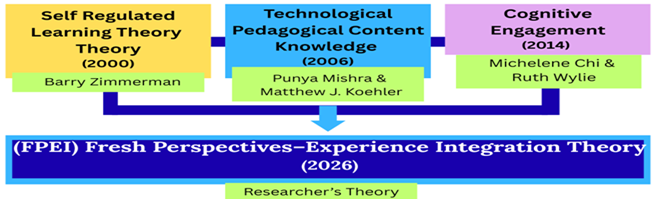
The TPACK Framework (Technological Pedagogical Content Knowledge) relates to this study because it emphasizes the importance of teachers mastering subject matter, teaching methods, classroom management, assessment, and using technology in their teaching. Teachers with strong TPACK skills can offer meaningful, student-centered instruction that boosts students' cognitive, behavioral, and emotional performance. This framework also supports the PPST domains used to evaluate teacher competence, focusing on content knowledge, pedagogy, learner diversity, learning environments, and assessment methods. Additionally, the ICAP Theory of Cognitive Engagement underscores how teachers’ instructional skills impact students’ engagement and overall performance. This theory connects to the study since effective teachers create classroom activities that promote participation, collaboration, critical thinking, and interaction. When teachers implement successful strategies, students become more cognitively engaged, leading to better academic results, improved skill development, and positive attitudes toward learning. Building on these theories, the researcher introduces the Fresh Perspectives Experience Integration Theory. This theory explains the link between teacher competence and student performance by viewing teaching skills as the main factor that drives successful learning, facilitated through an integrated instructional process. At the first level, teacher competence is split into three connected areas based on established theories.
The Self-Regulated Learning theory (Zimmerman) emphasizes teachers' roles in developing motivated, independent, and academically engaged learners. Competent teachers guide students using effective teaching strategies, manage the classroom well, assess appropriately, and provide meaningful learning activities that promote self-regulation.
The second area, Technological Pedagogical Content Knowledge (Mishra & Koehler), looks at how teachers' skills impact student performance via effective teaching practices and instructional delivery. This framework highlights that skilled teachers can blend subject knowledge, teaching strategies, and technology to create valuable, student-centered learning experiences.
The third area, Cognitive Engagement (Chi & Wylie), examines how teaching competence affects student engagement and overall performance. Competent teachers use effective teaching methods, foster classroom interactions, create collaborative activities, implement questioning techniques, and adopt learner-centered approaches to motivate students to actively participate in the learning process. These three competencies come together in the Fresh Perspectives Experience Integration Process, which forms the heart of the framework.
This process shows how teachers merge innovative teaching ideas with hands-on learning experiences. At this stage, teaching becomes transformative; teachers do not just present lessons but craft engaging, reflective, and impactful learning experiences. This integration results in: (1) students actively engaging in crafting their own knowledge; (2) learning becoming experience-based instead of just theoretical; and (3) instruction being adjusted to enhance understanding and participation.
Consequently, this integrated approach fosters improved student performance, the ultimate goal of the framework. Performance goes beyond academic success to include vital skills like critical thinking, problem-solving, and active participation in the learning process.
Conceptual Framework
The conceptual paradigms presented in Figure 2 which serves as the research guide for the study. The researcher uses the system approach which shows the interplay of three important elements: input, process, and output.
Input. It includes the profile of newly hired teachers in Holy Child Educational Center Incorporated in terms of age; sex; civil status. The professional profile in terms of educational attainment, eligibility, length of service, relevant training attended. The instructional competence of teachers: performance of the learners: challenges of the teachers.
Process. The procedures undertaken to analyze the relationship among the variables: by Data Gathering using questionnaires, interviews, and institutional documents; Profiling using frequency and percentage distribution; Assessment of Instructional Competence using weighted mean; Evaluation of Academic
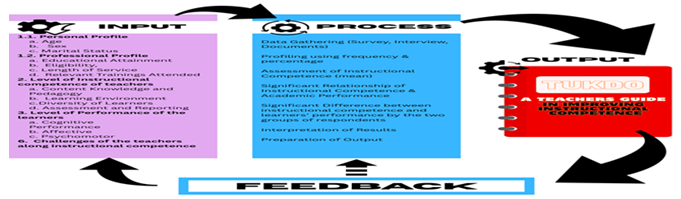
Performance through document analysis of grades; Determination of Significant Relationship using correlation analysis; Identification of Challenges encountered by teachers; Interpretation and Synthesis of Data; Formulation of an Intervention Program based on results.
Output. the research findings and the proposed intervention would be the Proposed Intervention Material, such as Professional Development Training, Coaching and Mentoring Program, Classroom Observation & Feedback System, Instructional Enhancement Workshops and Support mechanisms for the teachers.
Feedback. The feedback loop provides a mechanism for the continuing development of the study to further use so as to achieve the identified goals. It is vital to keep the evidence based program on track. If the feedback loop indicates needed changes, then the system needs to be adjusted to improve effectiveness and efficiency.
Statement of the Problem
This study aims to determine the Teachers’ Instructional Competence and Learners Performance: Nexus and Challenges of Holy Child Educational Center Incorporated, Iriga City and Buhi Campuses, School year 2025-2026.
Specifically, this seek answers to the following questions:
1. What is the profile of the teachers in Holy Child Educational Center Incorporated in terms of:
1.1 Personal Profile
1.1.1 Age
1.1.2 Sex
1.1.3 Civil Status
1.2 Professional Profile
1.2.1. Educational Attainment
1.2.2 Eligibility
1.2.3. Length of Service
1.2.4 Relevant Trainings Attended
2. What is the perceived level of instructional competence of teachers as perceived by the school heads and themselves along:
-
Content knowledge and Pedagogy
-
Learning Environment
-
Diversity of learners
-
Assessment and Reporting
3. What is the level of performance of the learners as assessed by the teachers along:
-
Cognitive
-
Affective
-
Psychomotor
-
Is there a significant relationship between the profile and perceived
instructional competence of teachers and level of learners performance?
-
Is there a significant difference between instructional competence and
learners performance as perceived by the two groups of respondents?
6. What are the challenges of the teachers along instructional competence?
7. What intervention can be proposed based from the findings of the study?
Assumptions of the Study
The study is premised on the following assumptions:
-
That the teachers in Holy Child Educational Center Incorporated varied personal and professional profile which include their age, sex, marital status, educational attainment, eligibility, length of service, and relevant trainings attended.
-
That the perceived level of instructional competence of teachers as perceived by the school heads and themselves along content knowledge and pedagogy, learning environment, diversity of learners, assessment and reporting.
-
That the level of performance of the learners as assessed by the teachers along cognitive, affective and psychomotor.
-
That the teachers identify the challenges along instructional competence.
-
The findings of the study will provide sufficient and valid basis for developing an intervention program that can enhance the instructional competence of teachers and improve learners’ performance.
Hypotheses
That the significant relationship between the profile and perceived
instructional competence of teachers and level of learners performance.
That the significant difference between instructional competence and learners performance as perceived by the two groups of respondents
Significance of the Study
This study is significant as it provides insights into the role of teachers in shaping the quality of instruction and student learning outcomes. The findings will benefit the following:
Teachers. the study will highlight their strengths and areas for improvement in teaching effectiveness, encouraging self-reflection and growth. Experienced teachers may also use the findings to support peer mentoring and collaboration.
Learners. Since students are the primary beneficiaries of effective teaching, this study will contribute to improving their academic performance, engagement, and overall learning experiences. This positive results will enhance student learning outcomes and provides a more harmonious relationship with the teacher.
School Administrators. The results will guide school leaders in making informed hiring decisions, providing appropriate mentoring programs, and strengthening professional development initiatives for newly graduate teachers.
Teacher Trainers and Mentors. The outcomes of this study would greatly benefit the colleagues who act as mentors or trainers on how to assist new teachers better. By knowing their common problems and classroom management tendencies, mentors would be able to offer more specific assistance during the induction period.
Parents, Community and other stakeholders. This study may be of great value through informing the parents as it may help develop in them a sense of awareness on the importance of the role they play as partners of teachers for the total development of their child. To the community people, this study can provide insights on how could provide help to the school head and teachers for the better learning of the learners.
Policy Makers and DepEd Officials. The study may provide evidence-based insights useful in developing policies regarding teacher recruitment, training, and retention in private schools.
Researcher. This study would become a guide post for the researcher to fully develop and attain the attributes of the teachers, who feel valued, respected and truly experience the sense of meaningfulness at work and its relationship to student outcomes, particularly in private school contexts.
Scope and Delimitations
The study focuses the Nexus of Teachers’ Competence and Learners Performance in Private Schools in Camarines Sur, A/Y 2025-2026. It also tackles on the personal and professional profile of the respondents in Holy Child Educational Center Incorporated Campuses in terms of educational attainment; area of specialization; professional development and training attended; length of service/teaching experience; also the Nexus of Teachers’ Competence and Learners Performance
The respondents of this study is comprised of two (2) groups. Nine (9) teachers in Iriga and six (6) in buhi campus in total of fifteen (15) teachers. The group two will be the school heads and the subject coordinators from Preschool Department to Gradeschool level of Iriga City and buhi Camarines Sur campuses of Holy Child Educational Center Incorporated Campuses.
Definition of Terms
Given the possibility of changing definitions through usage, certain key terms should be provisionally defined for this study.
Academic Performance. Refers to the measurable learning outcomes of students, typically reflected through grades, assessment results, or other performance indicators provided by Holy Child Educational Center Incorporated
campuses. In this study, it serves as the indicator of learners’ level of achievement.
Affective Performance. The learners’ attitudes, values, interests, motivation, and emotional responses toward learning and classroom activities. It reflects how learners develop positive behavior, self-confidence, cooperation, discipline, and appreciation for learning as part of their overall performance.
Age. The chronological number of years of the teacher from birth up to the time of the conduct of the study. It is considered as part of the personal profile of the respondents and may influence teaching experience, professional maturity, and instructional practices.
Assessment and Reporting. The teacher’s ability to design, administer, interpret, and communicate assessment results to monitor learners’ progress and improve academic performance. It includes the use of appropriate assessment tools, timely feedback, accurate recording of learners’ achievement, and clear communication of learning outcomes to learners and parents.
Challenges of Teachers. Refer to the difficulties or obstacles encountered by teachers’ in the institution, including instructional, behavioral, administrative, workload-related, and environmental challenges that affect their teaching effectiveness.
Classroom Management. Creating clear expectations, fostering strong teacher-student relationships, establishing consistent routines and procedures, and promoting a positive learning environment through consistent discipline, positive reinforcement, and engaging instruction.
Cognitive Engagement. mental processes involved in learning,
understanding, thinking, remembering, analyzing, and problem-solving. In education, cognitive performance focuses on how learners acquire knowledge and use their thinking skills in academic tasks.
Connection. association or relationship between teachers’ competence and learners’ performance, wherein the knowledge, skills, teaching strategies, and professional practices of teachers influence the academic, behavioral, and affective outcomes of learners.
Content knowledge and pedagogy. The teacher’s mastery of subject matter and the ability to apply appropriate teaching strategies, methods, and instructional approaches to facilitate effective learning among students. It includes the teacher’s capability to explain concepts clearly, organize lessons effectively, use suitable learning materials, assess learners’ understanding, and adapt instruction according to the needs and abilities of learners.
Diversity of Learners. The differences among learners in terms of abilities, learning styles, interests, cultural background, socio-economic status, experiences, and individual needs that teachers must consider in the teaching-learning process. It highlights the teacher’s ability to use varied instructional strategies and approaches to address and support the unique characteristics of every learner.
Educational Attainment. The highest level of formal education completed
by the teacher, such as bachelor’s degree, with or without units in graduate studies.
Eligibility. Indicates the professional credential or licensure status of the newly hired teachers, such as LET passer or other recognized teaching-related civil service eligibility.
Enhancement. pertains to the continuous improvement of teachers’ knowledge, skills, teaching strategies, and professional practices to promote better learning outcomes among learners.
Guide. Basis that helps teachers improve their teaching practices and support learners in achieving better academic and behavioral outcomes.
Instructional Competence. Encompasses the skills and knowledge teachers need to effectively facilitate student learning, including mastery of subject matter, strategic lesson planning, diverse teaching methods, effective communication, strong classroom management, and consistent, constructive student assessment.
Learning Environment. The classroom atmosphere and conditions created by teachers that promote learners’ engagement, participation, safety, discipline, and effective learning. It includes the teacher’s ability to establish a positive, inclusive, organized, and supportive environment where learners feel motivated, respected, and encouraged to participate in classroom activities.
Learners. The students enrolled in Holy Child Educational Center Incorporated campuses whose performance is evaluated in relation to teachers’ instructional competence.
Learners’ Performance. The level of achievement demonstrated by learners as a result of the teaching–learning process, usually measured through academic outcomes such as test scores, grades, classroom participation, skill mastery, and overall learning progress.
Length of Service. The number of years a teacher has rendered teaching service in an educational institution or in the teaching profession. It indicates the teacher’s teaching experience, which may influence professional competence, instructional practices, and effectiveness in managing learners and classroom activities.
Marital Status. Indicates the civil status of the teachers, such as single, married, separated, widowed
Newly Hired Teachers. Teachers who have recently been employed by Holy Child Educational Center Incorporated campuses, typically within a specified timeframe (e.g., within 1–3 years), and who are still in the early stages of their teaching career in the institution.
Nexus. The connection, linkage, or relationship examined in the study between the instructional competence of newly hired teachers and the academic performance of learners.
Personal Professional Standard of teachers (PPST). A guide for improving teachers’ knowledge, teaching skills, classroom management, assessment practices, and professional growth.
Psychomotor. is influenced by the teacher’s ability to provide hands-on activities, demonstrations, interactive learning experiences, and skill-based instruction.
Relevant Trainings Attended. Refer to seminars, workshops, webinars, in-service trainings, or professional development activities that newly hired teachers have participated in and that contribute to their teaching competence.
Self Regulated Learning. The capacity of learners to independently control and manage their learning behaviors, motivation, and strategies in achieving academic goals.
Sex. The biological classification of the teacher as male or female as identified by the respondents in the study. It is included as part of the personal profile variables of the teachers.
Skills Performance. The learners’ ability to apply knowledge, demonstrate practical skills, and perform tasks effectively in classroom activities and learning situations. It includes communication skills, problem-solving skills, critical thinking, collaboration, and the proper execution of academic and learning tasks.
Student Outcome. Generally strong, with higher scores on standardized tests, more completion of advanced courses, and a greater likelihood of obtaining a bachelor's degree compared to public school students
Teachers’ Competence. Teachers’ competence is the extent to which teachers meet the professional standards set in the Philippine Professional Standards for Teachers (PPST), including content knowledge, pedagogy, learner-centered practices, and professional engagement.
Teaching Background. The teacher’s prior exposure to teaching before
their employment at Holy Child Educational Center Incorporated Iriga City & Buhi Camarines Sur Campus, including internships, volunteer work or previous school assignments.
Teaching Effectiveness. A teacher's ability to deliver content effectively, manage the classroom, engage and motivate students, and achieve positive student learning outcomes.
Teaching Strategies. Student-centered approaches like personalized learning, project-based learning, and gamification, combined with traditional methods like lectures and guided practice. Teachers also focus on building a supportive community, using differentiation to meet diverse needs, providing regular feedback, and integrating technology and real-world contexts to enhance engagement and critical thinking skills.
Technological Pedagogical Content . The knowledge and skills teachers need to effectively integrate technology into teaching and learning. and a framework that explains how teachers integrate technology, pedagogy, and subject content effectively to enhance teaching and improve learners’ performance.
Tukdo. A bicol word means to teach a broader concept of learning and process but a continues cycle of learning, reflection and improvement where educators actively engage in developing their own competencies while supporting growth of others.
Review of Related Literature
This review of literature offers valuable insights and essential background information on the nature of the problem, serving as a foundation for guiding the conduct and discussion of the study’s results.
This section reviews international meta-analyses and empirical studies, then narrows to recent Philippine studies on newly hired/graduates and classroom practices to situate the present study at Holy Child Educational Center (Iriga City & Buhi Camarines Sur Campuses).
Teachers’ Competence
Pamon and Oco (2024) found that teachers’ knowledge and understanding of the PPST domains significantly contribute to effective teaching practices and positively influence learners’ academic performance.
Darling-Hammond (2000) emphasized that teacher competence is a crucial determinant of student achievement and educational quality. The study found that teacher preparation and certification significantly influence students’ academic outcomes. Teachers who possess strong pedagogical preparation are more capable of delivering effective instruction and responding to learners’ needs. This suggests that competent teachers contribute meaningfully to improving learners’ performance.
Collinson (1999) described teacher competence as encompassing subject matter knowledge, curricular knowledge, and pedagogical knowledge. The study emphasized that competent teachers possess a deep understanding of content and appropriate teaching strategies. Such competence enables teachers to facilitate effective learning experiences among students. Consequently, professional knowledge serves as an important foundation for learner success.
Brophy (1986) highlighted the importance of effective teaching behaviors in improving student achievement. The study suggested that competent teachers utilize appropriate instructional methods, classroom management, and feedback strategies. Effective teaching practices contribute to increased learner engagement and academic performance. Therefore, teacher competence remains central to achieving positive educational outcomes.
Muijs and Reynolds (2010) found that teacher behaviors significantly explain students’ academic progress. Their study emphasized the role of instructional effectiveness in enhancing numeracy and academic achievement. Competent teachers create task-oriented learning environments that support student growth. As a result, teaching quality directly influences learner performance.
Kemp and Hall (1992) found that teacher competence is associated with effective lesson presentation, questioning techniques, discipline, and instructional strategies. The study emphasized that these classroom practices contribute to students’ academic achievement. Teachers who effectively manage instruction can facilitate better learner understanding. Thus, competence in classroom teaching enhances student outcomes.
Barber and Mourshed (2007) asserted that the quality of an educational system cannot exceed the quality of its teachers. Their findings emphasized that teacher effectiveness is the strongest school-related factor influencing student achievement. Competent teachers possess the ability to motivate, guide, and improve student learning. Hence, strengthening teacher competence remains essential in educational improvement.
Instructional Effectiveness
Luciano and Buquia (2023) noted that teachers who demonstrate competence in managing performance tasks create more engaging learning environments, resulting in improved learner participation and achievement. Effective instructional practices promote critical thinking, collaboration, communication, and problem-solving skills among students.
Maloloy-on and Arnado (2023) found that teachers’ proficiency in PPST domains significantly predicts teaching performance, particularly in Content Knowledge and Pedagogy, Diversity of Learners, and Professional Growth and Development.
Components of Teacher Competence
Lynch et al. (2020) emphasized instructional competence as an important indicator of teachers’ readiness for classroom teaching. The study highlighted that teachers should be equipped with knowledge, strategies, and confidence to deliver instruction effectively. Instructional readiness contributes to successful classroom engagement and learner understanding. Therefore, competence in instructional delivery is vital for quality education.
Li et al. (2020) examined how leadership affects teachers’ instructional competence and classroom practices. The study revealed that school administrators significantly shape teachers’ educational approaches and effectiveness. Supportive leadership enhances teachers’ professional growth and teaching performance. Consequently, leadership plays an important role in strengthening teacher competence.
Montebon (2021) reported that pre-service teachers generally demonstrate moderate to high instructional competence. The findings highlighted classroom discussion and instructional strategies as essential teaching skills. Competence in these areas improves teachers’ preparedness for real classroom situations. Thus, instructional proficiency contributes to effective teaching and learning.
Punongbayan and Bauyon (2021) found differences between teachers’ self-perceptions and students’ evaluations of instructional competence. Teachers perceived themselves as highly competent, while students viewed their competence as only sufficient. This discrepancy suggests the need for continuous improvement in teaching practices. Hence, feedback from learners is valuable in enhancing instructional effectiveness.
Clinchy (2022) pointed out that poor lesson planning negatively affects classroom instruction and student understanding. The study also emphasized the importance of contextualization in helping students relate lessons to real-life situations. Teachers who fail to connect lessons meaningfully may hinder learner comprehension. Therefore, effective planning and contextualization are essential indicators of teacher competence.
Jonathan Wong (2021) investigated differences in teaching competence between education and non-education graduates. The findings revealed that education graduates demonstrated stronger teaching competence in lesson planning, classroom management, and assessment. Teachers with professional training exhibited more positive attitudes toward teaching. Consequently, professional preparation contributes to stronger instructional competence.
Experience and Qualifications
Wayne and Youngs (2003) found a positive relationship between teacher experience and student achievement. Their study revealed that experienced teachers are more effective in classroom instruction and student management. As teachers gain years of service, they develop improved pedagogical practices and decision-making skills. Therefore, teaching experience contributes significantly to learners’ academic performance.
Rice (2003) explained that the relationship between teacher experience and student achievement is particularly evident at the secondary level. The study highlighted that experienced teachers possess stronger instructional competence and classroom strategies. However, the greatest improvements in effectiveness often occur during the early years of teaching. This suggests that experience enhances teacher competence over time.
Clotfelter et al. (2006) found that teacher experience positively influences student achievement in reading and mathematics. Their research indicated that students taught by experienced teachers demonstrate better academic performance. Experienced educators are more capable of addressing diverse classroom challenges effectively. Hence, teaching experience is an important factor affecting learner success.
Papay and Kraft (2015) confirmed that teacher effectiveness improves as years of teaching increase. Their findings suggested that novice teachers experience rapid professional growth during the first years of service. Continuous teaching practice allows educators to refine their classroom management and instructional approaches. Consequently, experience strengthens competence and positively affects learner outcomes.
Rivkin et al. (2005) described teacher quality as an important contributor to variations in student achievement. The study emphasized that teacher effectiveness explains differences in learners’ academic progress. Competent teachers can significantly influence students’ performance despite other external factors. Thus, teacher quality remains an essential determinant of educational success.
Goldhaber and Brewer (1997) found that students taught by teachers with advanced degrees in mathematics demonstrated better academic achievement. The study emphasized the value of content expertise in improving instruction. Teachers with higher qualifications possess deeper knowledge that can support student understanding. Therefore, academic qualifications contribute to effective teaching practices.
Chang et al. (2020) examined the impact of teachers’ academic degrees on student achievement. The findings revealed that learners benefit when teachers possess advanced degrees related to their teaching field. Teachers with specialized preparation are more capable of addressing students’ academic needs. Hence, content-related qualifications improve teaching effectiveness.
Monk (1994) found that teachers who completed advanced pedagogical and content-related courses improved student learning outcomes. The study emphasized that both subject knowledge and teaching methods are important in classroom effectiveness. Teachers with strong preparation are better able to explain concepts and facilitate learning. Thus, professional preparation enhances instructional competence.
The Office for Standards in Education (Ofsted, 2010)18 have reported that commonly worked with lower-attaining pupils or those most likely to disrupt the lesson. These were also the pupils likely to be withdrawn from classes for specific intervention programme. As a result, lower-attaining pupils spent considerably less time than other pupils being taught by a qualified teacher
In a similar vein, Fook (2002) takes on an approach to reflexivity as being able to locate oneself within a structural picture, appreciating how one's own self relates to the organisation. Reflexivity, therefore, has come to mean an act of self-reference where self-examination entails the capacity of an individual to recognise forces of socialisation and the capacity to shift her or his place in the organisational structure.
Professional Development
Desimone et al. (2002, 2013) suggested that professional development improves the quality of classroom instruction. Their study emphasized that continuous training equips teachers with updated teaching strategies and professional knowledge. Teachers who participate in professional development become more competent in instructional delivery. Therefore, professional learning contributes to improved learner performance.
Blank and De Las Alas (2009) found significant positive relationships between professional development and student achievement. Their meta-analysis revealed that teacher training enhances instructional competence and classroom effectiveness. Teachers who engage in content-focused professional learning are more effective in teaching. Hence, professional development strengthens educational outcomes.
Young (2007) highlighted the importance of supportive school leadership in teacher development. The study found that principals who understand teacher needs provide stronger guidance and support. Administrative encouragement helps teachers improve their instructional competence and job satisfaction. Consequently, leadership contributes to teacher effectiveness and learner achievement.
Kardos et al. (2001) emphasized the role of collaborative school cultures in teacher growth. Their study revealed that schools with balanced numbers of novice and experienced teachers create stronger professional support systems. Collaboration among teachers encourages knowledge sharing and professional improvement. Therefore, school culture positively influences teacher competence.
Ingersoll and Smith (2003) reported that beginning teachers are more likely to remain in the profession when they receive mentoring and support. Their study highlighted the importance of induction programs in improving teacher competence and confidence. Mentorship provides novice teachers with guidance in addressing instructional challenges. Thus, support systems enhance teaching effectiveness.
Learners’ Performance
Okumbe (2005) emphasized that assessment plays an important role in improving student learning. The study highlighted that testing provides useful information for measuring students’ academic progress and learning needs. Effective assessment supports informed instructional decisions that improve learner outcomes. Therefore, learners’ performance can be strengthened through valid educational assessment.
Aiken (1988) explained that assessment becomes meaningful only when it provides valid and reliable information about learners. The study emphasized the importance of measuring intelligence, achievement, learning styles, and emotional development accurately. Reliable assessment enables teachers to identify students’ strengths and areas for improvement. Hence, assessment quality contributes to better learner performance.
Cross (1998) emphasized that students construct knowledge through active learning experiences. The study suggested that learning becomes meaningful when students build upon prior knowledge and engage in collaboration. Teachers who encourage active participation help students achieve deeper understanding. Therefore, learner performance improves when students actively construct knowledge.
Ewell (1997) found that students learn best when engaged in meaningful and problem-based learning situations. The study emphasized that experience-based learning enhances understanding and retention of knowledge. Teachers who provide authentic learning opportunities improve student engagement and achievement. Consequently, effective learning experiences contribute to stronger learner performance.
Coffield et al. (2004) explained that different learning approaches and strategies influence students’ academic achievement. The study emphasized that students learn in varied ways depending on their preferences and environments. Teachers who recognize these differences can better adapt instruction to learner needs. Hence, understanding learning approaches supports improved educational performance.
Teacher Competence and Learners’ Performance Relationship
The Coleman Report (1966) examined the influence of teachers on student learning and academic achievement. The findings highlighted that teacher contributions significantly affect students’ educational outcomes. Effective teaching practices improve learner engagement and academic progress.
Teddlie and Reynolds (2000) found a strong relationship between teacher quality and student outcomes. Their research showed that highly competent teachers positively influence learners’ academic performance. Effective instruction enables students to develop stronger academic skills and understanding. Thus, teacher quality is directly associated with learner achievement.
Chetty et al. (2011) found that teacher quality has a lasting influence on students’ academic achievement and future success. Their study revealed that effective teachers contribute to higher academic performance and better career outcomes. Competent teachers positively shape learners’ long-term development. Hence, teacher effectiveness extends beyond classroom achievement.
DeAngelis and Presley (2011) emphasized that highly qualified teachers are essential for school improvement. Their findings showed that teacher quality significantly contributes to educational effectiveness and student achievement. Schools with competent teachers tend to produce stronger academic results. Therefore, teacher competence remains necessary for improving learner performance.Hanushek and Rivkin (2010) concluded that teachers play a substantial role in explaining differences in student achievement. The study highlighted that teacher quality contributes considerably to learner performance within schools. Effective teachers create meaningful learning experiences that support academic growth. Thus, teacher competence remains a strong predictor of educational success.
López-Martín et al. (2023) indicated that students who have access to highly qualified teachers achieve better academic outcomes. Their findings emphasized the importance of instructional competence in improving educational quality. Teachers with strong competence effectively address learners’ academic needs. Therefore, teacher competence positively affects learner achievement.
Sanfo and Malgoubri (2023) found that access to competent and qualified teachers increases students’ academic success. Their study emphasized that teaching quality significantly shapes learners’ performance across educational settings. Teachers who possess professional competence are better able to deliver meaningful instruction. Consequently, teacher competence serves as a major determinant of student achievement.
Philippine Context
Baldomar et al. (2022) found that Filipino beginning teachers experience challenges in lesson planning and classroom instruction. The study emphasized that many teachers struggle to bridge theory and actual classroom practice. These instructional difficulties may affect teacher competence and classroom effectiveness. Therefore, adequate preparation and support are necessary to improve teaching quality.
Andrada and Cunanan (2022) reported that newly hired teachers in the Philippines experience difficulties in classroom management and student motivation. Their findings highlighted challenges in managing disruptive behaviors and maintaining instructional flow. Such difficulties may negatively affect teaching effectiveness and learner outcomes. Hence, strengthening teacher competence is necessary for improving classroom instruction.
The Department of Education (2021) implemented programs aimed at improving teacher quality and educational outcomes in the Philippines. These initiatives focus on strengthening instructional competence, professional development, and learner achievement. Despite these efforts, challenges in instructional delivery and educational disparities remain evident.
Synthesis of the State-of-the-Art
The reviewed literature highlights that teacher competence is a fundamental factor in promoting effective teaching and improving learners’ academic performance. Studies emphasized that teacher competence encompasses pedagogical knowledge, subject mastery, instructional delivery, classroom management, lesson planning, and assessment strategies, all of which contribute to meaningful learning experiences among students (Collinson, 1999; Brophy, 1986b; Muijs & Reynolds, 2010; Kemp & Hall, 1992; Darling-Hammond, 2000; Barber & Mourshed, 2007; Lynch et al., 2020; Li et al., 2020; Montebon, 2021; Punongbayan & Bauyon, 2021; Clinchy, 2022; Wong, 2021). Competent teachers are more capable of facilitating student engagement, addressing diverse learner needs, and creating productive classroom environments that foster academic achievement (Brophy, 1986b; Muijs & Reynolds, 2010; Kemp & Hall, 1992; Clinchy, 2022). Furthermore, instructional competence is strengthened through professional preparation, teaching experience, and continuous exposure to classroom practice (Wayne & Youngs, 2003; Rice, 2003; Clotfelter et al., 2006; Papay & Kraft, 2015; Rivkin et al., 2005; Goldhaber & Brewer, 1997; Chang et al., 2020; Monk, 1994).
The literature further suggests that teachers’ qualifications and professional experiences significantly influence instructional effectiveness. Studies revealed that teachers with advanced degrees, content specialization, and extensive classroom experience tend to demonstrate higher competence in delivering lessons and managing learning environments (Goldhaber & Brewer, 1997; Monk, 1994; Rice, 2003; Wayne & Youngs, 2003; Clotfelter et al., 2006; Papay & Kraft, 2015; Chang et al., 2020). However, findings also indicate that teacher effectiveness is not solely dependent on educational attainment but is reinforced by meaningful professional development, mentoring, supportive leadership, and collaborative school cultures (Desimone et al., 2002, 2013; Blank & De Las Alas, 2009; Young, 2007; Kardos et al., 2001; Ingersoll & Smith, 2003). Continuous professional learning enables teachers to improve pedagogical practices, adapt to emerging educational demands, and enhance their classroom performance (Desimone et al., 2002, 2013; Blank & De Las Alas, 2009; Young, 2007).
In relation to learners’ performance, studies consistently show that valid assessment, active learning experiences, differentiated instruction, and supportive teacher-student interactions positively contribute to students’ academic achievement (Aiken, 1988; Okumbe, 2005; Cross, 1998; Ewell, 1997; Coffield et al., 2004). Learners perform better when teachers employ effective instructional methods and create meaningful opportunities for engagement and knowledge construction (Cross, 1998; Ewell, 1997; Coffield et al., 2004).
The reviewed literature strongly supports the existence of a relationship between teacher competence and learner performance, emphasizing that teacher quality significantly influences students’ academic success and long-term educational outcomes (Coleman Report, 1966; Teddlie & Reynolds, 2000; Chetty et al., 2011; DeAngelis & Presley, 2011; Hanushek & Rivkin, 2010; López-Martín et al., 2023; Sanfo & Malgoubri, 2023). Highly competent teachers were found to improve not only students’ academic performance but also their motivation and overall learning experiences (Chetty et al., 2011; Hanushek & Rivkin, 2010; Teddlie & Reynolds, 2000).
Despite extensive international and local literature emphasizing the importance of teacher competence in improving student achievement, limited studies have specifically examined the nexus between teachers’ competence and learners’ performance in private schools within the Philippine context, particularly in Camarines Sur. Most existing studies focus on public schools, teacher preparation, or broader educational systems, leaving a contextual gap in understanding how teacher competence influences learners’ outcomes in selected private institutions (Baldomar et al., 2022; Andrada & Cunanan, 2022; Department of Education, 2021). Moreover, variations in instructional practices, school culture, and educational resources among private schools necessitate further localized investigation. Hence, this study seeks to fill this gap by examining the relationship between teachers’ competence and learners’ performance in selected private schools in Camarines Sur, thereby providing evidence-based insights for improving instructional quality and educational outcomes.
Research Gap
Although numerous international and local studies have established that teacher competence significantly influences learners’ academic performance through effective instruction, pedagogical knowledge, professional qualifications, teaching experience, and professional development, limited studies have directly examined the nexus between teachers’ competence and learners’ performance in private school settings within the Philippine context, particularly in Camarines Sur. Existing research predominantly focuses on public schools, teacher preparation, or broad educational systems, with minimal emphasis on how teacher competence specifically affects learner outcomes in selected private educational institutions. Furthermore, differences in school environment, instructional practices, and resource availability among private schools may create varying effects on learners’ performance that remain underexplored. Hence, this study seeks to address this gap by investigating the relationship between teachers’ competence and learners’ performance in selected private schools in Camarines Sur to provide localized and evidence-based insights for improving instructional effectiveness and educational outcomes.
Research Methodology
This chapter presents the procedures undertaken in the conduct of the study. It describes the research design, the respondents, the research instrument, the data collection procedures, and the statistical treatment of the data. Furthermore, it provides the readers with a clear understanding of how the study was carried out.
Research Design
The researcher utilized the descriptive-evaluative method to obtain the data needed for the present investigation. The descriptive approach was employed to gather information about existing conditions and situations. Its primary aim is to describe the nature of a phenomenon as it exists at the time of the study and to examine specific cases. This method provides descriptive information that addresses the research questions posed in the study. Furthermore, the descriptive survey method focuses on describing certain phenomena, making it a “fact-finding” or “information-gathering” approach supported by analytical interpretation.
According to Dulay, Burt and Krashen (2012), descriptive research is useful because it can provide important information regarding the average member of a group. Specially, by gathering data on a large enough group of people, a researcher can describe the average member, or the average performance of a member, of the particular group being studied. Kothari (2012) said that the purpose of descriptive research is description of the state of affair as it exists at present. Fraenkel, Wallen and Hyun (2013) added that descriptive studies describe a given state of affairs as fully and carefully as possible. Therefore, it is in line with the aim of this research, which is tried to describe and to present the data from the respondent’s point of view.
Descriptive analysis identifies patterns in data to answer questions about who, what, where, when and to what extent. This guide describes how to more effectively approach, conduct, and communicate quantitative descriptive analysis. Survey research method using questionnaire will be employed to collect data from participants of the study. Creswell states that- survey design provides quantitative or numeric description of trends, attitudes or option of a population by studying a sample of that population.
In this study, the descriptive-quantitative method was employed to examine the Teachers’ Instructional Competence and Learners Performance: Nexus and Challenges in Private School in Camarines Sur. Specifically, it considered variables such as educational attainment, area of specialization, professional development and training attended, and length of service or teaching experience. Furthermore, the study aimed to determine the impact and relationship between the teaching effectiveness of newly graduated teachers and student outcomes.
Respondents
The respondents of this study is comprised of two (2) groups. The first group consists of fifteen (15) teachers, with nine (9) from the Holy Child Educational Center Incorporated in Iriga City Campus and six (6) from the Buhi Camarines Sur Campus. The second group includes the school heads and subject coordinators from preschool department to Grade school level of Iriga Campus and Buhi campus in Holy Child Educational Center, Incorporated, during the academic year 2025–2026.
Data Gathering Tools.
The research employed a number of researchers’ tool in gathering the necessary data. Among them where; a.) questionnaire, b) unstructured interviews, c) direct and participatory observations, d) research conducted through the internet, e) basic library technique as well as examination and assessment of pertinent documents.
Questionnaire. The primary tool used in this study was the pre-validated questionnaire checklist. A questionnaire is a tool to collect and record information about a particular issue of interest and it is mostly made up of a list of questions. According to Bulmer (2014), questionnaires is a well- established tool within social science research for acquiring information on particular social characteristics, present and past behavior, standards of behavior or attitudes and their beliefs and reasons for action with respect to the topic under investigation. Questionnaires can be used in different survey situations like postal, electronic, face to face and telephone. Questionnaires are mostly used to collect precise information to classify people and their situations; to gather information that is related to people’s behavior; to look at the basic opinions and attitudes of people related to a particular issue; and to collect information that can be tracked over time to analyze change.
Preparation of the Questionnaire. The questionnaire was the primary data-gathering tool used in the study. It was constructed based on the research problems, conceptual framework, and related literature, ensuring that each section addressed the specific variables under investigation.
Administration and Retrieval of the questionnaire. A formal request to undertake the study was sought from the office of the school principal to allow the researcher to conduct the study among the target respondents. The researcher personally distributed the questionnaires to the target respondents.
Interview. obtain deeper insights into the instructional competence and challenges experienced by teachers at Holy Child Educational Center Incorporated (HCECi) Campuses. The interview method allowed the researcher to gather qualitative data that could not be fully captured by quantitative survey responses.
Observation. to directly assess the instructional competence of newly teachers at Holy Child Educational Center Incorporated (HCECi) campuses. Observation allowed the researcher to gather authentic, real-time information on the teachers' actual teaching behaviors, strategies, and interactions with learners.
Ethical Consideration. the study adhered to established ethical standards throughout the data collection process. Ethical safeguards were strictly observed in obtaining permissions, handling information, and protecting the rights and dignity of all participants
Statistical Treatment of Data
This study employed several statistical tools to process, analyze, and interpret the gathered data. Once the data collection phase was completed, the resulting information was collated, organized, tabulated, and subjected to the following statistical treatments:
1. Frequency Count and Percentage Technique. The frequency count
was used to tally the respondents' answers, while the percentage technique determined the proportion of each response relative to the total sample. Nominal data consisting of raw frequency counts were converted into percentages using the following formula:
P = F/N x 100
Where:
P = percentage
F = frequency (number of responses)
N = total number of respondents
2. Weighted Mean. The weighted mean was utilized to quantify and interpret the ordinal data gathered from the rating scales or perceptions of the respondents. The formula is:
WM = Ʃ (W x F)
N
Where:
WM = weighted mean
Ʃ = sum of
W = weight assigned to each response category
F = frequency of responses for each category
N = total number of respondent
Five-Point Likert Rating Scale. This was employed in quantifying and interpreting the weighted mean for each indicator, consisting of the following interpretations.
| Scale | Interval | Verbal Interpretations |
| 5 | 4.20-5.00 | Outstanding |
| 4 | 3.40-4.19 | Very Satisfactory |
| 3 | 2.60-3.39 | Satisfactory |
| 2 | 1.80-2.59 | Needs Improvement |
| 1 | 1.00-1.79 | Poor |
Chi-Square Test. To test significant relationship between the profile of teachers and their perception, the researcher used Chi-Square Test. The formula is.
Where:
x2 = chi-square
∑ = Summation
Oi = observed frequency
Ei = expected frequency
The interpretations of the results of the Chi-Square Test was based on the comparison of the computed value against their respective critical value with vital consideration on the degrees of freedom and the level of significance. Hence, if the computed value is lesser than the tabular value, the research hypothesis is accepted, however, if the computed value is greater than the tabular value, the null hypothesis is rejected. Significance level was set at 0.05.
Exploring Teachers’ Instructional Competence: Its Perceived Relationship To Learners’ Perfroamnce And Professional Challenges
This chapter presents, analyzes, and interprets the data gathered to address the specific problems of the study. It focuses on Teachers’ Intructional Competence: Its Perceived relationship to Learners’ Performance and Professional Challenges in Holy Child Educational Center Incorportaed in Iriga City and Buhi Camarines Sur during the Academic Year 2025–2026. The data are presented in tables, and each set of data is systematically analyzed and interpreted.
Personal and Professional Profile of the Teachers in Holy Child Educational Center, Incorporated Campuses
The personal and professional attributes of teachers, school head, and subject coordinators of Holy Child Educational Center, Incorporated Iriga City and Buhi Camarines Sur Campuses for the Academic Year 2025–2026 were given substantial attention in this study. These attributes include age, sex, marital status, educational attainment, eligibility, length of service, and relevant trainings attended. In this section, each of these variables is presented and described accordingly.
Personal Profile
The succeeding presentation focuses on the personal profile of the teacher respondents along age, sex and civil status.
Age. Table 1 shows that more teachers, consisting of 7 or 35 percent , are
within the age 20-24 years old. This was followed by 6 or 30 percent who belonged
to 35 and above; 4 or 20 percent are within 25-29 years old; 3 or 15 percent belonged to 30-34 years old. This simply means that teachers involved in this study are still in their prime age, vibrant with high energy to competently handled roles and accomplished varied duties and obligations.
| Age | Frequency | Percentage | Rank |
| 20–24 | 7 | 35 | 1 |
| 25–29 | 4 | 20 | 3 |
| 30–34 | 3 | 15 | 4 |
| 35 and above | 6 | 30 | 2 |
| TOTAL | 20 | 100 |
The data indicate that the teaching workforce across the campuses of Holy Child Educational Center, Incorporated is relatively young, with a significant proportion of educators in the early stages of their professional careers. The largest cohort, aged 20–24 (35%), suggests a strong presence of novice teachers who bring fresh perspectives, adaptability, and enthusiasm to the institution.
These findings are supported by existing literature, which highlights that beginning teachers often enter the profession with innovative ideas and a willingness to learn, although they may also face initial challenges in areas such as classroom management and instructional planning (Rodriguez et al., 2020; Baldomar et al., 2022). Concurrently, the presence of teachers aged 35 and above (30%) reflects a valuable pool of experienced educators who contribute stability, expertise, and mentorship. This aligns with studies emphasizing that teacher experience positively influences instructional effectiveness, particularly as educators transition beyond their initial years of practice (Rice, 2003; Papay & Kraft, 2015).
Meanwhile, the smaller proportions of teachers aged 25–29 (20%) and 30–34 (15%) indicate a moderate representation of mid-career professionals who are actively refining their pedagogical skills and professional identities. This demographic distribution suggests a developing continuum of professional growth within the institution, where novice teachers gradually gain experience and transition into highly competent practitioners. The literature underscores that the first few years of teaching are critical for professional development, as educators build their instructional competence and classroom management skills through direct experience and institutional support systems (Ingersoll & Smith, 2003; Fry, 2007). Consequently, the balanced presence of both early-career and experienced teachers provides an optimal environment for peer mentorship and collaborative learning, both of which are essential for sustaining teacher effectiveness and retention.
Sex. Presented in Table 2, the majority of the teachers are female, comprising 17 or 85 percent of the respondents, while only 3 or 15 percent are male. The data reveal that the teaching workforce in Holy Child Educational Center, Incorporated Campuses is predominantly female, with 85 percent of the respondents being women and only 15 percent being male.
This indicates a clear gender imbalance in favor of female educators, a pattern that is widely observed in the teaching profession, particularly in basic education. Literature suggests that teaching has traditionally attracted more women due to its perceived alignment with nurturing and care giving roles, which are often socially associated with the profession. Moreover, studies emphasize that teacher characteristics regardless of gender play a crucial role in shaping student learning, as teacher quality significantly influences academic outcomes (Teddlie & Reynolds, 2000; Hanushek & Rivkin, 2010).
| Sex | Frequency | Percentage | Rank |
| Male | 3 | 15 | 2 |
| Female | 17 | 85 | 1 |
| TOTAL | 20 | 100 |
The predominance of female teachers may contribute positively to the learning environment, as research highlights the importance of supportive teacher-student relationships in enhancing student engagement and achievement (Hamre & Pianta, 2001; Hughes et al., 2012). Female educators are often associated with strong interpersonal skills, empathy, and patience, which are essential in fostering a positive classroom climate. These qualities align with the principles of effective teaching behavior identified in the literature, such as creating a task-oriented and emotionally supportive environment conducive to learning (Brophy, 1986; Borich, 1996).
However, the relatively low representation of male teachers suggests a need to promote gender diversity within the institution. A more balanced workforce can provide varied teaching styles, perspectives, and role models for students, which is important for holistic development.
Civil Status. Table 3 exhibited the distribution of the teachers as to their civil status. It can be seen from the tabular that there are 13 or 65 percent represent the single population; while 6 or 30 percent are married, and 1 or 5 percent widowed. Mostly of the respondents are still single while few are committed.
| Civil Status | Frequency | Percentage | Rank |
| Single | 13 | 65 | 1 |
| Married | 6 | 30 | 2 |
| Widowed | 1 | 5 | 3 |
| TOTAL | 20 | 100 |
The data show that the majority of teachers across the campuses of Holy Child Educational Center, Inc. are single (65%), followed by married teachers (30%) and a small proportion who are widowed (5%). This distribution suggests that a large portion of the teaching workforce are likely in the early stages of their educator careers, with fewer personal and family-related responsibilities. Literature supports this interpretation, noting that early-career teachers often dedicate more time and energy to developing their instructional competence, adapting to classroom demands, and engaging in professional growth opportunities (Ingersoll & Smith, 2003; Fry, 2007). This flexibility may allow single teachers to be more involved in school-related activities, training, and extended instructional preparation.
At the same time, the presence of married and widowed teachers, although smaller in number, adds depth and diversity to the professional environment. Research indicates that teachers with broader life experiences often demonstrate stronger emotional regulation, resilience, and relational skills, which are essential in managing classroom dynamics and fostering positive teacher-student relationships (Hamre & Pianta, 2001). These qualities contribute significantly to student engagement and achievement, reinforcing the idea that teacher effectiveness is not solely based on technical skills but also on personal and social competencies.
Professional profile
This section is a presentation of the professional profile of the respondents along educational attainment, eligibility and length of service.
Educational attainment. Table 4 is the highest educational attainment of the teacher’s respondents. It can be gleaned that there are 20 or 100% were bachelor’s degree holder; those who had already with master’s unit with 9 or 45%. And for the master’s degree, with doctoral units and doctorate degree has not yet fulfilled by the teachers. Obviously, the data manifest that the teachers showed remarkable or desired attitude in their professional upliftment through continuous education. Yet many need further motivation to pursue graduate school studies. Reyes (2020) emphasized that the teaching profession is a continuous pursuit of self-improvement. In line with this, the study revealed that effective professional development experiences, such as pursuing postgraduate studies, have a significant impact on teachers’ performance both inside and outside the classroom, leading to more meaningful teaching outcomes.
| Educational Attainment | Frequency | Percentage | Rank |
| Bachelor’s Degree | 20 | 100 | 1 |
| With Master’s Units | 9 | 45 | 2 |
| Master’s Degree | 0 | 0 | 4 |
| With Doctoral Units | 0 | 0 | 4 |
| Doctorate Degree | 0 | 0 | 4 |
| TOTAL | 20 | 100 |
Similarly, Roxas (2019) concluded that academic preparation is essential in any field of work, as it serves as the foundation of knowledge required in the performance of daily professional tasks. This implies that higher educational attainment equips individuals with the necessary competencies to effectively fulfill their roles.
In addition, Shah (2018), in a study on the correlates of job satisfaction
among teachers, found a significant relationship between educational level and
stress. The findings further revealed that respondents with postgraduate diplomas reported the highest level of job satisfaction and the lowest level of stress, suggesting that higher educational attainment is associated with better professional well-being.
Eligibility. The eligibility of the teachers is presented in Table 6. As shown in the data, only 1 or 5 percent of the respondents are Civil Service Commission passers, while the majority, 20 or 100 percent, are Licensed Professional Teachers who have passed the Licensure Examination for Teachers (LET).
| Eligibility | Frequency | Percentage | Rank |
| LET Passer | 20 | 100 | 1 |
| CSC Passer | 1 | 5 | 2 |
| TOTAL | 20 | 100 |
The data indicate that the teaching workforce in Holy Child Educational Center, Incorporated Campuses is highly qualified in terms of professional eligibility, with 100% of the respondents being Licensed Professional Teachers (LPTs) who have passed the Licensure Examination for Teachers (LET). This demonstrates the institution’s strong adherence to national standards in hiring educators who possess the required credentials for effective teaching practice. Literature supports that teacher preparation and certification are among the strongest indicators of teaching quality and student achievement, as they reflect a solid foundation in both content knowledge and pedagogical skills (Darling-Hammond, 2000). From the lens of Constructivist Theory, particularly the perspectives of Jean Piaget and Lev Vygotsky, professionally trained teachers are better equipped to create learner-centered environments, scaffold instruction, and guide students within their Zone of Proximal Development, thereby enhancing meaningful learning.
The dominance of LET passers also reflects a high level of pedagogical competence aligned with Lee Shulman’s Pedagogical Content Knowledge (PCK) Theory. This suggests that teachers not only possess subject matter expertise but also the ability to transform content into forms that are understandable and engaging for learners. Such competence is essential in addressing diverse learning needs and ensuring that instruction is both effective and inclusive. Additionally, the limited presence of Civil Service passers further highlights that teaching-specific licensure, rather than general eligibility, is the primary qualification valued by the institution reinforcing its commitment to specialized professional standards.
Furthermore, this strong professional qualification base supports the principles of David Kolb’s Experiential Learning Theory, as licensed teachers are trained to design meaningful, experience-based learning activities that promote reflection, application, and deeper understanding. When viewed through the Fresh Perspectives–Experience Integration Theory, the teachers’ licensure serves as a critical foundation for integrating constructivist, experiential, and pedagogical competencies. This integration enables teachers to move beyond traditional instruction toward transformative teaching practices that actively engage learners, connect theory to real-life experiences, and adapt instruction to varying learner needs. Consequently, the institution’s highly qualified teaching workforce is well-positioned to facilitate improved learner performance, not only in terms of academic achievement but also in developing higher-order thinking skills and active participation in the learning process.
Length of service. The length of teaching experience of the teachers is shown in Table 6. As presented, none of the respondents have been in service for less than a year. Ten (10) or 50 percent have been teaching for 1–2 years, while five (5) or 25 percent have 3–4 years of teaching experience. Likewise, five (5) or 25 percent have been in service for five years and above.
| Length of Service | Frequency | Percentage | Rank |
| Less than 1 year | 0 | 0 | 4 |
| 1-2 years | 10 | 50 | 1 |
| 3-4 years | 5 | 25 | 2 |
| 5 years and above | 5 | 25 | 2 |
| TOTAL | 20 | 100 |
The data indicate that most of the teachers involved in the study have been in the teaching profession for a considerable period of time. This further implies that the respondents have already acquired the necessary skills and competencies that enable them to effectively fulfill their roles in the delivery of quality education.
The findings of Merkt (2021) emphasize that academic teaching skills require a longer period to fully develop, highlighting that short-term, methodology-focused trainings may only address immediate instructional needs rather than sustained professional growth. This perspective reinforces the present findings, where teachers show strong engagement in foundational trainings such as classroom management and teaching strategies but relatively less exposure to areas like ICT integration and assessment. Anchored in Constructivist Theory, particularly the ideas of Jean Piaget and Lev Vygotsky, teaching competence evolves gradually through continuous interaction, reflection, and experience. Thus, teachers require long-term, scaffolded professional development that allows them to construct deeper pedagogical knowledge over time.
Similarly, Donald Schön (2020) underscores that novice teachers must develop their practice through conscious reflection while avoiding cognitive overload, emphasizing the need for structured and guided support systems. This aligns with the study’s implication that while many teachers are trained in core teaching areas, there is still a need to strengthen mentorship, induction programs, and continuous professional development. From the lens of David Kolb’s Experiential Learning Theory, reflective observation is a critical phase in the learning cycle, where teachers analyze their experiences to improve future practice. Without adequate support and structured reflection, teachers may struggle to translate training into effective classroom implementation.
On the other hand, the findings of Tabassum (2019) suggest that teachers
with less than one year of experience may initially demonstrate more positive perceptions compared to their more experienced counterparts. This can be interpreted within the Fresh Perspectives–Experience Integration Theory, where novice teachers bring enthusiasm and openness (fresh perspectives), while experienced teachers contribute depth of practice and refined competence (experience integration). In relation to Lee Shulman’s PCK Theory, this indicates that while novice teachers may possess positive attitudes and foundational knowledge, true pedagogical expertise develops over time through the integration of content, pedagogy, and classroom experience. Overall, these theoretical and empirical insights affirm that teacher competence is a developmental process that requires sustained, reflective, and experience-based professional support to effectively enhance teaching quality and learner performance.
Relevant Trainings Attended. The relevant training was shown in Table 7. There are 17 or 85 percent were in classroom management; 13 or 65 percent had been in teaching strategies; while 9 or 45 percent were trained in ICT Integration same with the assessment methods got a respondent a 9 or 45 percent, and only 1 or 25 percent got for other relevant training.
The data indicate that teachers in Holy Child Educational Center, Incorporated Campuses have participated most actively in trainings related to classroom management (85%) and teaching strategies (65%), while fewer have ttended trainings in ICT integration and assessment methods (both 45%), with
very minimal participation in other relevant trainings. This pattern reflects a strong emphasis on foundational teaching competencies, particularly in managing classroom behavior and delivering instruction areas widely recognized as essential, especially for novice teachers (Andrada & Cunanan, 2022; Rodriguez et al., 2020).
| Training Attended | Frequency | Rank |
| Classroom Management | 17 | 1 |
| Teaching Strategies | 13 | 2 |
| ICT Integration | 9 | 3 |
| Assessment Methods | 9 | 3 |
| Others | 1 | 5 |
| TOTAL | 49 |
Anchored in Constructivist Theory, as advanced by Jean Piaget and Lev Vygotsky, such competencies are crucial because they enable teachers to create structured yet interactive learning environments where learners actively construct knowledge. Effective classroom management and instructional strategies allow teachers to scaffold learning experiences and guide students within their Zone of Proximal Development, thereby enhancing engagement and academic performance.
However, the relatively lower engagement in ICT integration and assessment-related trainings reveals a gap in teachers’ preparedness for modern, data-driven, and technology enhanced educational practices. This is particularly significant given that assessment is central to informing instruction and improving learning outcomes (Okumbe, 2005; Aiken, 1988)67, while ICT competence is increasingly necessary in delivering relevant and innovative instruction (Rey, 2023; König et al., 2020). From the perspective of Lee Shulman, this gap suggests that while teachers may possess strong foundational pedagogical skills, their ability to integrate content, pedagogy, and technology effectively may still be developing. Similarly, David Kolb’s framework highlights that meaningful learning occurs through experience, reflection, and application; thus, limited ICT and assessment training may restrict teachers’ capacity to design experiential and reflective learning opportunities that deepen students’ understanding.
Furthermore, the minimal participation in other relevant trainings suggests limited diversification in professional development, which may hinder continuous teacher growth. Literature emphasizes that sustained and well-structured professional development significantly enhances teaching effectiveness and student achievement (Desimone et al., 2002; Blank & De Las Alas, 2009), while inadequate induction and mentoring systems can leave teachers underprepared, particularly in their early years (Ingersoll & Smith, 2003; Marquez, 2021). Viewed through the Fresh Perspectives–Experience Integration Theory, the current findings imply that teachers demonstrate strength in constructivist and pedagogical competencies but require further development in experiential and technological domains.
Perceived level of instructional competence of teachers along
This part is a discussion of the perceived level of instructional competence of teachers along perceived content knowledge and pedagogy, learning environment, diversity of learners, assessment and reporting.
Content Knowledge and Pedagogy. Table 8 presents the instructional competence of teachers along Content Knowledge and Pedagogy as assessed by school heads and teachers. The indicators focused on teachers’ mastery of subject matter, integration of knowledge, instructional delivery, and alignment of lessons with curriculum standards and learning objectives.
The findings revealed that all indicators obtained weighted means interpreted as Outstanding (O). The highest-rated indicator was “Uses varied instructional materials and resources to support content integration and application” with an overall weighted mean of 4.75, ranked first. This was followed by “Applies content knowledge to real-life situations to enhance learners’ understanding” with a weighted mean of 4.65, ranked second. Meanwhile, “Responds effectively to learners’ questions, demonstrating depth of content understanding” obtained a weighted mean of 4.55 and ranked third.
On the other hand, the indicator “Explain concepts clearly and logically using appropriate examples and illustrations” obtained the lowest overall weighted mean of 4.35, although still interpreted as Outstanding. All other indicators also fell within the Outstanding descriptive rating, with weighted means ranging from 4.40 to 4.50.
| Indicators | School Heads | Teachers | Average Weighted Mean | ||||||
| Content Knowledge and Pedagogy | WM | VI | R | WM | VI | R | WM | VI | R |
| Explain concepts clearly and logically using appropriate examples and illustrations. | 5.00 | O | 5.5 | 4.44 | VS | 8 | 4.35 | O | 10 |
| Exhibits accurate and updated content knowledge aligned with curriculum standards and learning competencies. | 5.00 | O | 5.5 | 4.39 | O | 10 | 4.40 | O | 9 |
| Uses correct subject-specific terminology consistently during instruction. | 5.00 | O | 5.5 | 4.56 | O | 3 | 4.50 | O | 5 |
| Relates lesson content to other learning areas, showing interdisciplinary connections. | 5.00 | O | 5.5 | 4.50 | O | 5 | 4.45 | O | 7.5 |
| Applies content knowledge to real- life situations to enhance learners’ understanding. | 5.00 | O | 5.5 | 4.72 | O | 1 | 4.65 | O | 2 |
| Integrates concepts from different subjects when appropriate to enrich lesson discussions. | 5.00 | O | 5.5 | 4.44 | O | 8 | 4.45 | O | 7.5 |
| Responds effectively to learners’ questions, demonstrating depth of content understanding. | 5.00 | O | 5.5 | 4.61 | O | 2 | 4.55 | O | 3 |
| Designs learning activities that apply content knowledge across curriculum areas. | 5.00 | O | 5.5 | 4.50 | O | 5 | 4.50 | O | 5 |
| Uses varied instructional materials and resources to support content integration and application. | 5.00 | O | 5.5 | 4.44 | O | 8 | 4.75 | O | 1 |
| Aligns content delivery with learning objectives and assessment tasks, ensuring coherence across the lesson. | 5.00 | O | 5.5 | 4.50 | O | 5 | 4.50 | O | 5 |
| Average Weighted Mean | 5.00 | O | 4.51 | O | 4.51 | O |
Legend: 4.20-5.00 Outstanding (O) 1.80-2.59 Needs Improvement (NI) 2.60-3.39 Satisfactory (S)
3.40-4.19 Very Satisfactory (VS) 1.00-1.79 Poor (P)
The data show that both school heads and teachers consistently perceived the instructional competence of teachers as Outstanding across all indicators. School heads gave a perfect verbal mean of 5.00 in all indicators, reflecting a very strong perception of teachers’ competence in content knowledge and pedagogy.
Teachers’ self-assessment ratings also remained high, ranging from 4.39 to 4.72. The highest-ranked indicator, “Uses varied instructional materials and resources to support content integration and application,” suggests that teachers effectively utilize diverse teaching resources to make lessons more meaningful and engaging. This demonstrates teachers’ ability to integrate instructional materials that support learners’ understanding and application of concepts.
Similarly, the high rating for “Applies content knowledge to real-life situations to enhance learners’ understanding” indicates that teachers are capable of contextualizing lessons, making learning more relevant and practical for students. This reflects learner-centered teaching practices that encourage meaningful learning experiences.
The indicator concerning teachers’ responsiveness to learners’ questions also received a high rating, implying that teachers possess sufficient mastery of subject matter and are confident in clarifying concepts during classroom instruction. Although “Explain concepts clearly and logically using appropriate examples and illustrations” received the lowest mean, it still fell within the Outstanding category. This suggests that while teachers are highly competent overall, there remains room for enhancement in simplifying and presenting lessons more effectively for diverse learners. The consistency of Outstanding ratings across all indicators signifies that teachers possess strong pedagogical skills and adequate content mastery necessary for effective instruction.
The findings imply that teachers in the selected private schools possess excellent competence in content knowledge and pedagogy. Their strong performance in integrating instructional materials, relating lessons to real-life contexts, and responding effectively to learners’ questions demonstrates their preparedness and professionalism in delivering instruction. The results further suggest that teachers are capable of implementing learner-centered approaches that enhance learners’ understanding and engagement. Their ability to align lesson content with curriculum standards and learning objectives reflects adherence to educational expectations and teaching standards.
The Outstanding ratings may also indicate that teachers continuously improve their instructional strategies through experience, professional development, and classroom practice. Such competence contributes positively to learners’ academic performance and overall classroom learning experiences. Moreover, the findings affirm that effective teaching requires not only mastery of subject matter but also the ability to apply pedagogical approaches that make learning interactive, meaningful, and connected to real-life situations.
According to Lee Shulman, effective teaching depends on Pedagogical Content Knowledge (PCK), which refers to the teacher’s ability to combine mastery of subject matter with appropriate teaching strategies. Shulman emphasized that teachers must know not only what to teach but also how to teach concepts
effectively to learners.
The findings are also aligned with the TPACK Framework developed by Punya Mishra and Matthew J. Koehler, which explains that teachers demonstrate competence when they effectively integrate content knowledge, pedagogy, and instructional resources in classroom teaching. The high rating on the use of varied instructional materials supports this framework. Furthermore, Lev Vygotsky emphasized in his Constructivist Theory that learners understand concepts better when teachers provide meaningful activities and connect lessons to real-life experiences. The high ratings in applying content knowledge to practical situations affirm this principle. Similarly, Jean Piaget explained that learners construct knowledge actively through interaction and experiences. Teachers who integrate examples, illustrations, and interdisciplinary connections help learners develop deeper understanding and critical thinking skills.
The results suggest that strengthening teachers’ competence in content knowledge and pedagogy can enhance instructional effectiveness and support improved learner outcomes. Thus, the findings reinforce the existence of a positive connection between teachers’ competence and learners’ performance, highlighting the vital role of effective teaching in achieving quality education in private schools.
Learning Environment. Table 9 presents the instructional competence of teachers along Learning Environment as assessed by school heads and teachers. The indicators focused on teachers’ ability to establish a learner-centered environment that promotes higher-order thinking, collaboration, reflective learning, creativity, and meaningful engagement among learners. The table reveals that most indicators were rated Outstanding (O), with weighted means ranging from 4.35 to 4.65. The highest-rated indicator was “Uses tasks that involve comparison, interpretation or decision-making, aligned with lesson objectives” with an overall weighted mean of 4.65, ranked first. This was followed by “Provides opportunities for creative expression, such as generating ideas, designing solutions or producing original outputs” with a weighted mean of 4.55, ranked second.
Likewise, “Scaffolds learning effectively to gradually move learners from guided thinking to independent critical analysis” and “Assesses higher-order thinking skills through performance tasks, rubrics or formative checks aligned with lesson goals” both obtained weighted means of 4.55 and were interpreted as Outstanding.
Meanwhile, the indicator “Integrates real-life or authentic problems that require learners to apply concepts in meaningful context” obtained the lowest weighted mean of 3.75, interpreted as Very Satisfactory (VS), and ranked tenth.
| Indicators | School Heads | Teachers | Average Weighted Mean | ||||||
| Learning Environment | WM | VI | R | WM | VI | R | WM | VI | R |
| Uses of open-ended and higher order questions that require learners to analyze, evaluate, and create rather than recall facts. | 5.00 | O | 5.5 | 4.11 | VS | 10 | 4.50 | O | 6.5 |
| Implements learner-centered strategies that promote independent thinking. | 5.00 | O | 5.5 | 4.94 | O | 2 | 4.45 | O | 8 |
| Encourages learners to explain their reasoning and justify answers during lesson presentation and activities. | 5.00 | O | 5.5 | 4.44 | O | 7.5 | 4.60 | O | 2 |
| Provides opportunities for creative expression, such as generating ideas, designing solutions or producing original outputs. | 5.00 | O | 5.5 | 4.72 | O | 3 | 4.55 | O | 4 |
| Integrates real-life or authentic problems that require learners to apply concepts in meaningful context. | 5.00 | O | 5.5 | 4.61 | O | 4 | 3.75 | VS | 10 |
| Facilitates reflective thinking by asking learners to assess their own understanding, strategies or solutions. | 5.00 | O | 5.5 | 4.22 | O | 9 | 4.35 | O | 9 |
| Uses tasks that involve comparison, interpretation or decision-making, aligned with lesson objectives. | 5.00 | O | 5.5 | 4.50 | O | 6 | 4.65 | O | 1 |
| Scaffolds learning effectively to gradually move learners from guided thinking to independent critical analysis. | 5.00 | O | 5.5 | 5.00 | O | 1 | 4.55 | O | 4 |
| Promote collaborative learning activities that stimulate idea-sharing, debate, and multiple perspectives. | 5.00 | O | 5.5 | 4.56 | O | 5 | 4.50 | O | 6.5 |
| Assesses higher-order thinking skills through performance tasks, rubrics or formative checks aligned with lesson goals. | 5.00 | O | 5.5 | 4.44 | O | 7.5 | 4.55 | O | 4 |
| Average Weighted Mean | 5.00 | O | 4.55 | O | 4.45 | O |
The data indicate that both school heads and teachers perceived the learning environment created by teachers as highly effective and conducive to learning. School heads consistently gave a weighted mean of 5.00 or Outstanding across all indicators, reflecting strong confidence in teachers’ instructional practices. The highest-rated indicator, “Uses tasks that involve comparison, interpretation or decision-making, aligned with lesson objectives,” suggests that teachers effectively engage learners in critical thinking activities. This implies that teachers encourage learners not only to memorize information but also to analyze and evaluate concepts. Similarly, the high ratings for creative expression and scaffolding of learning show that teachers provide opportunities for learners to think independently, express ideas creatively, and gradually develop critical analysis skills. These practices are essential in fostering meaningful and active learning experiences.
The indicator on assessing higher-order thinking skills also received an Outstanding rating, indicating that teachers use appropriate assessment tools and performance-based activities to measure learners’ understanding and application of knowledge. However, the indicator “Integrates real-life or authentic problems that require learners to apply concepts in meaningful context” received the lowest mean and was interpreted only as Very Satisfactory. This suggests that although teachers are generally competent, there is still a need to strengthen the integration of authentic and contextualized learning experiences in classroom instruction. The findings imply that teachers possess strong competence in managing a learning environment that promotes active participation, critical thinking, collaboration, and learner engagement. Their ability to implement learner-centered strategies and scaffold learning effectively reflects their commitment to improving learners’ understanding and higher-order thinking skills.
The Outstanding ratings further indicate that teachers provide supportive classroom environments where learners are encouraged to express ideas, justify answers, and participate in collaborative learning activities. Such practices contribute to the development of independent and reflective learners. The lower rating on integrating real-life problems suggests that teachers may still need additional strategies or resources to contextualize lessons more effectively. Incorporating authentic learning situations may further enhance learners’ ability to connect classroom concepts to practical applications.
According to Lev Vygotsky, learning occurs effectively through social interaction and guided participation. His Social Constructivist Theory emphasizes that teachers play a vital role in scaffolding learning experiences that help learners move from guided understanding to independent thinking. This supports the high rating on scaffolding and collaborative learning activities. Similarly, Jean Piaget explained that learners actively construct knowledge through exploration, interaction, and problem-solving activities. Teachers who encourage creative expression, reasoning, and reflective thinking promote deeper cognitive development among learners.
The theory explains that learners achieve deeper understanding when they are actively engaged in interactive and constructive learning activities such as discussion, problem-solving, and decision-making tasks. Furthermore, John Dewey emphasized that meaningful learning takes place when learners are exposed to authentic experiences connected to real-life situations.
Diversity of Learners. Table 10 presents the instructional competence of teachers along Diversity of Learners as assessed by school heads and teachers. The indicators focused on teachers’ ability to recognize individual differences, implement inclusive teaching practices, adapt instruction, and create supportive
learning environments for diverse learners. The findings revealed that all indicators obtained an Outstanding (O) verbal interpretation, with overall weighted means ranging from 4.50 to 4.65. The highest-rated indicator was “Recognizes learners’ individual differences in gender, abilities, interests, and learning needs” with an overall weighted mean of 4.65, ranked first. This was followed by “Uses inclusive and gender-sensitive language and examples during instruction,” “Provides differentiated tasks or outputs based on learners’ abilities and learning styles,” and “Applies flexible grouping strategies to support diverse learners,” all obtaining weighted means of 4.65 and interpreted as Outstanding. Meanwhile, the indicator “Plans lessons that include varied teaching strategies to address diverse learning profiles” obtained the lowest weighted mean of 4.50, although it still received an Outstanding interpretation.
The highest-rated indicator, “Recognizes learners’ individual differences in gender, abilities, interests, and learning needs,” suggests that teachers are highly aware of the uniqueness of learners and consider these differences in classroom instruction. This reflects teachers’ sensitivity to the varied characteristics and educational needs of students.
| Indicators | School Head | Teachers | AWM | ||||||
| Diversity of Learners | WM | VI | R | WM | VI | R | WM | VI | R |
| Recognizes learners’ individual differences in gender, abilities, interests, and learning needs. | 5.00 | O | 5.5 | 4.61 | O | 2.5 | 4.65 | O | 2 |
| Plans lessons that include varied teaching strategies to address diverse learning profiles. | 5.00 | O | 5.5 | 4.44 | O | 10 | 4.50 | O | 10 |
| Adapts instructional activities to suit learners’ strengths and readiness levels. | 5.00 | O | 5.5 | 4.50 | O | 8.5 | 4.55 | O | 8.5 |
| Uses inclusive and gender- sensitive language and examples during instruction. | 5.00 | O | 5.5 | 4.61 | O | 2.5 | 4.65 | O | 2.5 |
| Provides differentiated tasks or outputs based on learners’ abilities and learning styles. | 5.00 | O | 5.5 | 4.61 | O | 2.5 | 4.65 | O | 2.5 |
| Applies flexible grouping strategies to support diverse learners. | 5.00 | O | 5.5 | 4.61 | O | 2.5 | 4.65 | O | 2.5 |
| Integrates learners’ interests and real- life experiences into lesson discussions and activities. | 5.00 | O | 5.5 | 4.56 | O | 6 | 4.60 | O | 6 |
| Adjusts pacing and level of difficulty to accommodate learners who need additional support or enrichment. | 5.00 | O | 5.5 | 4.56 | O | 6 | 4.60 | O | 6 |
| Uses varied assessment strategies to fairly measure learners’ progress and performance. | 5.00 | O | 5.5 | 4.50 | O | 8.5 | 4.55 | O | 8.5 |
| Creates a supportive and inclusive learning environment where all learners feel respected and valued. | 5.00 | O | 5.5 | 4.56 | O | 6 | 4.60 | O | 6 |
| Average Weighted Mean | 5.00 | O | 4.56 | O | 4.6 | O |
The data show that both school heads and teachers perceived teachers as highly competent in managing learner diversity inside the classroom. School heads consistently rated all indicators as Outstanding with a weighted mean of 5.00, while teachers’ self-assessment ratings ranged from 4.44 to 4.61.
The high ratings for inclusive language, differentiated tasks, and flexible grouping strategies indicate that teachers effectively implement inclusive practices that promote equal participation and learning opportunities for all learners. These practices help ensure that instruction remains responsive to the varying abilities and learning styles of students.
The indicators concerning integration of learners’ interests, adjustment of pacing, and use of varied assessment strategies also obtained high ratings, implying that teachers are capable of modifying instruction and assessment to meet diverse learner needs. Although “Plans lessons that include varied teaching strategies to address diverse learning profiles” ranked lowest, it still received an Outstanding interpretation. This indicates that teachers are generally effective in planning differentiated instruction, although there may still be opportunities to further strengthen the use of varied teaching approaches for diverse learners.
The findings imply that teachers possess strong competence in managing diversity among learners and in creating inclusive learning environments. Their ability to recognize individual differences and adapt instructional strategies demonstrates responsiveness to the unique needs, interests, and abilities of students. The Outstanding ratings further suggest that teachers value inclusivity and fairness in classroom instruction. By using differentiated tasks, flexible grouping, and varied assessments, teachers provide equitable opportunities for learners to succeed regardless of differences in learning styles and abilities.
The results also indicate that teachers foster positive classroom environments where learners feel respected, accepted, and supported. Such inclusive practices contribute to improved learner participation, confidence, and academic engagement. Moreover, the findings affirm that teachers are aware of the importance of adapting instruction to accommodate learner diversity, which is essential in promoting meaningful learning experiences and improving learners’ overall performance.
According to Howard Gardner, learners possess multiple intelligences and differ in the ways they process and understand information. Gardner’s Multiple Intelligences Theory emphasizes the need for teachers to use varied instructional strategies to address learners’ diverse abilities and strengths. Similarly, Lev Vygotsky highlighted in his Social Constructivist Theory that learners develop understanding through social interaction and guided support. Teachers who provide scaffolding and flexible learning opportunities help diverse learners
achieve better learning outcomes.
The findings are also aligned with the principles of Inclusive Education promoted by UNESCO, which advocate equal access to quality education for all learners regardless of gender, abilities, or background. Inclusive teaching practices ensure that every learner feels valued and supported in the classroom.
Furthermore, Carol Ann Tomlinson emphasized that differentiated instruction enables teachers to address varying learner needs through modifications in content, process, and assessment. Teachers who provide differentiated tasks and flexible grouping strategies help maximize learners’ participation and achievement. The study is likewise supported by the TPACK Framework of Punya Mishra and Matthew J. Koehler, which highlights the importance of adapting instructional approaches and resources to suit different learner needs and contexts.
Additionally, studies by Linda Darling-Hammond revealed that inclusive and learner-centered classrooms positively influence learners’ academic performance, motivation, and social development. Teachers who recognize diversity and provide equitable learning opportunities contribute significantly to student success.
Assessment and Reporting. Table 11 presents the instructional competence of teachers along Assessment and Reporting as assessed by school heads and teachers. The indicators focused on teachers’ ability to provide timely, accurate, constructive, and learner-centered feedback as well as their use of assessment information to improve instruction and learner performance.
The findings revealed that all indicators obtained an Outstanding (O) verbal interpretation, with overall weighted means ranging from 4.40 to 4.60. The highest-rated indicators were “Encourages learners to reflect on feedback and apply it in subsequent tasks” and “Monitors learners’ progress after feedback to ensure improvement in performance,” both obtaining an overall weighted mean of 4.60 and ranked first.
Next in rank is “Balances strengths-based and corrective feedback to support learner confidence and growth” with a weighted mean of 4.55, ranked third. Several indicators such as the use of constructive language, feedback-informed teaching, and guiding learners toward improvement also obtained high ratings with weighted means of 4.50.
| Indicators | School Head | Teachers | AWM | ||||||
| Assessment and Reporting | WM | VI | R | WM | VI | R | WM | VI | R |
| 1.Provides feedback promptly after learner performance or assessment. | 5.00 | O | 5.5 | 4.17 | VS | 10 | 4.40 | O | 10 |
| Gives accurate and specific feedback aligned with learning objectives and success criteria. | 5.00 | O | 5.5 | 4.39 | O | 7.5 | 4.45 | O | 8 |
| Explains learners errors or misconceptions clearly, guiding them toward correct understanding | 5.00 | O | 5.5 | 4.39 | O | 7.5 | 4.45 | O | 8 |
| Uses constructive and positive language that motivates learners to improve. | 5.00 | O | 5.5 | 4.44 | O | 4 | 4.50 | O | 5 |
| Balances strengths-based and corrective feedback to support learner confidence and growth. | 5.00 | O | 5.5 | 4.50 | O | 2 | 4.55 | O | 3 |
| Uses feedback to guide learners on how to improve rather than simply giving scores or grades. | 5.00 | O | 5.5 | 4.44 | O | 4 | 4.50 | O | 5 |
| Adjusts instruction based on learners’ responses and performance, showing feedback- informed teaching. | 5.00 | O | 5.5 | 4.44 | O | 4 | 4.50 | O | 5 |
| Encourages learners to reflect on feedback and apply it in subsequent tasks. | 5.00 | O | 5.5 | 4.39 | O | 7.5 | 4.60 | O | 1.5 |
| Uses varied feedback methods to address diverse learners. | 5.00 | O | 5.5 | 4.39 | O | 7.5 | 4.45 | O | 8 |
| Monitors learners’ progress after feedback to ensure improvement in performance. | 5.00 | O | 5.5 | 4.56 | O | 1 | 4.60 | O | 1.5 |
| Average Weighted Mean | 5.00 | O | 4.41 | O | 4.50 | O |
Meanwhile, the indicator “Provides feedback promptly after learner performance or assessment” obtained the lowest weighted mean of 4.40, although it still received an Outstanding interpretation.
The data indicate that both school heads and teachers perceived the respondents as highly competent in the area of assessment and reporting. School heads consistently rated all indicators as Outstanding with a weighted mean of 5.00, while teachers’ ratings ranged from 4.17 to 4.56. The highest-rated indicators, which focused on encouraging learners to reflect on feedback and monitoring learner progress, suggest that teachers effectively use assessment as a tool for continuous learning and improvement. This implies that teachers do not merely provide grades but actively help learners understand and improve their performance.
Similarly, the high rating for balancing strengths-based and corrective feedback indicates that teachers provide constructive comments that motivate learners while addressing areas for improvement. Such practices help maintain learner confidence and encourage continuous growth. The indicators related to feedback-informed teaching and varied feedback methods also received Outstanding ratings, showing that teachers are capable of adjusting instruction and using different assessment approaches to meet diverse learner needs. Although “Provides feedback promptly after learner performance or assessment” received the lowest weighted mean, it still fell within the Outstanding category. This suggests that while teachers generally provide timely feedback, there may still be opportunities to further improve the immediacy and efficiency of feedback delivery.
The findings imply that teachers are highly competent in conducting assessment and reporting processes that promote meaningful learning. Their ability to provide constructive feedback, monitor learner progress, and encourage learner reflection demonstrates the effective use of assessment as an integral part of instruction.
The Outstanding ratings further suggest that teachers value assessment not only as a means of measuring achievement but also as a strategy for improving learner understanding and performance. Through positive and specific feedback, teachers help learners recognize strengths, address weaknesses, and become more engaged in the learning process. The results also indicate that teachers use assessment data to improve classroom instruction and adapt teaching strategies according to learners’ needs. Such practices contribute to more responsive and learner-centered instruction. The slightly lower rating on promptness of feedback suggests that teachers may still encounter challenges related to time management or workload in providing immediate responses to learners. Nevertheless, the overall findings confirm that teachers effectively implement assessment and reporting practices that enhance learner growth and development.
According to Benjamin Bloom, assessment plays a crucial role in improving learning outcomes when feedback is used to identify learners’ strengths and areas needing improvement. Bloom emphasized that effective feedback helps learners achieve mastery of learning competencies. Similarly, John Hattie identified feedback as one of the most influential factors affecting student achievement. Hattie explained that timely, specific, and constructive feedback significantly improves learners’ academic performance and motivation. The findings are also aligned with the Formative Assessment Theory of Paul Black and Dylan Wiliam, which emphasizes that assessment should be used continuously to monitor learner progress and guide instructional improvement. Teachers who encourage learner reflection and use feedback-informed teaching practices help enhance learner understanding and achievement. Furthermore, Lev Vygotsky emphasized that guided support and feedback help learners move toward higher levels of understanding within the Zone of Proximal Development. Teachers who provide constructive guidance and monitor learner improvement contribute to learners’ cognitive development.
Summary Table of the Perceived Level of Instructional Competence of Teachers
Table 12 presents the summary table of the perceived level of instructional competence of teachers as perceived by the school heads and themselves along content knowledge and pedagogy, learning environment, Diversity of learners and assessment and reporting.
The results reveal that school heads consistently rated all domains with a weighted mean of 5.00, interpreted as Outstanding (O). Similarly, teachers rated all domains within the Outstanding category, with weighted means ranging from 4.41 to 4.56.
| Elements | School Head | Teacher | AWM | ||||||
| WM | VI | R | WM | VI | R | WM | VI | R | |
| Content Knowledge and Pedagogy | 5.00 | O | 2.5 | 4.51 | O | 3 | 4.51 | O | 2 |
| Learning Environment | 5.00 | O | 2.3 | 4.55 | O | 2 | 4.45 | O | 4 |
| Diversity of Learners | 5.00 | O | 2.5 | 4.56 | O | 1 | 4.60 | O | 1 |
| Assessment and reporting | 5.00 | O | 2.5 | 4.41 | O | 4 | 4.50 | O | 3 |
| AWM | 5.00 | O | 4.51 | O | 4.51 | O |
Table 12 presents the summary of the perceived level of instructional competence of teachers as assessed by school heads and teachers across the four domains of the Philippine Professional Standards for Teachers (PPST), namely: Content Knowledge and Pedagogy, Learning Environment, Diversity of Learners, and Assessment and Reporting.
Among the four domains, Diversity of Learners obtained the highest overall weighted mean of 4.60, interpreted as Outstanding and ranked first. This was followed by Content Knowledge and Pedagogy with an overall weighted mean of 4.51, ranked second. Assessment and Reporting obtained an overall weighted mean of 4.50, ranking third, while Learning Environment received an overall weighted mean of 4.45, ranking fourth.
The highest-ranked domain, Diversity of Learners, indicates that teachers are particularly effective in recognizing individual learner differences, implementing inclusive practices, and adapting instruction to meet diverse learning needs. This suggests a strong commitment to equitable and learner-centered education.
The second-ranked domain, Content Knowledge and Pedagogy, reflects teachers’ competence in mastering subject matter, delivering lessons effectively, and applying appropriate instructional strategies. The high rating indicates that teachers possess the knowledge and pedagogical skills necessary to facilitate meaningful learning experiences.
The domain of Assessment and Reporting also received an Outstanding rating, suggesting that teachers effectively utilize assessment strategies, provide constructive feedback, and monitor learner progress. Such practices support continuous improvement in teaching and learning. Although Learning Environment ranked lowest among the four domains, it still received an Outstanding rating. This implies that teachers effectively establish supportive and engaging classroom environments, although there may still be opportunities to further strengthen learner participation, collaboration, and critical thinking activities.
The findings are aligned with the Differentiated Instruction Model of Carol Ann Tomlinson, which emphasizes adapting instruction to meet the diverse needs of learners. The highest rating in Diversity of Learners supports the principle that effective teachers modify teaching approaches to accommodate individual differences.
Furthermore, the Formative Assessment Theory of Paul Black and Dylan Wiliam emphasizes the importance of assessment and feedback in improving learner achievement. Teachers who effectively assess learning and provide constructive feedback contribute significantly to educational success.
The findings are likewise supported by the research of Linda Darling-Hammond, who found that teacher competence is one of the strongest predictors of learner achievement. Competent teachers are more capable of managing classrooms, addressing learner diversity, implementing effective instruction, and assessing learner progress.
Performance level of the learners as Assessed by School head and teachers
This section is the presentation of the learners’ performance level in terms of cognitive, affective and psychomotor as assessed by the two group of respondents.
Cognitive. Table 12 presents the level of performance of learners in terms of Cognitive Performance as assessed by school heads and teachers. The indicators focused on learners’ understanding, comprehension, application of knowledge, critical thinking, creativity, and academic achievement.
The findings revealed that all indicators obtained an Outstanding (O) verbal interpretation, with overall weighted means ranging from 4.55 to 4.75. The highest-rated indicator was “They can recall and apply lessons in new contexts” with an overall weighted mean of 4.75; followed by “They show creativity in thinking by generating ideas or alternative solutions” with a weighted mean of 4.70.
| Indicators | School Head | Teachers | Average Weighted Mean | ||||||
| Cognitive | WM | VI | R | WM | VI | R | WM | VI | R |
| Understand and recall key concepts and facts presented in lessons | 5.00 | O | 5.5 | 4.67 | O | 8.5 | 4.65 | O | 3 |
| Comprehend learning materials and instructions accurately | 5.00 | O | 5.5 | 4.5 | O | 2 | 4.55 | O | 8 |
| Apply learned knowledge and skills to exercises, tasks and real life situations | 5.00 | O | 5.5 | 4.61 | O | 7 | 4.65 | O | 3 |
| Learners consistently achieve satisfactory academic scores | 5.00 | O | 5.5 | 4.56 | O | 5 | 4.60 | O | 5 |
| Demonstrate mastery of the competencies taught | 5.00 | O | 5.5 | 4.5 | O | 2 | 4.55 | O | 8 |
| Apply critical thinking in solving problems | 5.00 | O | 5.5 | 4.5 | O | 2 | 4.55 | O | 8 |
| Show creativity in thinking by generating ideas or alternative solutions | 5.00 | O | 5.5 | 4.67 | O | 8.5 | 4.70 | O | 2 |
| Recall and apply lessons in new contexts | 5.00 | O | 5.5 | 4.72 | O | 10 | 4.75 | O | 1 |
| Complete academic tasks with accuracy and minimal errors | 5.00 | O | 5.5 | 4.56 | O | 5 | 4.60 | O | 5 |
| Show improvement in academic performance over time | 5.00 | O | 5.5 | 4.56 | O | 5 | 4.60 | O | 5 |
| Average Weighted Mean | 5.00 | O | 4.58 | O | 4.62 | O |
Legend: 4.20-5.00 Outstanding (O) 2.60-3.39 Satisfactory (S) 1.00-1.79 Poor (P)
3.40-4.19 Very Satisfactory (VS) 1.80-2.59 Needs Improvement (NI)
The indicators “They understand and recall key concepts and facts presented in lessons” and “They apply learned knowledge and skills to exercises, tasks and real-life situations” both obtained weighted means of 4.65 and ranked third. Meanwhile, the indicators “They comprehend learning materials and instructions accurately,” “They demonstrate mastery of the competencies taught,” and “They apply critical thinking in solving problems” obtained the lowest weighted means of 4.55, although they were still interpreted as Outstanding.
The data show that both school heads and teachers perceived learners’ cognitive performance as highly satisfactory and consistently Outstanding. School heads gave a weighted mean of 5.00 in all indicators, reflecting a very positive assessment of learners’ academic and cognitive abilities. Teachers’ ratings also remained high, ranging from 4.50 to 4.72. The highest-rated indicator, “They can recall and apply lessons in new contexts,” suggests that learners are capable of transferring and applying acquired knowledge to different situations. This indicates effective learning retention and the ability to use knowledge beyond memorization.
Similarly, the high rating for creativity in thinking implies that learners are encouraged to generate ideas, think independently, and develop alternative solutions to problems. This reflects the presence of classroom practices that support innovation and higher-order thinking skills.
The indicators related to understanding lessons, applying knowledge to real-life situations, and achieving satisfactory academic scores also received high ratings, signifying that learners are able to comprehend concepts and utilize them effectively in academic tasks and practical situations. Although comprehension, mastery of competencies, and critical thinking ranked lowest, these indicators still obtained Outstanding interpretations. This implies that learners generally perform well cognitively, though there may still be opportunities to further strengthen critical thinking and mastery-based learning activities.
The consistent Outstanding ratings across all indicators demonstrate that learners possess strong academic and cognitive abilities supported by effective instructional practices. The findings imply that learners in the selected private schools exhibit excellent cognitive performance. Their ability to recall, apply, and transfer knowledge in different contexts demonstrates effective learning and understanding of lessons.
The Outstanding ratings further suggest that learners are not only able to comprehend academic concepts but also capable of applying higher-order thinking skills such as critical thinking, creativity, and problem-solving. These competencies are essential in achieving academic success and adapting to real-life situations. The results also indicate that the instructional strategies employed by teachers contribute positively to learners’ cognitive development. Through meaningful learning activities, varied instructional approaches, and learner-centered teaching practices, learners are able to achieve high academic performance and demonstrate mastery of competencies.According to Jean Piaget, cognitive development occurs when learners actively construct knowledge through interaction, exploration, and problem-solving experiences. Learners who are exposed to meaningful learning activities develop stronger understanding, reasoning, and application skills. Similarly, Lev Vygotsky emphasized that learning is enhanced through social interaction and guided instruction. His concept of the Zone of Proximal Development explains that learners improve cognitive abilities
when teachers provide scaffolding and support during learning activities.
The findings are also aligned with Bloom’s Taxonomy developed by Benjamin Bloom, which highlights different levels of cognitive learning such as remembering, understanding, applying, analyzing, evaluating, and creating. The high ratings in application, creativity, and critical thinking reflect learners’ development of higher-order cognitive skills. Furthermore, the ICAP Theory of Cognitive Engagement proposed by Michelene Chi and Ruth Wylie explains that learners achieve deeper understanding when they actively participate in constructive and interactive learning activities. Learners who engage in problem-solving, reflection, and idea generation demonstrate improved cognitive performance. The findings are likewise supported by the Self-Regulated Learning Theory of Barry Zimmerman, which states that learners who monitor their learning, apply strategies, and reflect on their progress are more likely to achieve academic success. In addition, studies conducted by Linda Darling-Hammond revealed that effective instructional competence and learner-centered teaching practices significantly improve learners’ cognitive achievement and academic performance.
Affective. Table 14 presents the level of performance of learners in terms of Affective Performance as assessed by school heads and teachers. The indicators focused on learners’ participation, collaboration, communication, creativity, independence, respect, perseverance, and other behaviors that contribute to positive learning attitudes and social development.
The findings revealed that all indicators obtained an Outstanding (O) verbal interpretation, with overall weighted means ranging from 4.30 to 4.80. The highest-rated indicator was “They collaborate effectively with peers during group work” with an overall weighted mean of 4.75, ranked first. This was followed by “They show creativity and originality in projects” with a weighted mean of 4.70, ranked second.
The indicators “They communicate ideas clearly in oral and written form” and “They use technology effectively to support their learning” both obtained weighted means of 4.65 and ranked third. The data show that both school heads and teachers perceived learners’ affective performance as highly positive and consistently Outstanding. School heads gave a weighted mean of 5.00 in all indicators, while teachers’ ratings ranged from 4.39 to 5.22, indicating a strong perception of learners’ positive attitudes, behaviors, and interpersonal skills.
The highest-rated indicator, “They collaborate effectively with peers during group work,” suggests that learners are capable of working cooperatively and maintaining positive interactions with classmates. This reflects the development of teamwork and social skills inside the classroom.
| Indicators | School Head | Teachers | AWM | ||||||
| Affective | WM | VI | R | WM | VI | R | WM | VI | R |
| Learners actively participate in class discussions and activities. | 5.00 | O | 5.5 | 4.78 | O | 2 | 4.80 | O | 1 |
| Collaborate effectively with peers during group work. | 5.00 | O | 5.5 | 4.72 | O | 3 | 4.75 | O | 2 |
| Communicate ideas clearly in oral and written form. | 5.00 | O | 5.5 | 4.61 | O | 4 | 4.65 | O | 4.5 |
| Show creativity and originality in projects | 5.00 | O | 5.5 | 5.22 | O | 1 | 4.70 | O | 3 |
| Manage their time well an submit tasks on schedule. | 5.00 | O | 5.5 | 4.39 | O | 1 | 4.30 | O | 10 |
| Demonstrate independence in learning tasks. | 5.00 | O | 5.5 | 4.50 | O | 8 | 4.55 | O | 8 |
| Use technology effectively to support their learning. | 5.00 | O | 5.5 | 4.61 | O | 4.5 | 4.65 | O | 4.5 |
| Exhibit problem-solving and decision making skills during activities. | 5.00 | O | 5.5 | 4.50 | O | 8 | 4.55 | O | 8 |
| Respect behavior toward teachers and classmates | 5.00 | O | 5.5 | 4.56 | O | 6 | 4.60 | O | 6 |
| Demonstrate perseverance and effort when faced with challenging tasks. | 5.00 | O | 5.5 | 4.50 | O | 8 | 4.55 | O | 8 |
| Average Weighted Mean | 5.00 | O | 4.64 | O | 4.61 | O |
Similarly, the high rating for creativity and originality in projects implies that learners are encouraged to express ideas creatively and engage actively in meaningful learning activities. This demonstrates learners’ confidence and active participation in classroom tasks.
The indicators concerning communication skills and technology use also received high ratings, signifying that learners can effectively express ideas and utilize technological resources to support their learning experiences. Although time management and punctual submission of tasks ranked lowest, the indicator still received an Outstanding interpretation. This suggests that learners generally perform well affectively, though there may still be a need to further strengthen learners’ responsibility and time-management skills.
The findings imply that learners in the selected private schools exhibit strong affective performance characterized by positive attitudes, cooperation, creativity, and responsible behavior. Their active participation, effective collaboration, and respectful interactions contribute to a healthy and productive learning environment.The Outstanding ratings further suggest that learners are emotionally engaged and motivated in their academic activities. Their ability to communicate clearly, use technology effectively, and demonstrate perseverance indicates the development of important life skills necessary for academic and personal success.
The results also indicate that teachers create supportive and learner-centered classroom environments that encourage learners to participate confidently, interact positively with peers, and express creativity. Such environments promote not only academic achievement but also social and emotional growth. The relatively lower rating in time management suggests that some learners may still experience challenges in balancing responsibilities and meeting deadlines consistently. Nevertheless, the overall findings affirm that learners demonstrate positive affective behaviors that enhance classroom learning and interpersonal relationships.
According to Abraham Maslow, learners perform better academically and socially when their emotional and psychological needs are met. Maslow’s Hierarchy of Needs emphasizes that supportive learning environments foster confidence, motivation, and positive behavior among learners. Similarly, Daniel Goleman explained in his Emotional Intelligence Theory that learners who possess self-awareness, cooperation, empathy, and self-regulation are more capable of building positive relationships and succeeding in academic tasks.
The findings are also aligned with the Social Learning Theory of Albert Bandura, which states that learners develop behaviors and attitudes through observation, interaction, and social experiences. Learners who participate actively and collaborate with peers strengthen their social and affective competencies.
Psychomotor. Table 15 presents the level of performance of learners in terms of Psychomotor Performance as assessed by school heads and teachers. The indicators focused on learners’ motivation, confidence, perseverance, discipline, responsibility, and attitudes toward learning and academic tasks.
The findings revealed that all indicators obtained an Outstanding (O) verbal interpretation, with overall weighted means ranging from 4.30 to 4.60. The highest-rated indicator was “Persevere even when faced with difficult lessons” with an overall weighted mean of 4.60, ranked first. This was followed by “Learners show motivation to learn and improve academically” and “Demonstrate perseverance and resilience when facing learning challenges,” both obtaining weighted means of 4.55 and ranked second. The data show that both school heads and teachers perceived learners’ psychomotor performance as consistently Outstanding. School heads rated all indicators with a weighted mean of 5.00, while teachers’ ratings ranged from 4.33 to 4.56, reflecting positive observations regarding learners’ behaviors, motivation, and engagement in academic tasks.
The highest-rated indicator, “Persevere even when faced with difficult lessons,” suggests that learners possess determination and persistence in completing academic activities despite challenges. This indicates strong learner engagement and resilience in the learning process.
Similarly, the high ratings for motivation to learn and resilience when facing challenges imply that learners maintain positive attitudes toward education and continuously strive to improve academically. These behaviors are important in promoting academic success and lifelong learning.
The indicators concerning discipline, confidence, satisfaction with learning experiences, and responsibility for learning also obtained Outstanding ratings, signifying that learners demonstrate responsible and productive learning behaviors inside the classroom
Although the indicator “Value learning and education as important to personal growth and success” received the lowest weighted mean, it still fell within the Outstanding category. This suggests that while learners generally value education, there may still be opportunities to strengthen their appreciation of learning as a tool for personal development and future success.
| Indicators | School Head | Teachers | AWM | ||||||
| Psychomotor | WM | VI | R | WM | VI | R | WM | VI | R |
| Learners show motivation to learn and improve academically. | 5.00 | O | 5.5 | 4.5 | O | 2.5 | 4.55 | O | 2.5 |
| Display enthusiasm and interest in the subject taught. | 5.00 | O | 5.5 | 4.39 | O | 8 | 4.45 | O | 7.5 |
| Show confident in accomplishing academically tasks. | 5.00 | O | 5.5 | 4.39 | O | 8 | 4.45 | O | 7.5 |
| Persevere even when faced with difficult lessons. | 5.00 | O | 5.5 | 4.56 | O | 1 | 4.60 | O | 1 |
| Demonstrate discipline by attending classes regularly. | 5.00 | O | 5.5 | 4.44 | O | 5 | 4.50 | O | 5 |
| Take responsibility for their own learning progress. | 5.00 | O | 5.5 | 4.33 | O | 10 | 4.40 | O | 9 |
| Express satisfaction with their learning experiences | 5.00 | O | 5.5 | 4.44 | O | 5 | 4.50 | O | 5 |
| Performance reflects the quality of instruction provided. | 5.00 | O | 5.5 | 4.44 | O | 5 | 4.50 | O | 5 |
| Demonstrate perseverance and resilience when facing learning challenges. | 5.00 | O | 5.5 | 4.50 | O | 2.5 | 4.55 | O | 2.5 |
| Value learning and education as important to personal growth and success. | 5.00 | O | 5.5 | 4.39 | O | 8 | 4.30 | O | 10 |
| Average Weighted Mean | 5.00 | O | 4.44 | O | 4.48 | O |
The findings imply that learners in the selected private schools possess strong psychomotor performance characterized by motivation, perseverance, discipline, and resilience in learning activities. Their ability to persist through challenges and demonstrate responsibility for their learning reflects positive educational attitudes and behaviors.
The Outstanding ratings further suggest that learners are actively engaged in the learning process and are willing to exert effort in accomplishing academic tasks. Their confidence and discipline contribute to productive classroom participation and improved academic performance. The results also indicate that teachers provide supportive instruction and learning environments that encourage learners to become motivated, responsible, and resilient individuals. Such learning environments help learners develop habits and behaviors necessary for both academic and personal growth. The relatively lower rating on valuing education as important to personal growth may indicate that some learners still need greater awareness of the long-term importance of education. Nevertheless, the overall findings affirm that learners demonstrate positive psychomotor behaviors that contribute significantly to successful learning experiences.
According to Abraham Maslow, learners become more motivated and engaged in learning when their needs for belongingness, esteem, and self-actualization are met. Maslow’s Hierarchy of Needs explains that supportive learning environments encourage perseverance, confidence, and positive attitudes toward learning. Similarly, Albert Bandura emphasized in his Social Learning Theory that learners develop behaviors such as perseverance, discipline, and confidence through observation, modeling, and interaction with teachers and peers. Positive classroom experiences help strengthen learners’ motivation and resilience.
The findings are also aligned with the Self-Regulated Learning Theory of Barry Zimmerman, which explains that learners who monitor their own progress, manage tasks responsibly, and persist despite difficulties are more likely to succeed academically. Motivation and self-discipline are important components of effective learning behavior. Furthermore, John Dewey emphasized that meaningful learning experiences encourage learners to become active participants in their own education.
Summary Table of the Level of Performance of the learners as assessed by the teachers
Table 16 presents the summary of the level of learners’ performance as assessed by school heads and teachers in terms of the three learning domains: Cognitive, Affective, and Psychomotor.
| Elements | School Heads | Teachers | Average Weighted Mean | ||||||
| WM | VI | R | WM | VI | R | WM | VI | R | |
| Cognitive | 5.00 | O | 5.00 | 4.58 | O | 2 | 4.62 | O | 1 |
| Affective | 5.00 | O | 5.00 | 4.64 | O | 1 | 4.61 | O | 2 |
| Psychomotor | 5.00 | O | 5.00 | 4.44 | O | 3 | 4.48 | O | 3 |
| AWM | 5.00 | O | 4.55 | O | 4.57 | O |
The results show that school heads consistently rated all domains with a weighted mean of 5.00, interpreted as Outstanding (O). Similarly, teachers rated all domains within the Outstanding category, with weighted means ranging from 4.44 to 4.64. Among the three domains, Cognitive Performance obtained the highest overall weighted mean of 4.62, interpreted as Outstanding and ranked first. This was followed by Affective Performance with an overall weighted mean of 4.61, ranking second. Meanwhile, Psychomotor Performance obtained an overall weighted mean of 4.48, interpreted as Outstanding and ranked third.
The findings indicate that learners performed exceptionally well in the cognitive, affective, and psychomotor domains. The Outstanding ratings from both school heads and teachers suggest a strong consensus regarding the learners’ overall performance and development.
The highest-ranked domain, Cognitive Performance, reflects learners’ ability to understand concepts, apply knowledge, solve problems, and demonstrate academic achievement. The high rating suggests that learners effectively acquire and utilize knowledge, which may be attributed to quality instruction and meaningful learning experiences. The second-ranked domain, Affective Performance, indicates that learners possess positive attitudes toward learning, actively participate in classroom activities, collaborate effectively with peers, and demonstrate desirable values and behaviors. These characteristics contribute significantly to academic engagement and success. The third-ranked domain, Psychomotor Performance, also received an Outstanding rating, indicating that learners demonstrate motivation, perseverance, discipline, and responsibility in accomplishing learning tasks. Although ranked lowest among the three domains, the result still reflects a high level of learner development and engagement.
The consistency of the ratings suggests that learners are developing holistically, not only in terms of intellectual growth but also in emotional, social, and behavioral aspects. Such balanced development is essential for achieving educational goals and preparing learners for future challenges. The highest rating in the cognitive domain suggests that learners effectively comprehend, retain, and apply knowledge in various learning situations. This indicates that instructional strategies and learning experiences successfully promote intellectual development and academic achievement. The strong performance in the affective domain implies that learners exhibit positive attitudes, motivation, collaboration, and respect toward others. These qualities are essential in creating a productive learning environment and fostering meaningful educational experiences.
Likewise, the Outstanding rating in the psychomotor domain indicates that learners demonstrate perseverance, responsibility, and active participation in learning tasks. These characteristics contribute to the successful completion of academic requirements and support lifelong learning habits.
The findings further imply that the instructional competence of teachers may have positively influenced learners’ overall development. Effective teaching practices, supportive learning environments, and appropriate assessment strategies help learners achieve success in cognitive, affective, and psychomotor domains. Therefore, the results affirm that learners possess the necessary competencies and dispositions to succeed academically and personally.
The Social Learning Theory of Albert Bandura emphasizes that learners develop behaviors, attitudes, and values through observation and interaction. Positive classroom experiences contribute to learner participation, collaboration, and social development.
Furthermore, studies conducted by Linda Darling-Hammond have shown that effective teaching practices significantly influence learner achievement across cognitive, affective, and behavioral dimensions. Teachers who provide engaging instruction, supportive learning environments, and meaningful assessments contribute to holistic learner development.
The findings are also consistent with the objectives of the Department of Education, which promotes the holistic development of learners by addressing intellectual, emotional, social, and behavioral competencies. Quality instruction and learner-centered practices play a crucial role in achieving these educational goals. Therefore, the present findings support existing theories and studies emphasizing that successful education involves the balanced development of cognitive, affective, and psychomotor competencies, leading to improved learner performance and overall educational success.
Test Significant Relationship Between the Profile and Perceived Instructional Competence of Teachers and Level of Learner’s Performance
Table 17 presents the test of significant relationship between the profile of the teachers and their perceived level of instructional competence in terms of Content Knowledge and Pedagogy, Learning Environment, Diversity of Learners, and Assessment and Reporting. The profile variables included age, sex, marital status, educational attainment, length of service, and relevant trainings attended.
The chi-square test was used to determine whether significant relationships existed between the respondents’ profile and their perceived instructional competence.
The table reveals that all computed chi-square values were lower than their corresponding critical chi-square values at 0.05 level of significance. Hence, the null hypothesis was accepted in all indicators, signifying that no significant relationship existed between the teachers’ profile and their perceived level of competence across the PPST domains.
For Content Knowledge and Pedagogy, the computed chi-square values for age (5.688), sex (0.019), marital status (0.581), educational attainment (0.471), length of service (2.948), and relevant trainings attended (2.000) were all lower than the respective critical values. This indicates that the teachers’ demographic and professional characteristics did not significantly influence their competence in content knowledge and pedagogy.
| Personal Profile | Content Knowledge and Pedagogy | |||||
| df | Computed x2 | Critical x2 | Α | Decision | Conclusion | |
| Age | 12 | 5.688 | 21.026 | 0.5 | Accept Ho | NS |
| Sex | 4 | 0.019 | 9.488 | 0.5 | Accept Ho | NS |
| Marital Status | 8 | 0.581 | 15.507 | 0.5 | Accept Ho | NS |
| Educational Attainment | 16 | 0.471 | 26.296 | 0.5 | Accept Ho | NS |
| Length of Service | 12 | 2.948 | 21.026 | 0.5 | Accept Ho | NS |
| Relevant Training Attended | 16 | 2.000 | 26.296 | 0.5 | Accept Ho | NS |
| Learning Environment | ||||||
| Age | 12 | 2.576 | 21.026 | 0.5 | Accept Ho | NS |
| Sex | 4 | 0.931 | 9.488 | 0.5 | Accept Ho | NS |
| Marital Status | 8 | 1.387 | 15.507 | 0.5 | Accept Ho | NS |
| Educational Attainment | 16 | 1.175 | 26.296 | 0.5 | Accept Ho | NS |
| Length of Service | 12 | 2.691 | 21.026 | 0.5 | Accept Ho | NS |
| Relevant Trainings Attended | 16 | 0.476 | 26.296 | 0.5 | Accept Ho | NS |
| Diversity of Learners | ||||||
| Age | 12 | 2.302 | 21.026 | 0.5 | Accept Ho | NS |
| Sex | 4 | 0.019 | 9.488 | 0.5 | Accept Ho | NS |
| Marital Status | 8 | 0.681 | 15.507 | 0.5 | Accept Ho | NS |
| Educational Attainment | 16 | 0.086 | 26.296 | 0.5 | Accept Ho | NS |
| Length of Service | 12 | 3.036 | 21.026 | 0.5 | Accept Ho | NS |
| Relevant Trainings Attended | 16 | 2.526 | 26.296 | 0.5 | Accept Ho | NS |
| Assessment and Reporting | ||||||
| Age | 12 | 2.482 | 21.026 | 0.5 | Accept Ho | NS |
| Sex | 4 | 1.513 | 9.488 | 0.5 | Accept Ho | NS |
| Marital Status | 8 | 1.869 | 15.507 | 0.5 | Accept Ho | NS |
| Educational Attainment | 16 | 2.692 | 26.296 | 0.5 | Accept Ho | NS |
| Length of Service | 12 | 4.001 | 21.026 | 0.5 | Accept Ho | NS |
| Relevant Trainings Attended | 16 | 5.937 | 26.296 | 0.5 | Accept Ho | NS |
In terms of Learning Environment, the computed chi-square values for age (2.576), sex (0.931), marital status (1.387), educational attainment (1.175), length of service (2.691), and relevant trainings attended (0.476) were also lower than the critical chi-square values. The findings imply that the ability of teachers to establish and maintain a positive learning environment was not dependent on their personal or professional profile.
For Diversity of Learners, all computed chi-square values remained lower than the tabular values, namely age (2.302), sex (0.019), marital status (0.681), educational attainment (0.086), length of service (3.036), and relevant trainings attended (2.526). This means that the respondents demonstrated comparable competence in addressing learner diversity regardless of their profile
characteristics.
Similarly, under Assessment and Reporting, the computed chi-square values for age (2.482), sex (1.513), marital status (1.869), educational attainment (2.692), length of service (4.001), and relevant trainings attended (5.937) did not exceed the critical values. Therefore, there was no significant relationship between the teachers’ profile and their competence in assessment and reporting practices.
Overall, the results consistently showed the acceptance of the null hypothesis, indicating that teachers’ competence was not significantly associated with their demographic and professional profile.
The findings suggest that the instructional competence of teachers is not determined by age, sex, marital status, educational attainment, length of service, or relevant trainings attended. Regardless of differences in profile, the teachers manifested relatively similar levels of competence in the four PPST domains.
This implies that instructional competence may be influenced more by professional commitment, continuous practice, teaching experiences, and adherence to educational standards rather than by demographic characteristics alone. The findings further indicate that teachers are capable of demonstrating effective teaching practices despite variations in their personal and professional backgrounds.
The absence of significant relationships also signifies that the respondents may have been exposed to similar institutional policies, teaching expectations, and professional development opportunities, which contributed to a generally uniform level of competence among teachers in the selected private schools. The findings of the study are supported by several related studies and theories emphasizing that teacher competence is not always directly associated with demographic and professional characteristics.
According to Linda Darling-Hammond, teacher effectiveness is more strongly influenced by professional practice, instructional preparation, and ongoing development rather than personal characteristics such as age or marital status. Competent teachers are developed through meaningful teaching experiences and reflective practices that enhance classroom performance. Similarly, the study of Punya Mishra and Matthew J. Koehler on the TPACK Framework emphasized that effective teaching competence results from the integration of content knowledge, pedagogy, and technology rather than demographic variables. Their framework highlights that teachers can attain instructional competence through continuous learning and adaptation in teaching practices.
The findings are also aligned with the Self-Regulated Learning Theory of Barry Zimmerman, which explains that teachers improve competence through self-reflection, self-monitoring, and professional growth. This suggests that competence may develop independently of personal profile factors. Moreover, the study of Michelene Chi and Ruth Wylie emphasized that meaningful engagement and active instructional practices contribute significantly to effective teaching performance. Teachers who actively engage learners and apply varied instructional strategies may demonstrate high competence regardless of age, sex,
or years of service. The results reveal that school heads and teachers generally agreed in their assessment of teachers’ instructional competence. The acceptance of the null hypothesis indicates that the differences observed in their ratings were not substantial enough to establish a statistically significant difference in perception.
Test of Significant Difference Between the Instructional Competence and Learners’ Performance
Table 18 presents the test of significant difference between the perceptions of schol heads and teachers regarding the instructional competence of teachers across the four domains of the Philippine Professional Standards for Teachers (PPST), namely: Content Knowledge and Pedagogy, Learning Environment, Diversity of Learners, and Assessment and Reporting.
The results reveal that school heads and teachers generally agreed in their assessment of teachers’ instructional competence. The acceptance of the null hypothesis indicates that the differences observed in their ratings were not substantial enough to establish a statistically significant difference in perception.
| Indicators | Results |
| X2Computed Value | 17.5 |
| X2Tabular Value | .05 |
| Significance Level | 0.013 |
| Degrees of Freedom (df) | n1=4, n2=4 |
| Decision | Accept Ho |
| Conclusion | NS |
The results show that the computed chi-square (χ²) value was 17.5, while the level of significance was 0.013 with degrees of freedom of n₁ = 4 and n₂ = 4. Based on the decision reflected in the table, the null hypothesis (Ho) was accepted, leading to the conclusion of No Significant Difference (NS) between the perceptions of school heads and teachers regarding teachers’ instructional competence.
This finding is supported by the consistently high ratings obtained in the four domains. In Content Knowledge and Pedagogy, both groups perceived teachers as highly competent in demonstrating mastery of subject matter, integrating content, and applying effective pedagogical approaches. Likewise, in Learning Environment, respondents recognized teachers’ ability to create learner-centered classrooms that promote critical thinking, collaboration, and meaningful engagement. Similarly, the domain of Diversity of Learners received highly favorable ratings, suggesting that teachers effectively address individual learner differences through inclusive practices, differentiated instruction, and flexible learning strategies. In Assessment and Reporting, both school heads and teachers acknowledged teachers’ competence in providing feedback, monitoring learner progress, and utilizing assessment results to improve instruction.
The absence of significant differences suggests that both groups have a common understanding of teachers’ professional performance and instructional practices. This agreement may stem from shared experiences, observation of classroom practices, and adherence to PPST standards.
The findings imply that teachers possess a high level of instructional competence across the domains of Content Knowledge and Pedagogy, Learning Environment, Diversity of Learners, and Assessment and Reporting. The lack of significant difference between the perceptions of school heads and teachers indicates a strong level of agreement regarding teachers’ professional capabilities.
This agreement suggests that teachers consistently demonstrate competencies expected under the PPST framework. Their ability to deliver content effectively, manage inclusive learning environments, accommodate diverse learners, and implement appropriate assessment practices is recognized by both evaluators and practitioners.
The results further imply that teachers have successfully aligned their instructional practices with professional teaching standards. Since both groups share similar perceptions, the findings strengthen the credibility of the assessment and indicate that teachers' instructional competence is evident in classroom practice. Moreover, the consistency in perceptions reflects a culture of professionalism and accountability within the participating schools. Teachers are perceived as capable of meeting learners’ educational needs while maintaining quality instructional delivery. The Pedagogical Content Knowledge Theory of Lee Shulman, which emphasizes that effective teaching requires the integration of content expertise and pedagogical skills. Teachers who possess strong pedagogical content knowledge are better able to facilitate learning and improve
learner outcomes.
Similarly, the TPACK Framework developed by Punya Mishra and Matthew J. Koehler explains that teacher effectiveness depends on the interaction of content knowledge, pedagogy, and instructional strategies. The favorable ratings across all domains indicate that teachers effectively integrate these competencies in classroom instruction. The findings are also consistent with the Social Constructivist Theory of Lev Vygotsky, which highlights the teacher’s role in creating supportive learning environments that facilitate learner development. Teachers who adapt instruction to learners’ needs and provide appropriate guidance contribute significantly to academic success.
Furthermore, the Differentiated Instruction Theory of Carol Ann Tomlinson emphasizes the importance of addressing learner diversity through flexible instructional practices. The high ratings in the Diversity of Learners domain support the view that teachers effectively accommodate varying learner needs and abilities.
The findings are likewise aligned with the Formative Assessment Theory of Paul Black and Dylan Wiliam, which stresses the role of assessment and feedback in improving teaching and learning. Teachers who provide meaningful feedback and monitor learner progress contribute to enhanced educational outcomes.
In addition, studies conducted by Linda Darling-Hammond found that highly competent teachers consistently demonstrate expertise in content knowledge, classroom management, differentiated instruction, and assessment practices. Such competencies are strongly associated with improved learner achievement and school effectiveness. The findings are further supported by the Philippine Professional Standards for Teachers (PPST), which identifies Content Knowledge and Pedagogy, Learning Environment, Diversity of Learners, and Assessment and Reporting as essential domains of teacher competence. Teachers who effectively demonstrate these competencies are more likely to promote learner success and educational excellence.
Challenges Encountered by the Teachers along Instructional Competence
Table 19 presents the challenges of teachers along Instructional Competence as assessed by school heads and teachers. The indicators focused on the difficulties encountered by teachers in content mastery, teaching strategies, learner engagement, classroom management, feedback, and workload.
| Indicators | School Head | Teachers | Average Weighted Mean | ||||||
| Instructional Competence | WM | VI | R | WM | VI | R | WM | VI | R |
| Difficulty in mastering subject content aligned with the curriculum | 5.00 | O | 5.5 | 3.28 | S | 3 | 3.35 | S | 8 |
| Limited confidence in teaching certain subject areas | 5.00 | O | 5.5 | 3.17 | S | 1 | 3.60 | S | 1 |
| Difficulty in selecting appropriate teaching strategies for diverse learners | 5.00 | O | 5.5 | 3.28 | S | 3 | 3.35 | S | 8 |
| Challenges in implementing learner- centered approaches | 5.00 | O | 5.5 | 3.33 | S | 5.5 | 3.40 | S | 6 |
| Limited ability to integrate strategies that promote critical and higher-order thinking | 5.00 | O | 5.5 | 3.33 | S | 5.5 | 3.40 | S | 6 |
| Managing learner behavior during instruction | 5.00 | O | 5.5 | 3.28 | S | 3 | 3.35 | S | 8 |
| Maintaining learner engagement throughout the lesson | 5.00 | O | 5.5 | 3.39 | VS | 7 | 3.45 | VS | 5 |
| Handling large class sizes while delivering effective instruction | 5.00 | O | 5.5 | 3.44 | VS | 9 | 3.50 | S | 2 |
| Providing timely and constructive feedback to learners | 5.00 | O | 5.5 | 3.44 | VS | 9 | 3.50 | S | 2 |
| Heavy workload affecting instructional quality | 5.00 | O | 5.5 | 3.44 | VS | 9 | 3.50 | S | 2 |
| AVERAGE WEIGHTED MEAN | 5.00 | O | 3.34 | S | 3.44 | S |
The findings revealed that most indicators obtained verbal interpretations ranging from Satisfactory (S) to Very Satisfactory (VS), with overall weighted means ranging from 3.35 to 3.60. The highest-rated challenge was “Limited confidence in teaching certain subject areas” with an overall weighted mean of 3.60, interpreted as Satisfactory and ranked first. This was followed by “Handling large class sizes while delivering effective instruction,” “Providing timely and constructive feedback to learners,” and “Heavy workload affecting instructional quality,” all obtaining weighted means of 3.50 and ranked second.
Meanwhile, the indicators “Difficulty in mastering subject content aligned with the curriculum,” “Difficulty in selecting appropriate teaching strategies for diverse learners,” and “Managing learner behavior during instruction” obtained the lowest weighted means of 3.35 and ranked eighth, although they were still interpreted as Satisfactory. Only one indicator, “Maintaining learner engagement throughout the lesson,” obtained a verbal interpretation of Very Satisfactory (VS) with a weighted mean of 3.45.
The data show that teachers encountered several challenges affecting their instructional competence. School heads consistently rated all indicators as Outstanding, while teachers’ self-assessment ratings ranged from 3.17 to 3.44, reflecting actual difficulties experienced in classroom instruction.
The highest-rated challenge, “Limited confidence in teaching certain subject areas,” suggests that some teachers experience uncertainty in delivering lessons in specific disciplines or topics. This may be influenced by insufficient mastery of content, lack of specialization, or limited professional preparation in certain subject areas. Similarly, the challenges related to handling large class sizes, providing timely feedback, and heavy workload indicate that teachers experience difficulties balancing instructional responsibilities with administrative and classroom demands. Large classes may limit individualized instruction and reduce opportunities for close monitoring of learner progress.
The findings also show that teachers encounter challenges in implementing learner-centered approaches and integrating strategies that promote higher-order thinking skills. These instructional practices often require additional preparation, creativity, and instructional resources. Although maintaining learner engagement received a slightly higher verbal interpretation, it still reflects a challenge faced by teachers in sustaining learners’ attention and active participation throughout the lesson.
The lower-ranked indicators related to content mastery, teaching strategies, and classroom management imply that while these remain concerns, teachers may already possess adequate skills and experiences to address them effectively.The data show that teachers encountered several challenges affecting their instructional competence. School heads consistently rated all indicators as Outstanding, while teachers’ self-assessment ratings ranged from 3.17 to 3.44, reflecting actual difficulties experienced in classroom instruction.
The highest-rated challenge, “Limited confidence in teaching certain subject areas,” suggests that some teachers experience uncertainty in delivering lessons in specific disciplines or topics. This may be influenced by insufficient mastery of content, lack of specialization, or limited professional preparation in certain subject areas. Similarly, the challenges related to handling large class sizes, providing timely feedback, and heavy workload indicate that teachers experience difficulties balancing instructional responsibilities with administrative and classroom demands. Large classes may limit individualized instruction and reduce opportunities for close monitoring of learner progress.
The challenges related to workload and large class sizes indicate that teachers may struggle to provide individualized attention and timely feedback to learners. Such conditions can affect the quality of instruction and learner outcomes if not properly addressed. Despite these difficulties, the Satisfactory and Very Satisfactory ratings indicate that teachers are still capable of performing their instructional responsibilities effectively. This reflects teachers’ resilience, adaptability, and commitment to fulfilling their professional duties despite existing challenges.
The findings revealed that the teachers generally encountered serious challenges along instructional competence, as reflected by the overall average weighted mean of 3.44, interpreted as Serious. Among the identified challenges, limited confidence in teaching certain subject areas obtained the highest rank (AWM = 3.60), indicating that teachers experience difficulties in confidently delivering lessons in some content areas. This finding may be associated with the respondents' educational qualifications, wherein all teachers possess only a Bachelor's Degree (100%), while none have completed a Master's or Doctorate degree. Although 45% have earned Master's units, the absence of completed graduate degrees may limit opportunities for advanced content specialization and professional growth.
The challenge of handling large class sizes while delivering effective instruction, providing timely and constructive feedback to learners, and heavy workload affecting instructional quality ranked second (AWM = 3.50). These challenges may be attributed to the relatively limited teaching experience of the respondents, as 50% have been teaching for only 1–2 years, while only 25% have 3–4 years of experience and another 25% have 5 years and above. Teachers who are still in the early stages of their careers may find it more difficult to balance instructional responsibilities, classroom management, and assessment tasks effectively.
Furthermore, maintaining learner engagement throughout the lesson ranked fifth (AWM = 3.45), while challenges in implementing learner-centered approaches and limited ability to integrate strategies that promote critical and higher-order thinking ranked sixth (AWM = 3.40). These findings may be linked to the training experiences of the respondents. Although Classroom Management and Teaching Strategies were the most attended training programs, with frequencies of 17 and 13, respectively, only 9 teachers attended trainings on ICT Integration and 9 attended trainings on Assessment Methods. This suggests a need for more specialized professional development programs focusing on innovative pedagogical approaches, learner-centered instruction, and higher-order thinking skills.
The profile of the respondents may also have influenced the nature of the challenges encountered. Most teachers were 20–24 years old (35%), followed by those 35 years old and above (30%), indicating a workforce composed of both beginning and experienced teachers. Younger teachers may still be developing their instructional skills and confidence, while more experienced teachers may face challenges related to adapting to changing educational demands and technologies. Moreover, the teaching force was predominantly female (85%) and single (65%), reflecting a relatively young professional population that may still be building instructional expertise and pursuing further professional development opportunities.
Despite these challenges, all respondents were Licensed Professional Teachers (100% LET passers), indicating that they possess the minimum qualifications required for teaching. However, the persistence of instructional challenges suggests that licensure alone does not guarantee mastery of all teaching competencies. Continuous professional development, mentoring programs, graduate studies, and targeted training interventions remain essential in strengthening teachers' instructional competence and enhancing the quality of teaching and learning.
Overall, the findings emphasize the need for school administrators to provide sustained support through capacity-building activities, coaching, and specialized training programs that address teachers' instructional needs. Such interventions can help improve teachers' confidence, pedagogical skills, classroom management practices, and ability to foster meaningful learning experiences for learners.
According to Lee Shulman, effective teaching requires strong pedagogical content knowledge, which combines mastery of subject matter and appropriate teaching strategies. Teachers who lack confidence in certain subject areas may encounter difficulties in delivering effective instruction. Similarly, the TPACK Framework developed by Punya Mishra and Matthew J. Koehler explains that teachers face instructional challenges when they struggle to integrate content knowledge, pedagogy, and instructional strategies effectively. Continuous training and professional development are essential in strengthening instructional competence.
The findings are also aligned with the Self-Regulated Learning Theory of Barry Zimmerman, which emphasizes that teachers improve instructional practices through reflection, self-monitoring, and continuous learning. Teachers who encounter instructional difficulties may benefit from reflective teaching and professional growth opportunities.
Furthermore, John Dewey emphasized that learner-centered instruction requires active engagement, meaningful experiences, and flexible teaching strategies. Teachers may face challenges in implementing these approaches due to classroom conditions, workload, and limited instructional resources.
The study is likewise supported by the ICAP Theory of Cognitive Engagement proposed by Michelene Chi and Ruth Wylie, which explains that sustaining learner engagement and higher-order thinking requires interactive and constructive learning activities. Teachers may encounter difficulties in consistently applying such strategies, especially in large or diverse classrooms.
In addition, studies conducted by Linda Darling-Hammond revealed that teacher workload, classroom size, and insufficient professional support significantly affect instructional quality and teacher effectiveness.
The results imply that teachers experience instructional challenges associated with confidence, workload, classroom demands, and implementation of learner-centered teaching strategies. These challenges may affect teachers’ efficiency, instructional delivery, and ability to maximize learner engagement. The results further suggest that teachers require continuous professional support, training, and resources to strengthen their competence in subject matter mastery, classroom management, and higher-order instructional strategies. Addressing these concerns may help improve instructional effectiveness and overall learner performance.
TUKDO: A Competency Enhancement Guide for Educators is a professional development resource designed to strengthen teachers' instructional competence and enhance the overall quality of teaching and learning. The guide is anchored on the domains of the Philippine Professional Standards for Teachers (PPST), particularly Content Knowledge and Pedagogy, Learning Environment, Diversity of Learners, and Assessment and Reporting.
Developed from the findings of the study, TUKDO serves as a practical and comprehensive tool that provides evidence-based strategies, learning activities, intervention programs, and best practices aimed at addressing the instructional challenges encountered by teachers. It offers guidance in improving content mastery, selecting appropriate teaching strategies, implementing learner-centered approaches, promoting higher-order thinking skills, managing classroom behavior, maintaining learner engagement, and providing timely and constructive feedback to learners.
The guide also emphasizes the importance of continuous professional development, reflective teaching practices, collaboration among educators, and lifelong learning. Through structured competency-building activities, mentoring opportunities, and targeted training recommendations, TUKDO helps teachers enhance their instructional effectiveness and adapt to the evolving demands of 21st-century education.
Moreover, TUKDO recognizes the diverse needs, abilities, and backgrounds of learners by promoting inclusive, equitable, and responsive teaching practices. It encourages educators to create positive learning environments that support the cognitive, affective, and psychomotor of learners while fostering academic excellence and holistic growth.
As an output of the study, TUKDO serves as a valuable reference for teachers, school administrators, subject coordinators, and other educational stakeholders in planning professional development initiatives and instructional improvement programs. Ultimately, it seeks to empower educators to become more competent, innovative, reflective, and responsive professionals who can effectively contribute to improved learner performance and educational outcomes.
TUKDO is more than a professional development guide; it is a capacity-building framework that promotes continuous improvement in instructional practices. The name TUKDO symbolizes the idea that every improvement in teaching competence is a vital piece that contributes to the overall success of learners and the achievement of educational goals. By addressing specific instructional gaps identified in the study, the guide provides teachers with practical solutions that can be readily applied in their classrooms.
Furthermore, TUKDO serves as a support mechanism for school administrators and subject coordinators in designing faculty development programs, monitoring instructional performance, and implementing targeted interventions. It may be used as a reference in conducting in-service trainings, instructional coaching, classroom observations, and performance evaluation activities.
Summary, Findings, Conclusions And Recommendations
This chapter presents the summary of findings, conclusions, and recommendations of the study. The summary highlights the major findings upon which the conclusions were based, from which the researcher formulated corresponding recommendations. Suggestions for further research are also presented at the end of this chapter.
Summary
The purpose of this study was to determine the relationship between teachers’ competence and learners’ performance at Holy Child Educational Center Incorporated across its Iriga City and Buhi, Camarines Sur campuses during the school year 2025–2026.
Specifically, the study addressed the following objectives: Examine the profile of the teachers in terms of their personal profile (age, sex, and marital status) and professional profile (educational attainment, eligibility, length of service, and relevant trainings attended); Assess the perceived level of instructional competence of the teachers, as evaluated by school heads and the teachers themselves, along the domains of Content Knowledge and Pedagogy, Learning Environment, Diversity of Learners, and Assessment and Reporting; Evaluate the level of performance of the learners, as assessed by the teachers, across the cognitive, affective, and psychomotor domains; Determine the significant relationship between the teachers' profiles and their perceived instructional competence; Identify any significant difference in the instructional competence of teachers and learners' performance as perceived by the two groups of respondents; Identify the challenges encountered by the teachers regarding instructional competence; and Develop a proposed intervention mechanism based on the findings of the study.
This study tested the null hypothesis that there is no significant relationship between teachers’ competence and learners’ performance, nor any significant difference when the respondents are grouped according to their personal and professional profiles.
The respondents of the study comprised two groups. The first group consisted of fifteen (15) teachers in total: nine (9) from the Iriga campus and six (6) from the Buhi campus. The second group included the school heads and subject coordinators from the Preschool and Grade School Departments of both campuses for the academic year 2025–2026.
The descriptive-evaluative method was employed, utilizing a validated questionnaire as the primary data-gathering instrument. The tabulated data were analyzed and interpreted using the following statistical tools: Frequency Count, Percentage Technique, Weighted Mean, Five-Point Likert Scale, and Chi-Square Test.
Findings
1. In terms of age, 7 participants (35%) are 20–24 years old; 6 (30%) are 35 years old and above; 4 (20%) are 25–29 years old; and 3 (15%) are 30–34 years old. In terms of sex, 17 (85%) are female and 3 (15%) are male. Regarding civil status, 13 (65%) are single, 6 (30%) are married, and 1 (5%) is widowed. In terms of educational attainment, all 20 participants (100%) are bachelor’s degree holders, of whom 9 (45%) have earned master’s units; none have completed a master's or doctoral degree. In terms of eligibility, 20 (100%) are Licensure Examination for Teachers (LET) passers, and 1 (5%) is a Civil Service Commission (CSC) passer. Regarding length of service, 10 (50%) have 1–2 years of experience; 5 (25%) have 3–4 years; 5 (25%) have 5 years and above; and none have less than 1 year. In terms of training, 17 (85%) have attended classroom management training; 13 (65%) teaching strategies; 9 (45%) ICT integration; 9 (45%) assessment methods; and 1 (5%) other training.
2. Overall, the findings demonstrate that teachers exhibit a high level of instructional competence across all PPST-related domains. Diversity of Learners (AWM = 4.60) emerged as the strongest area, followed by Content Knowledge and Pedagogy (AWM = 4.51), Assessment and Reporting (AWM = 4.50), and Learning Environment (AWM = 4.45). These results suggest that teachers consistently demonstrate professional competence and effective instructional practices that support learner development and academic achievement. However, continuous professional development could focus on integrating real-life learning experiences, improving prompt feedback delivery, and strengthening strategies for explaining concepts clearly and logically.
3. The results indicate that learners performed at an Outstanding level across all three domains, with the Cognitive Domain (AWM = 4.62) receiving the highest rating, followed closely by the Affective Domain (AWM = 4.61) and the Psychomotor Domain (AWM = 4.48). These findings imply that learners possess strong academic competencies, positive attitudes toward learning, and desirable behavioral characteristics that support their educational success. The consistently outstanding ratings across the three domains suggest that the instructional practices implemented by teachers effectively contribute to the learners’ holistic development. However, continuous efforts should focus on improving learners’ time management skills, responsibility for learning, and appreciation of education to further enhance overall performance.
4. Teachers’ age, sex, marital status, educational attainment, length of service, and relevant training attended do not significantly influence their perceived instructional competence in the areas of Content Knowledge and Pedagogy, Learning Environment, Diversity of Learners, and Assessment and Reporting. Hence, the null hypothesis is accepted, and it can be concluded that instructional competence is relatively consistent among teachers regardless of their personal and professional profile characteristics. This suggests that teachers demonstrate comparable levels of instructional competence仗irrespective of demographic differences, highlighting that professional practice and instructional effectiveness may be influenced more by individual commitment, continuous professional development, and adherence to professional standards than by personal profile variables alone.
5. The findings indicate that there is no significant difference between the assessments of school heads and teachers regarding teachers’ instructional competence and learners’ performance. Therefore, the null hypothesis is accepted. This finding implies that both groups recognize the teachers’ high level of instructional competence and the learners’ outstanding performance in a similar manner, reflecting a shared perspective on the effectiveness of teaching practices and educational outcomes.
6. The teachers experienced a Satisfactory level of challenges in relation to their instructional competence, with an overall Average Weighted Mean (AWM) of 3.44. The highest-ranked challenge was “Limited confidence in teaching certain subject areas,” with an AWM of 3.60, interpreted as Satisfactory. The second highest-ranked challenges were “Handling large class sizes while delivering effective instruction,” “Providing timely and constructive feedback to learners,” and “Heavy workload affecting instructional quality,” all of which tied with an AWM of 3.50. Meanwhile, the lowest-ranked challenges were “Difficulty in mastering subject content aligned with the curriculum,” “Difficulty in selecting appropriate teaching strategies for diverse learners,” and “Managing learner behavior during instruction,” each obtaining an AWM of 3.35. Furthermore, “Challenges in implementing learner-centered approaches” and “Limited ability to integrate strategies that promote critical and higher-order thinking” both obtained an AWM of 3.40. Overall, the findings indicate that teachers face a moderate level of challenges in instructional competence, particularly in building confidence in certain subject areas, managing large classes, providing timely feedback, and coping with heavy workloads. Despite these challenges, the results suggest that teachers continue to perform their instructional responsibilities effectively.
7. An intervention guide called "Tukdo" was developed based on the findings of the study.
Conclusions
In light of the findings, the following conclusions were drawn:
-
The teaching population is largely composed of female teachers, while the majority are single, suggesting that many are still in the early stages of their professional and personal lives. In terms of educational qualifications, all respondents are bachelor’s degree holders, with nearly half pursuing master’s degree units, reflecting their commitment to professional growth and career advancement. Furthermore, all respondents are Licensed Professional Teachers (LET passers), demonstrating that they possess the required professional qualifications to practice the profession. Regarding teaching experience, most respondents have one to two years of service, indicating that the majority are relatively new to the profession. Despite their limited years of experience, they have actively participated in professional development activities, particularly in classroom management, teaching strategies, ICT integration, and assessment methods, which contribute to the enhancement of their instructional competencies.
-
Teachers demonstrated an Outstanding level of instructional competence across all PPST-related domains. Among the four domains, Diversity of Learners emerged as the strongest area, indicating that teachers are highly capable of addressing learners' varied needs, abilities, and backgrounds through inclusive and responsive instructional practices. This was followed by Content Knowledge and Pedagogy, Assessment and Reporting, and Learning Environment, all of which received Outstanding ratings. Overall, the findings affirm that teachers are competent practitioners who consistently uphold quality teaching standards.固定 Nevertheless, continued professional development is essential to further enhance instructional effectiveness, particularly in integrating authentic real-life learning experiences, providing timely feedback, and improving strategies for explaining concepts clearly and logically to learners. These efforts will help sustain and strengthen the quality of instruction and learner outcomes.
-
Learners demonstrated an Outstanding level of performance across all evaluated domains, suggesting that they possess strong academic abilities, constructive learning behaviors, and positive values that contribute to their educational success. The consistently high ratings across all domains indicate that teachers’ instructional practices are effective in promoting learners’ holistic development. Overall, the findings affirm that learners are performing exceptionally well both academically and behaviorally. Nevertheless, continuous efforts should be directed toward strengthening learners’ time management, personal responsibility for learning, and deeper appreciation of education, as these areas can further enhance their overall performance and lifelong learning development.
-
Instructional competence is consistently demonstrated by teachers regardless of their demographic and professional characteristics. The teachers are capable of maintaining a high level of instructional competence i仗respective of differences in age, sex, civil status, educational background, teaching experience, or training exposure, reflecting a shared commitment to delivering quality education and promoting learner success.
-
Both groups of respondents share similar perceptions and evaluations of teachers’ instructional competence and learners’ performance. The consistency in their assessments suggests a common understanding of the quality of instruction being delivered and the level of learner achievement attained within the school setting. The school heads and teachers have a unified view of the effectiveness of teaching practices and their positive impact on learner outcomes. Such agreement strengthens the credibility of the study results and reflects a shared recognition of the teachers’ competence and the learners’ outstanding performance across the different domains assessed.
-
Despite encountering moderate instructional challenges, teachers remain competent and committed to delivering quality education. However, continuous professional development, mentoring support, effective workload management, and specialized training on learner-centered and critical thinking strategies are essential to further enhance teachers’ instructional competence and improve learner outcomes.
-
The developed intervention material, "Tukdo," serves as a strategic guide to sustain and further strengthen the outstanding performance demonstrated by the teachers.
Recommendations
In view of the conclusions drawn, the following recommendations are offered:
-
School administrators and education officials should continue to support the professional growth and development of teachers, particularly those who are in the early stages of their teaching careers. Since most respondents are young and have limited teaching experience, structured mentoring and coaching programs should be strengthened to help novice teachers enhance their instructional skills, classroom management practices, and professional confidence.
-
School administrators and education leaders should continue to sustain and strengthen teachers’ instructional competence through ongoing professional development programs aligned with the Philippine Professional Standards for Teachers (PPST). Although teachers demonstrated an Outstanding level of competence across all domains, continuous learning opportunities should be provided to maintain and further enhance instructional quality.
-
Teachers should continue to implement effective instructional strategies that foster learners’ cognitive, affective, and psychomotor development to sustain their outstanding level of performance. The practices that contribute to learners’ academic achievement, positive attitudes, and desirable behaviors should be maintained and continuously enhanced.
-
School administrators and educational leaders should continue to provide equitable opportunities for professional development to all teachers regardless of their age, sex, civil status, educational attainment, length of service, or training background. Since instructional competence was found to be consistent across different profile characteristics, professional growth initiatives should focus on enhancing teaching effectiveness and maintaining high standards of instructional practice for all educators.
-
School heads and teachers should continue to maintain strong collaboration and open communication in monitoring and evaluating instructional practices and learner performance. The shared perceptions and consistent assessments demonstrated by both groups indicate a common understanding of educational goals and teaching effectiveness, which should be sustained through regular professional dialogue and collaborative decision-making.
-
School administrators and educational leaders should provide continuous professional development programs aimed at strengthening teachers’ instructional competence, particularly in areas where challenges were identified. Training workshops, seminars, and coaching sessions should focus on enhancing teachers’ confidence in teaching specific subject areas and deepening their content knowledge and pedagogical skills.
-
The intervention material developed by the researcher, "Tukdo," should be utilized and integrated into the school's faculty development plan to help sustain and maximize teachers' instructional capabilities.
References
- Ahmed, J. U., Chowdhury, H. K., Rahman, S., & Talukder, A. K. M. M. H. (2014). Google Scholar ↗
- Academic probation: An empirical study of private university students. Research in Education, 92, 1–14. DOI ↗ Google Scholar ↗
- Akram, M. (2019). Relationship between students’ perceptions of teacher effectiveness and student achievement at secondary school level. Bulletin of Education and Research, 41(2), 93–108. A review of the literature on teacher effectiveness and student outcomes. (n.d.). SpringerLink. Google Scholar ↗
- Asim, A. E., Ekuri, E. E., & Eni, E. I. (2013, May). A diagnostic study of pre-service teachers' competency in multiple-choice item development. Research in Education, 89, 13+. http://dx. DOI ↗ Google Scholar ↗
- Blanton, L. P., Sindelar, P. T., & Correa, V. I. (2006). Models and measures of beginning teacher quality. The Journal of Special Education, 40(2), 115–127. Google Scholar ↗
- Blanton, L. P., Sindelar, P. T., & Correa, V. I. (2006). Models and measures of beginning teacher quality. The Journal of Special Education, 40, 115–127. Google Scholar ↗
- Botha, R. J. Q. N. Q. (2012, November). Evolving leadership required in South African schools. Research in Education, 88, 40+. http://dx. DOI ↗ Google Scholar ↗
- Botha, R. J. (2012). Evolving leadership required in South African schools. Research in Education, 88, 40–51. DOI ↗ Google Scholar ↗
- Campbell, R. J., Kyriakides, L., Muijs, R. D., & Robinson, W. (2004). Effective teaching and values: Some implications for research and teacher appraisal. Oxford Review of Education, 30(4), 451–465. Google Scholar ↗
- Campling, L., Confiance, H., & Purvis, M. (2011). Social policies in Seychelles. Google Scholar ↗
- Commonwealth Secretariat and United Nations Research Institute for Social Development. Google Scholar ↗
- Cansing, P. A., Jr. (2024). Instructional competence of newly hired teachers: Basis for pedagogical upskilling plan. Google Scholar ↗
- Danielson, C. (1999). Mentoring beginning teachers: The case for mentoring. Teaching and Change, 6(3), 251–257. Google Scholar ↗
- Danielson, C. (1999). Mentoring beginning teachers: The case for mentoring. Teaching and Change, 6, 251–257. Google Scholar ↗
- Flores, M. A. (2004). The impact of school culture and leadership on new teachers’ learning in the workplace. International Journal of Leadership in Education, 7, 287–318. Google Scholar ↗
- Fan, F. A. (2012, May). Class size: effects on students' academic achievements and some remedial measures. Research in Education, 87, 95+. https://link.gale.com/apps/doc/A415109102/SPJ.SP00?u=phusant&sid=bookmark-SPJ.SP00&xid=377bc330 Google Scholar ↗
- H. (2024). Effective teaching, teacher-student relation, student engagement and student mathematical achievement. Google Scholar ↗
- Hammerness, K., Darling-Hammond, L., & Bransford, J. (2005). How teachers learn and develop. In L. Darling-Hammond & J. Bransford (Eds.), Preparing teachers for a changing world (pp. 358–389). Jossey-Bass. Google Scholar ↗
- Hong Sheung Chui 1* Samuel Wing Ho Chui 2 (2024) Effective teaching, teacher-student relation, student engagement and student mathematical achievement Google Scholar ↗
- Jamie Sheridan Minto (2025). The Impact of Graduate Degrees on Teacher Retention: a Phenomenological Study of the Lived Experience of Educators Google Scholar ↗
- Kaliannan, M., & Chandran, S. D. (2012, May). Empowering students through outcome-based education (OBE). Research in Education, 87, 50+. https://link.gale.com/apps/doc/A415109105/SPJ.SP00?u=phusant&sid=bookmark-SPJ.SP00&xid=1eb6cb3b Google Scholar ↗
- Kardos, S. M., Johnson, S. M., Peske, H. G., Kauffman, D., & Liu, E. (2001). Counting on colleagues: New teachers encounter the professional cultures of their schools. Educational Administration Quarterly, 37, 250–290. Google Scholar ↗
- Krimbill, et al.The impact of recruiting and retaining teachers with advanced degrees. Google Scholar ↗
- Lam, G. (2014). A theoretical framework of the relation between socioeconomic status and academic achievement of students. Education, 134(3), 326–333. Google Scholar ↗
- Lumin D. Paden1, Romulo G. Doronio, PhD (2024) travails of newly-hired teachers towards school administrative workload and teaching travails_of_newly_hired_teachers_towards_school_administrative_workload_and_teaching_ijariie24623.pdf Google Scholar ↗
- Malie, S., & Akir, O. (2012). Bridging the gaps between learning and teaching through recognition of students' learning approaches: A case study. Research in Education, 87, 75–87. Google Scholar ↗
- Minto, J. S. (2025). The impact of graduate degrees on teacher retention: A phenomenological study of the lived experience of educators. Google Scholar ↗
- Paciano A. Cansing Jr.1. Instructional Competence of Newly Hired Teachers: Basis for Pedagogical Upskilling Plan. 202406-06-017453 Google Scholar ↗
- Paden, L. D., & Doronio, R. G. (2024). Travails of newly-hired teachers towards school administrative workload and teaching. 13Chui, H. S., & Chui, S. W. Google Scholar ↗
- Roffey-Barentsen, J., & Watt, M. (2014). The voices of teaching assistants (Are we value for money?). Research in Education, 92, 18–30. DOI ↗ Google Scholar ↗
- Stull, J. C. (2013). Family socioeconomic status, parent expectations, and a child’s achievement. Research in Education, 90, 53–67. DOI ↗ Google Scholar ↗